
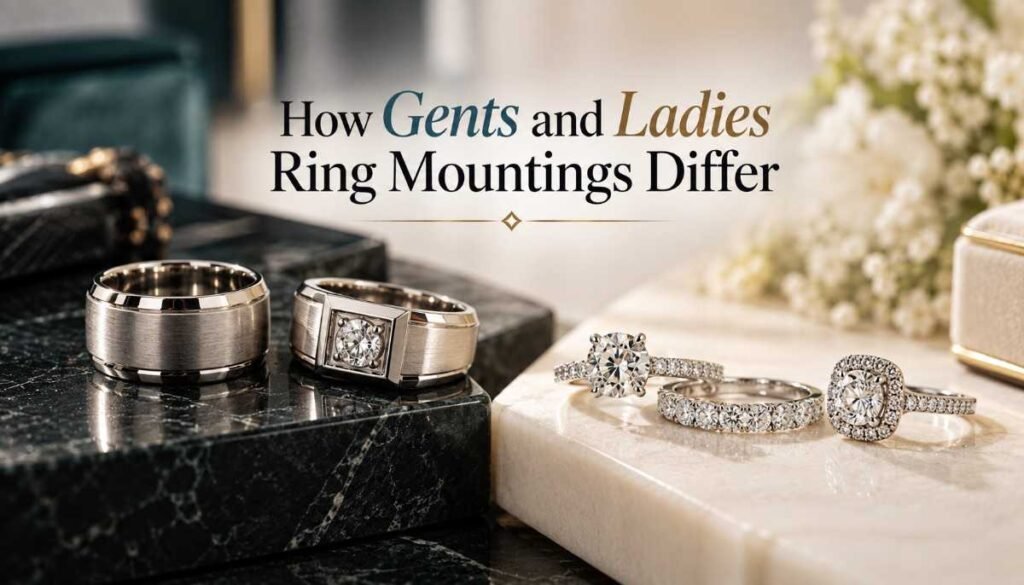
How Gents and Ladies Ring Mountings Differ
At first glance, it might seem like the difference between a gents ring mounting and a ladies ring mounting comes down to little more than size, men’s rings are bigger, women’s rings are smaller, and that’s the end of the story. In reality, the differences run much deeper than proportions alone. Gents and ladies mountings are engineered around genuinely different wear patterns, aesthetic expectations, and structural priorities, and understanding those distinctions matters enormously for jewelers sourcing, designing, or selling across both categories. This guide breaks down the real differences between gents and ladies ring mountings, why those differences exist, and what jewelers should keep in mind when stocking or customizing pieces for each.
Band Width and Overall Proportions
The most immediately visible difference between gents and ladies mountings is band width and overall scale. Gents rings typically feature significantly wider bands, often ranging from 6mm to 10mm or more, compared to the more delicate 2mm to 4mm range common in many ladies rings. This isn’t purely aesthetic. Wider bands distribute pressure and wear more evenly across a larger surface area, which matters for a category of jewelry that, statistically, tends to see more exposure to manual work, tools, and physical activity. Proportions extend beyond band width as well. Gents mountings generally feature thicker shanks and more substantial overall metal weight, giving the piece a heavier, more substantial feel that aligns with typical aesthetic preferences in men’s jewelry design. Ladies mountings, by contrast, often prioritize a more refined, lighter-weight profile, particularly for pieces meant to be worn alongside other rings or stacked designs.
Durability and Structural Engineering Priorities
This is where the differences become genuinely technical rather than purely visual. Gents rings, particularly wedding bands and mountings designed for daily wear, need to be engineered with a stronger emphasis on impact resistance and scratch durability. This often influences metal choice and finishing decisions, favoring more durable alloys and finishes like brushed or matte textures that hide minor surface wear more effectively than a high-polish finish would. Comfort-fit interiors, a slightly domed inner band profile that reduces friction during removal and wear, have also become a standard expectation in gents mountings, reflecting the practical, daily-wear priorities that tend to dominate men’s jewelry design. Ladies mountings, while still needing to hold up to regular wear, more often prioritize design intricacy and stone-focused engineering, since the center stone typically plays a much more prominent visual role than it does in most gents pieces.
Stone Setting Philosophy: Center Stage vs. Supporting Role
Perhaps the most fundamental design difference between the two categories comes down to how stones are used within the mounting itself. Ladies rings, particularly engagement rings, are frequently built around a single, prominent center stone, with the entire mounting engineered to showcase and protect that stone, whether through prong height, halo detailing, or basket construction designed to maximize light exposure to the diamond. Gents mountings take a different approach. When stones are included at all, they’re typically set flush or nearly flush with the metal surface, using techniques like channel setting or bezel setting that prioritize durability and a lower profile over maximizing brilliance. This reflects both practical concerns, a raised stone is more vulnerable to impact in a piece worn during manual activity, and aesthetic conventions that generally favor understated detail over the dramatic prominence common in women’s stone-focused jewelry.
Design Language and Aesthetic Conventions
Beyond structural engineering, the two categories draw on genuinely different design vocabularies. Ladies mountings frequently incorporate more ornamental detail: milgrain edging, filigree work, pavé accents, and curved or contoured band profiles that create visual movement and romance in the design. Halo settings, three-stone arrangements, and intricate gallery work are far more common in ladies mountings than in gents pieces. Gents mountings tend toward cleaner, more geometric design language, straight or subtly beveled edges, minimal ornamentation, and finishes that emphasize texture and material quality over decorative detail. Popular design elements in this category include mixed-metal accents, brushed finishes, subtle beveling, and occasionally masculine-coded motifs like hammered textures or geometric faceting along the band’s exterior.
Sizing Ranges and Production Considerations
Gents and ladies mountings also differ in their typical sizing ranges, which affects how manufacturers approach production planning. Gents rings generally span a narrower but larger overall size range, while ladies rings often require a broader range of smaller sizes along with more frequent resizing requests over a piece’s lifetime, particularly for engagement and wedding rings purchased before a final fitting. This has practical implications for jewelers managing inventory. Stocking ladies mountings often requires maintaining a wider spread of available sizes or working with suppliers capable of quick resizing turnaround, while gents inventory can typically be managed with a somewhat narrower size distribution given more consistent proportional demand across that category.
Sourcing Considerations for Each Category
Given these substantive differences, jewelers sourcing mountings for both categories benefit from working with a manufacturer that demonstrates genuine expertise across both design philosophies, rather than one that simply scales a single design approach up or down in size. A quality Gents Ring Mounting should reflect the durability-first engineering, comfort-fit construction, and clean design language that men’s jewelry customers expect, built specifically around daily wear resilience rather than simply a scaled-down version of decorative detailing. Similarly, a well-designed Ladies Ring Mounting needs to prioritize stone-forward engineering, secure prong work that maximizes brilliance without compromising security, and the kind of refined ornamental detail that ladies’ jewelry customers have come to expect from a well-crafted piece. Sourcing both categories from a manufacturer with proven technical range across these different priorities helps ensure consistent quality regardless of which category a customer is shopping in.
Quick Comparison: Key Differences at a Glance
- Band width: Gents mountings typically run wider (6-10mm+); ladies mountings are generally narrower (2-4mm) for a more refined profile.
- Stone setting approach: Ladies mountings often showcase a prominent center stone; gents mountings favor flush or low-profile settings for durability.
- Design detail: Ladies mountings lean toward ornamental detailing like milgrain and filigree; gents mountings favor cleaner, more geometric lines.
- Finish priorities: Gents mountings often use brushed or matte finishes for durability; ladies mountings more frequently use high-polish finishes to maximize stone brilliance.
- Sizing considerations: Ladies mountings typically require a broader size range and more frequent resizing accommodation.
Final Thoughts
The differences between gents and ladies ring mountings go well beyond simple size adjustments, they reflect genuinely different engineering priorities, design philosophies, and wear expectations that shape everything from band width to stone setting technique. For jewelers sourcing across both categories, understanding these distinctions isn’t just useful background knowledge, it directly affects inventory planning, customer guidance, and ultimately, how well a piece holds up and satisfies the person wearing it. Working with a manufacturing partner who demonstrates genuine technical range across both design philosophies, rather than treating one as a simple variation of the other, is what allows jewelers to serve both categories with the same level of craftsmanship and confidence.