
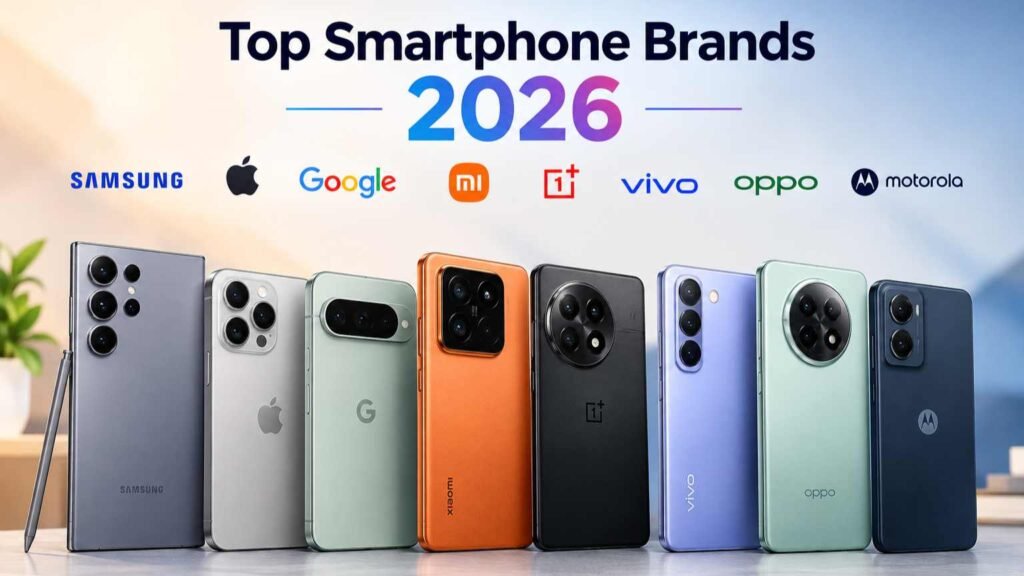
8 Top Smartphone Brands in 2026 for Every Type of User
The smartphone market in 2026 offers more choices than ever before. From premium flagship phones and powerful cameras to affordable devices and gaming-focused models, smartphone brands are competing to provide better performance, longer battery life, improved displays, and smarter software experiences. With so many options available, choosing the right brand can sometimes feel confusing.
Every smartphone company has its own strengths. Some brands focus heavily on premium design and software integration, while others offer excellent hardware at competitive prices. Some are known for photography, some for gaming performance, and others for providing feature-rich phones at affordable prices.
This guide explores eight top smartphone brands to consider in 2026. The goal is not simply to list companies, but to explain what makes each brand interesting, what type of user it may suit, and which features are worth considering before purchasing a new smartphone.
1. Apple
Apple continues to be one of the most recognizable names in the smartphone industry. Its iPhone lineup is known for premium construction, powerful processors, long-term software support, advanced cameras, and close integration with other Apple products.
One of Apple’s biggest strengths is its ecosystem. People who already use products such as a Mac, iPad, Apple Watch, or AirPods can benefit from the way these devices work together. Features such as file sharing, synchronization, messaging, and device continuity can make everyday tasks more convenient.
Apple also focuses strongly on processor performance. Its custom-designed chips provide powerful performance for everyday applications, gaming, photography, video editing, and other demanding tasks.
The camera experience is another major part of the iPhone lineup. Modern iPhones combine high-quality camera hardware with computational photography to produce detailed images and videos.
Software support is also important. iPhones generally receive operating system updates for many years, which can make them attractive to users who plan to keep their phones for an extended period.
For users looking for premium design, strong performance, a polished operating system, and an integrated ecosystem, Apple remains an important brand to consider.
2. Samsung
Samsung is one of the largest smartphone manufacturers in the world and offers devices across multiple price categories. Its lineup includes affordable smartphones, mid-range models, premium flagships, and foldable devices.
One of Samsung’s most noticeable strengths is display technology. The company has extensive experience developing high-quality smartphone screens, and its premium devices often feature bright displays with smooth refresh rates and strong contrast.
Samsung is also a major player in the foldable smartphone market. Its foldable phones provide larger displays in compact designs, giving users an alternative to traditional smartphones.
Camera technology is another area where Samsung invests heavily. Its premium phones typically include multiple cameras designed for different photography situations, including wide-angle and zoom photography.
The company’s Android-based software experience also includes a large selection of customization and productivity features. Samsung devices can be useful for users who want greater control over their phone’s interface and functionality.
Because Samsung offers phones at different price levels, consumers can choose a device based on their budget and requirements. This broad range makes Samsung relevant to casual users, professionals, photographers, gamers, and technology enthusiasts.
3. Google Pixel
Google’s Pixel smartphone lineup has developed a strong reputation for photography, clean software, and artificial intelligence features.
One of the main reasons people consider Pixel phones is their camera experience. Google uses advanced computational photography to improve image quality, particularly in challenging lighting conditions. Rather than depending only on camera hardware, Pixel devices use software processing to enhance photographs.
The Pixel software experience is another major attraction. The interface is generally clean and closely connected to Google’s Android ecosystem. Users who prefer a straightforward Android experience may find Pixel phones appealing.
Artificial intelligence has become increasingly important in modern smartphones, and Google has placed significant emphasis on AI-powered features. These can assist with photography, communication, productivity, and everyday smartphone tasks.
Pixel phones can also appeal to users who want timely Android software updates and Google’s latest mobile features.
For photography enthusiasts and users who prefer a clean Android experience with smart software features, the Pixel lineup is worth considering.
4. OnePlus
OnePlus has built its identity around performance-focused smartphones, fast charging, smooth displays, and competitive pricing.
The brand became popular among users who wanted flagship-level performance without always paying the highest premium prices. That approach continues to influence its smartphone strategy.
Performance is one of the most important reasons users consider OnePlus. Its higher-end smartphones typically feature powerful processors, fast memory, high-refresh-rate displays, and large batteries.
Fast charging is another notable feature. Depending on the model and market, OnePlus devices can support high-speed charging technologies designed to reduce the amount of time users need to keep their phones connected to a charger.
The software experience also focuses on smoothness and customization. Users who enjoy adjusting their phone’s interface and settings may appreciate the flexibility.
OnePlus can be a suitable option for consumers who prioritize performance, charging speed, display quality, and overall responsiveness while still paying attention to value.
5. Xiaomi
Xiaomi is well known for offering feature-rich smartphones at different price points. The brand competes strongly in both affordable and premium segments.
One of Xiaomi’s biggest advantages is the amount of hardware it offers for the price. Depending on the model, users can find high-resolution displays, large batteries, capable cameras, powerful processors, and generous storage.
Xiaomi also operates several smartphone series designed for different audiences. Some models focus on affordability, while others target photography, performance, or premium design.
Battery capacity is another area where Xiaomi phones can be attractive. Many models are designed to provide long-lasting battery performance, while fast charging can make daily use more convenient.
The company’s software interface includes numerous customization and utility features. Users who enjoy having many options available on their phones may find the experience useful.
For budget-conscious consumers who still want modern hardware and a broad selection of features, Xiaomi remains a brand worth examining.
6. Motorola
Motorola continues to maintain a strong presence in the smartphone market with devices ranging from affordable models to premium and foldable phones.
One of Motorola’s strengths is its approach to software. Many of its phones offer a relatively clean Android experience while also adding practical features that can improve everyday usability.
Motorola has also invested in foldable smartphones. Its foldable models provide users with a compact form factor that can open into a larger screen.
Design is another area where Motorola frequently focuses attention. Some models feature slim profiles, curved displays, and modern materials that give them a premium appearance.
The company also offers smartphones across multiple price categories, making it possible for users with different budgets to consider its products.
Motorola can be especially interesting for people who prefer straightforward Android software, distinctive designs, and practical features without necessarily moving into the highest-priced smartphone category.
7. OPPO
OPPO has become an important smartphone brand in international markets, particularly through its focus on design, camera technology, charging, and display quality.
Photography is one of the major areas associated with OPPO smartphones. Many of its devices focus on portrait photography, low-light images, and advanced camera processing.
Fast charging is another area where OPPO has invested significantly. Faster charging can be useful for people who rely heavily on their smartphones throughout the day and need to restore battery power quickly.
The brand also offers devices with stylish designs and high-quality displays. Its premium models often focus on combining attractive hardware with powerful internal components.
OPPO’s smartphone lineup covers different price categories, allowing users to choose based on their budget and preferred features.
For consumers who care about smartphone design, cameras, charging technology, and display quality, OPPO can be an interesting brand to explore.
8. Vivo
Vivo is another major smartphone manufacturer known for camera-focused devices, stylish designs, displays, and charging technology.
Photography has been a major part of Vivo’s smartphone strategy. The company has introduced features designed to improve portraits, night photography, stabilization, and other aspects of mobile imaging.
Vivo also offers smartphones with attractive designs and vibrant displays. Its premium devices often focus on combining camera capabilities with high-end hardware.
Battery and charging technology are additional areas where Vivo continues to compete. Fast charging can provide convenience for users who spend significant amounts of time using their phones.
The company also produces phones across multiple price categories, from relatively affordable models to high-end smartphones.
Vivo can therefore appeal to consumers who want a stylish smartphone with strong camera capabilities and modern hardware.
What Makes a Smartphone Brand Stand Out in 2026?
Choosing a smartphone brand is no longer only about processor speed. Several factors can influence the overall ownership experience.
Camera Quality
Smartphone cameras have become extremely advanced. However, megapixel numbers alone do not determine image quality. Sensor size, image processing, stabilization, lens quality, and software features all play important roles.
Consumers who take many photographs should look at the complete camera system instead of focusing on a single specification.
Battery Life
Battery life remains one of the most important everyday considerations. A powerful smartphone is less useful if its battery cannot comfortably last through the day.
Battery capacity, processor efficiency, display technology, software optimization, and charging speed all affect the overall battery experience.
Display
A good display can improve almost every smartphone activity, including browsing, gaming, watching videos, reading, and photography.
Refresh rate, brightness, resolution, color accuracy, and display size are all worth considering.
Software Updates
Long-term software support can significantly affect the value of a smartphone. Regular updates can improve security, introduce new features, and maintain compatibility with newer applications.
Consumers who plan to keep their phone for several years should pay attention to the manufacturer’s update policy.
Performance
Modern smartphones can handle demanding applications, games, video editing, and multitasking. Processor performance is especially important for users who regularly perform intensive tasks.
However, performance should be considered together with thermal management, battery efficiency, memory, and software optimization.
Build Quality
Premium materials and durable construction can improve the feel and longevity of a smartphone. Buyers should also consider factors such as water resistance, screen protection, hinge durability on foldable phones, and overall construction.
How to Choose the Right Smartphone Brand
The best smartphone brand for one person may not be the same for another. Instead of choosing based only on popularity, consumers should consider their individual requirements.
A person already using several Apple products may value ecosystem integration. An Android user may prefer the flexibility offered by brands such as Samsung, Google, OnePlus, Xiaomi, Motorola, OPPO, or Vivo.
Photography enthusiasts should pay close attention to camera hardware and image-processing capabilities. Gamers may prioritize processor performance, cooling, display refresh rate, and battery capacity.
For users with a limited budget, value-oriented models from brands offering strong hardware at competitive prices may make more sense than premium flagship phones.
People who frequently travel may prioritize battery life, fast charging, durability, camera quality, and storage capacity.
Flagship vs Budget Smartphones
Flagship smartphones generally provide the latest processors, advanced cameras, premium materials, sophisticated displays, and additional features. However, they also tend to cost more.
Budget and mid-range smartphones have improved significantly. Many affordable devices now provide enough performance for everyday activities such as social media, streaming, photography, messaging, browsing, and casual gaming.
The right choice depends on how the phone will be used. Someone who mainly makes calls, uses messaging applications, watches videos, and browses the internet may not need an expensive flagship.
On the other hand, professional users, serious gamers, content creators, and photography enthusiasts may benefit from higher-end hardware.
Final Thoughts
The smartphone market in 2026 provides consumers with a wide range of choices. Apple, Samsung, Google Pixel, OnePlus, Xiaomi, Motorola, OPPO, and Vivo each bring different strengths to the industry.
Apple focuses heavily on ecosystem integration, premium hardware, performance, and long-term software support. Samsung offers a broad portfolio with strong displays, cameras, and foldable technology. Google Pixel stands out through computational photography, Android software, and AI-focused features.
OnePlus continues to attract performance-oriented users with fast hardware and charging technology. Xiaomi offers a broad selection of feature-rich smartphones across different price categories. Motorola combines Android software with practical features and distinctive designs.
OPPO focuses on cameras, design, displays, and charging, while Vivo places considerable attention on photography, design, and modern hardware.
Rather than choosing a smartphone solely because a brand is popular, consumers should compare the features that matter most to them. Camera quality, battery life, display, performance, software support, storage, design, and price can all influence the right purchase decision.
With technology developing rapidly, 2026 is an exciting year for smartphone buyers. Whether someone wants a premium flagship, a camera-focused device, a powerful gaming phone, a foldable smartphone, or an affordable everyday model, the current market provides plenty of options to explore.