
How Automation Is Reshaping Real Estate Business Operations in the UAE
Real estate businesses operate in an environment where timing, communication, and accurate information can influence business outcomes. A delayed response to a property enquiry may result in a lost opportunity, while an overlooked lease renewal or an unresolved maintenance request can create avoidable administrative problems.
As property portfolios and transaction volumes grow, manual processes become increasingly difficult to manage. Employees may spend hours updating spreadsheets, sending reminders, preparing reports, and checking documents instead of focusing on customers and business development.
Automation offers a practical way to reduce repetitive work and establish more consistent workflows. For real estate agencies, property managers, landlords, and developers in the United Arab Emirates, the right technology can connect everyday activities and improve operational visibility.
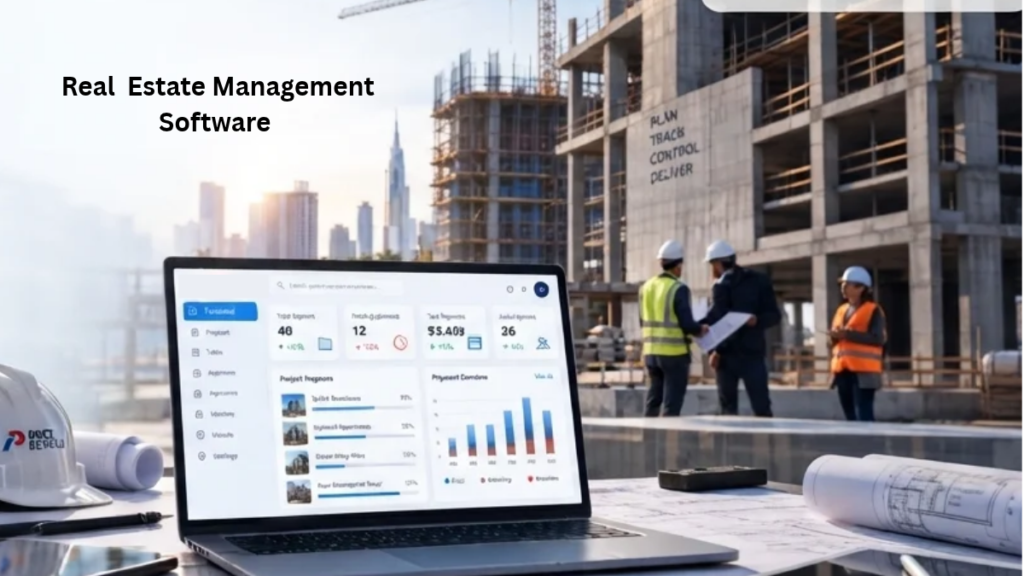
Finding the best real estate management software in UAE requires understanding which tasks should be automated, where human oversight remains necessary, and how technology can support the company’s long-term objectives.
Why Automation Matters in Real Estate
Real estate operations involve recurring tasks across several departments. Sales teams follow up with prospects, property managers monitor maintenance requests, finance employees reconcile payments, and administrators maintain contracts and property records.
When these activities depend entirely on manual intervention, delays and inconsistencies become more likely.
Consider a property management company responsible for hundreds of rental units. Employees may need to monitor upcoming lease expirations, follow up on outstanding payments, coordinate maintenance, and respond to tenant enquiries. Tracking every activity manually can become demanding as the portfolio expands.
Automation can help by triggering reminders, assigning tasks, updating workflow statuses, and generating routine reports. This allows employees to focus on exceptions and decisions that require judgment.
The objective is not to remove people from the process. It is to reduce unnecessary administrative effort while keeping important decisions under appropriate human control.
Automating Property Administration
Property administration involves maintaining information about buildings, units, owners, tenants, occupancy, leases, and maintenance activities. Keeping these records accurate is essential for effective management.
Real Estate Property Management Software in Dubai can help centralize property information and automate selected administrative tasks, depending on the platform’s capabilities.
For example, a system may notify a property manager when a lease approaches its renewal date or when a maintenance request remains unresolved beyond a defined period. Some platforms can also generate recurring reports or assign tasks according to established rules.
These functions help employees prioritize work instead of relying on memory or manually checking multiple spreadsheets.
However, automation must be configured carefully. An incorrect lease date or an outdated tenant record can trigger misleading notifications. Businesses should establish procedures for verifying data and correcting errors before depending on automated workflows.
Improving Lead Response With Real Estate CRM
For real estate agencies, customer enquiries are a major part of the sales process. Prospective buyers and tenants may contact a company through its website, telephone, email, property portals, or social media.
If enquiries are scattered across different channels, employees may struggle to track them consistently.
Using real estate crm software in uae, agencies can bring prospect information into a centralized system, assign enquiries to sales representatives, schedule follow-ups, and monitor opportunities through different sales stages.
Automation can make these processes more consistent.
For instance, when a new enquiry enters the system, a CRM may automatically assign it to an employee based on predefined rules. It may also create a follow-up task or notify the sales manager if the enquiry remains unanswered.
This reduces the risk of leads being overlooked.
CRM automation can also help teams organize customer preferences. If a prospect is looking for a property within a particular budget or location, representatives can record those requirements and use them to guide subsequent communication.
The effectiveness of this approach depends on accurate information and appropriate follow-up practices. Automated messages should remain relevant to the recipient rather than becoming repetitive or impersonal.
Streamlining Property Transactions
Real estate transactions require coordination among customers, agents, administrators, and other parties. Depending on the transaction, teams may need to collect documents, track approvals, monitor deadlines, and maintain records of communication.
Real Estate Transaction Management Software can help structure these activities within a defined workflow.
A transaction might progress through stages such as enquiry, viewing, negotiation, documentation, and completion. At each stage, the system can identify the next task, assign responsibility, and notify the relevant employee.
For example, if a transaction is waiting for a required document, the system may generate a reminder for the responsible team member. Managers can then review outstanding items without asking every employee for a separate status update.
Automation can improve coordination, but it should not replace professional checks. Contracts, financial commitments, and regulatory documentation may require manual review by qualified personnel.
Before choosing a platform, businesses should verify whether its transaction workflows match their actual procedures.
Making Rental Collections and Financial Administration More Consistent
Financial administration is another area where automation can reduce repetitive work. Property businesses may need to track rental payments, issue invoices, record expenses, reconcile accounts, and monitor outstanding balances.
When these activities are managed separately, finance employees may need to transfer information manually between systems.
An integrated platform can help connect financial records with relevant property and customer information. Depending on the software, it may support scheduled reminders, recurring billing workflows, payment-status tracking, and financial reporting.
For example, a property manager may receive a notification when a recorded payment remains outstanding. The finance team can then verify the record and follow the company’s established collection procedure.
Businesses should confirm how the system handles payment records, reconciliation, accounting integrations, and required invoicing workflows. UAE-specific taxation and compliance requirements should be verified with the provider and appropriate professional advisers.
Automated notifications are useful, but they should not be treated as proof that a payment has or has not occurred without checking the underlying records.
When ERP Automation Becomes Valuable
Some organizations need more than property management and CRM automation. Property developers and larger real estate groups may also coordinate procurement, project budgets, suppliers, accounting, employee records, and management reporting.
In these situations, an integrated ERP system can connect processes across departments.
Choosing the Best Real Estate ERP Software in the UAE involves examining how the system manages information across the organization rather than simply counting its available modules.
For example, a property development company may need to connect project expenses with budgets, supplier invoices with procurement records, and sales activities with financial reporting.
An integrated ERP environment can reduce repeated data entry and make it easier to understand how operational activities affect overall business performance.
However, ERP automation introduces its own challenges. Complex workflows require careful configuration, clean data, appropriate permissions, and employee training. Businesses should automate processes only after they understand how those processes should operate.
Using Automation to Improve Maintenance Management
Maintenance affects tenant satisfaction, property condition, and operating costs. Requests can involve routine inspections, plumbing problems, electrical repairs, equipment servicing, or other property-related issues.
Without a structured process, requests may remain in email inboxes or informal messaging conversations. Employees may not know which issues are urgent or whether a contractor has completed the work.
A property management system can help record requests, categorize their urgency, assign tasks, and track progress.
For example, a reported equipment fault could create a maintenance task and notify the responsible employee. Once the issue is resolved, the team can update the record and retain the service history.
Over time, these records can help managers identify recurring problems and review maintenance costs.
Automation should still account for urgency and risk. A serious safety issue may require immediate human intervention rather than waiting for a routine workflow or notification.
Reporting That Supports Better Decisions
Automated reporting can reduce the time spent collecting information from different departments. It can also help managers identify patterns and monitor business performance.
Real estate companies may track:
- Lead response times and conversion rates
- Property occupancy and lease renewals
- Outstanding rental payments
- Maintenance completion times
- Transaction progress
- Operating expenses
- Revenue and property performance
The right metrics depend on the business model.
A brokerage may focus on lead conversion and transaction completion, while a property management company may prioritize occupancy, maintenance response, and rental collections.
Automated reports are only useful when the underlying data is accurate. Businesses should define reporting responsibilities, review unusual results, and avoid treating incomplete records as reliable performance indicators.
Challenges to Consider Before Automating
Automation can improve efficiency, but implementing it without preparation can create additional problems.
One common mistake is automating an inefficient process without reviewing it first. If several employees must approve the same routine task unnecessarily, automating every approval may simply make the inefficient process faster.
Another challenge is poor data quality. Duplicate customer records, incorrect property details, and outdated contact information can cause automated workflows to fail.
Integration is also important. If the CRM cannot exchange information with the accounting system or property management platform, employees may still need to perform manual transfers.
Businesses should also consider security, access permissions, employee training, implementation costs, and the availability of technical support.
A sensible approach is to begin with a limited number of high-value workflows, measure the results, and expand automation after the initial processes operate reliably.
How to Choose the Right Software for Automation
Selecting suitable software begins with identifying where the business loses time or experiences recurring errors.
Companies should document their current workflows and determine which activities require repetitive manual effort. They can then compare vendors against these specific requirements.
Useful evaluation questions include:
- Can the system automate the tasks that currently consume the most staff time?
- Does it support property management, CRM, and transaction workflows relevant to the business?
- Can it integrate with existing financial and communication tools?
- Are automated reminders and task assignments configurable?
- Can employees review and correct automated actions?
- Does the system maintain suitable records of changes and completed activities?
- What training, implementation, and support are included?
- How will the company measure the return on its investment?
Businesses should request demonstrations based on realistic scenarios rather than relying entirely on general product presentations.
The total cost should include software subscriptions, implementation, customization, integration, data migration, training, and ongoing support.
Conclusion
Automation can help UAE real estate businesses manage property administration, customer enquiries, transactions, financial activities, and maintenance workflows more consistently. Its greatest value comes from reducing repetitive work while improving visibility and accountability.
Dedicated property management software may suit companies with straightforward requirements, while agencies may benefit from CRM and transaction automation. Businesses with broader operational needs may find that an integrated ERP system provides a more connected approach.
The best real estate management software in UAE is the solution that automates the right processes, integrates with essential business systems, and remains practical for employees to use every day.
By identifying operational bottlenecks, maintaining reliable data, and introducing automation gradually, real estate companies can improve efficiency without adding unnecessary complexity to their operations.