
Geomembrane for Roads: Waterproofing Solutions for Road Infrastructure
Road infrastructure must withstand traffic loads, changing weather, groundwater, and moisture-related challenges throughout its service life. Water entering pavement layers or underground structures can contribute to deterioration when drainage and waterproofing are not adequately designed. For this reason, road engineers evaluate suitable materials and construction systems that help manage moisture and protect vulnerable structures.
Geomembrane for roads refers to the use of low-permeability membrane materials in selected road construction and infrastructure applications. Depending on the project design, a geomembrane may be considered for waterproofing, moisture control, slope protection, or separation from water-sensitive areas. The correct material depends on the road design, soil conditions, drainage requirements, and expected service environment.
D L Millar and Company Limited, operating under the Dr. Millars brand, supplies PVC geomembrane solutions for suitable infrastructure and waterproofing applications. Selecting the right product and installing it according to the engineering specification are essential for achieving reliable performance.
What Is a Geomembrane for Roads?
A geomembrane is a synthetic sheet designed to provide a low-permeability barrier against the movement of water and certain liquids. In road infrastructure, it may be used in specific locations where limiting water movement is an important part of the design.
Road projects include different structures, such as highways, embankments, underpasses, retaining structures, tunnels, culverts, and access roads. Each has different requirements. A geomembrane that is suitable for one application may not be appropriate for another, so the material must be chosen according to the engineering design.
PVC geomembrane sheets are flexible membranes that may be considered for selected waterproofing applications. Other materials, including HDPE geomembranes and purpose-designed construction membranes, may be appropriate for different conditions. The product specification should determine the final selection.
Why Is Waterproofing Important in Road Construction?
Water management is a key consideration in road engineering. Rainwater, groundwater, and moisture from surrounding soil can affect pavement layers and adjoining structures if they are not managed correctly.
Waterproofing and drainage serve related but different functions. Drainage systems collect and direct water away from vulnerable areas, while a suitable waterproofing barrier helps restrict water movement through a designated surface. A well-designed road project may require both approaches.
The need for a geomembrane should be established through site investigation and engineering assessment. Factors such as groundwater levels, soil permeability, rainfall, slope stability, pavement structure, and drainage design can influence whether a membrane is required.
Applications of Geomembrane in Road Infrastructure
Road Underpasses and Underground Structures
Underpasses and other underground road structures may be exposed to groundwater and moisture pressure. A suitable geomembrane can form part of a waterproofing system designed to protect structural elements from water ingress.
The system must be designed around joints, construction interfaces, penetrations, and transitions. Drainage arrangements and protective layers should also be considered. Installation and inspection procedures should follow the approved project specification.
Road Tunnels
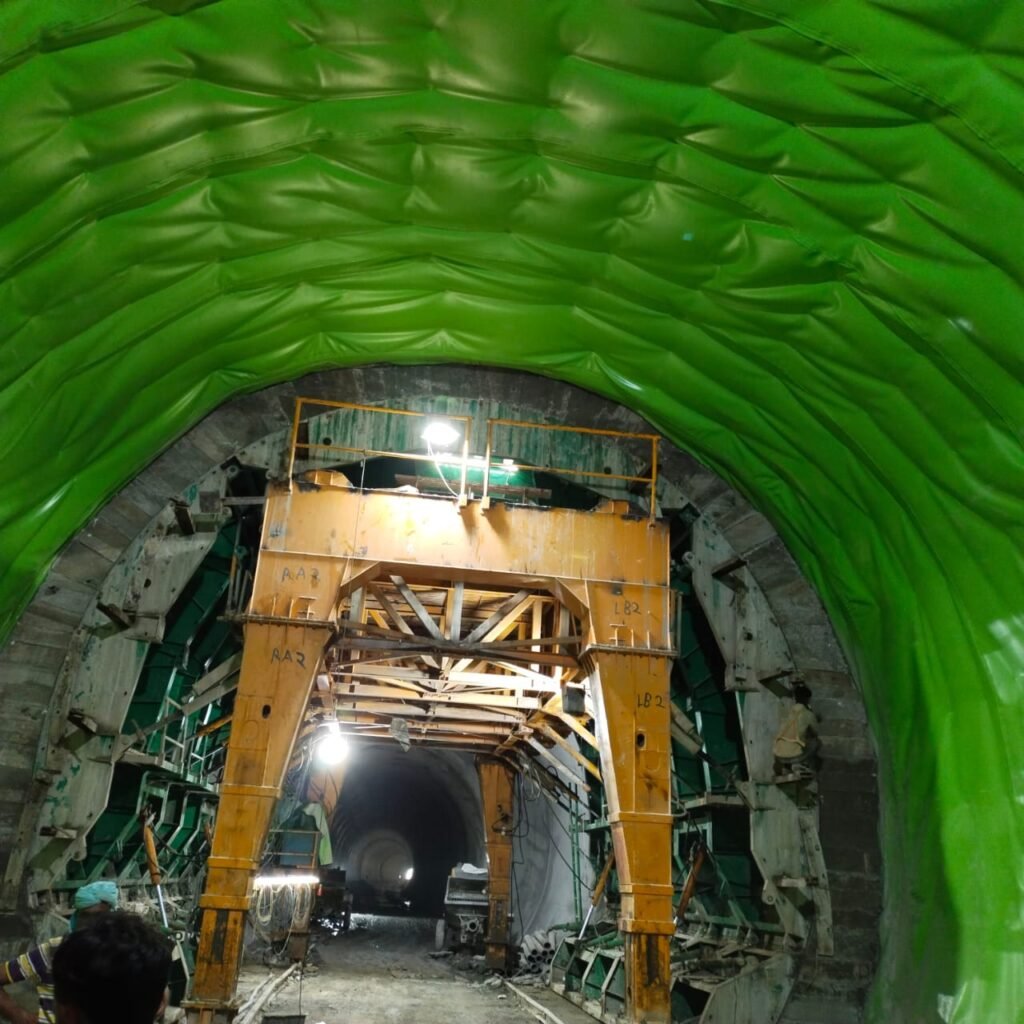
Road tunnels can face persistent moisture and groundwater challenges. A suitable geomembrane may be incorporated into a tunnel waterproofing system to help control water ingress and protect the tunnel lining.
PVC geomembrane is one material that may be considered when its properties meet the tunnel design requirements. Correct detailing, seam joining, drainage, and quality control are important for the performance of the complete system.
Embankments and Slope Protection
Road embankments and slopes may require engineered measures to manage seepage or protect selected surfaces. A geomembrane can be considered in appropriate designs where limiting water movement through a specific area is necessary.
Slope stability, soil characteristics, drainage, anchoring, and mechanical protection must be assessed by qualified engineers. A geomembrane should not be treated as a substitute for proper slope stabilization or drainage measures.
Retaining Walls and Bridge Approaches
Retaining structures and bridge approaches may be affected by water behind walls, moisture movement through adjoining ground, and drainage limitations. In selected designs, a waterproofing membrane can help protect designated structural surfaces.
The membrane type must be compatible with the substrate and the expected conditions. Connections, joints, protective layers, and drainage outlets require appropriate detailing to avoid creating additional moisture problems.
Culverts and Drainage Structures
Road drainage structures carry water beneath or alongside roadways. Depending on the design, a suitable membrane may be used to protect selected surfaces from water ingress or to form part of a containment arrangement.
Material selection should account for water exposure, substrate preparation, mechanical loads, and compatibility with the structure. The design should also ensure that the membrane does not interfere with the intended drainage function.
Roadside Water Retention and Lined Ponds
Some road infrastructure projects include retention ponds, sedimentation basins, or other water storage features. Geomembranes may be considered for suitable lining applications where seepage control is required.
The required product depends on the stored water, ground conditions, weather exposure, and design life. Protective geotextiles, anchoring, and appropriate joining methods may be needed as part of the lining system.
PVC Geomembrane Sheet for Road Applications
PVC geomembrane sheets are flexible, low-permeability membranes used in selected waterproofing and infrastructure applications. Their suitability for road projects depends on the precise location and function of the membrane.
Dr. Millars published product information has listed PVC geomembrane options in 1.5 mm and 2.0 mm thicknesses. Buyers should confirm current availability and request technical documentation before selecting a product for a road project.
Thickness alone does not determine suitability. Relevant considerations may include tensile strength, puncture resistance, flexibility, seam performance, chemical compatibility, and resistance to environmental exposure. The project designer should identify which properties are necessary for the intended conditions.
A geomembrane installed beneath or beside road infrastructure may also require protection against damage from aggregate, construction equipment, backfilling, or movement of adjoining materials. The complete system should be designed to reduce the risk of punctures, abrasion, and seam failure.
How to Select the Right Geomembrane for Roads
Start with the specific engineering problem the membrane is intended to address. Waterproofing a tunnel or underpass is different from lining a roadside pond or managing seepage near an embankment. The application should determine the required material and installation approach.
Next, review the site investigation and project drawings. Groundwater levels, soil conditions, expected loads, drainage paths, temperature variations, and exposure to chemicals may influence material selection. The design should identify the required thickness, performance properties, and protective layers.
Technical documentation is essential. Request current product specifications, relevant test reports, recommended joining methods, and installation instructions. Where a project requires a particular Indian Standard or certification, verify the current supporting documents for the exact product supplied.
Finally, establish a quality-control plan. This may include checking incoming materials, preparing the substrate, inspecting seams, documenting repairs, and carrying out tests required by the project specification. Qualified installation teams and engineering supervision help ensure the membrane is incorporated correctly into the overall road system.
Installation Considerations for Road Geomembranes
Successful installation begins with proper surface preparation. The substrate should meet the project requirements and be free from materials or irregularities that could damage the membrane. Any protective geotextile or bedding layer should be installed according to the design.
Membrane sheets should be placed, joined, and anchored using approved procedures for the selected product. Seams, edges, penetrations, and transitions require careful inspection. The installation team should follow the manufacturer’s guidance and the project’s specified quality checks.
Construction activities after membrane placement must also be managed carefully. Heavy equipment, aggregate placement, backfilling, and other work can damage the membrane if adequate protection is not provided. The project specification should define when inspections are required and how damage or defective seams must be repaired.
A geomembrane should always be treated as one component of the overall road design. Drainage, pavement layers, structural protection, and foundation engineering remain essential to the performance of the infrastructure.
Why Consider Dr. Millars for Geomembrane Solutions?
D L Millar and Company Limited, operating under the Dr. Millars brand, has a company history dating back to 1929. Its published product information includes PVC geomembrane solutions for suitable waterproofing and infrastructure applications.
For road-related projects, buyers can discuss the intended application, required thickness, site conditions, and technical documentation with the company. The appropriate product should be confirmed against the approved engineering specification before procurement.
When comparing geomembrane manufacturers and suppliers in India, review the current technical data, product availability, quality documentation, and installation requirements. These checks help project teams select a membrane that matches the design rather than relying only on general product descriptions.
Conclusion
Geomembrane for roads can be useful in selected infrastructure applications where a low-permeability barrier is required. Road tunnels, underpasses, retaining structures, embankments, drainage structures, and lined water retention areas may require different waterproofing and moisture-control solutions.
The right geomembrane depends on the engineering design, ground conditions, exposure, required material properties, and installation method. Proper substrate preparation, seam inspection, mechanical protection, and drainage planning are essential for long-term system performance.
D L Millar and Company Limited, through Dr. Millars, supplies PVC geomembrane solutions for suitable infrastructure applications. Contact the company to discuss project requirements and confirm current product specifications.
Frequently Asked Questions
1. What is geomembrane for roads used for?
Geomembranes may be used in selected road infrastructure applications to provide a low-permeability barrier, including certain underground structures, tunnels, embankments, and lined water retention areas.
2. Can PVC geomembrane be used in road tunnels?
Yes, a suitable PVC geomembrane can form part of a road tunnel waterproofing system when it meets the engineering specification and is installed correctly.
3. Which PVC geomembrane thicknesses does Dr. Millars list?
Dr. Millars published product information has listed 1.5 mm and 2.0 mm PVC geomembrane options. Confirm current availability and suitability with the company.
4. Does a geomembrane replace road drainage?
No. A geomembrane provides a barrier where specified, while drainage systems collect and direct water away. Depending on the project, both may be needed.
5. What should I check before buying a geomembrane for roads?
Review the product’s technical specifications, required thickness, site conditions, seam joining method, protective layers, test reports, and any standards specified by the project.
6. How can I contact Dr. Millars for road infrastructure projects?
Contact D L Millar and Company Limited using the details below to discuss product specifications and project requirements.
Company Contact Details
D L MILLAR AND COMPANY LIMITED
Flat No. 303, 3rd Floor, Elite House-36, Community Center, Zamroodpur, New Delhi-110048, India.
Phone: +91 8700518400
Email: dlmillars@gmail.com
Website: https://drmillars.co.in/