
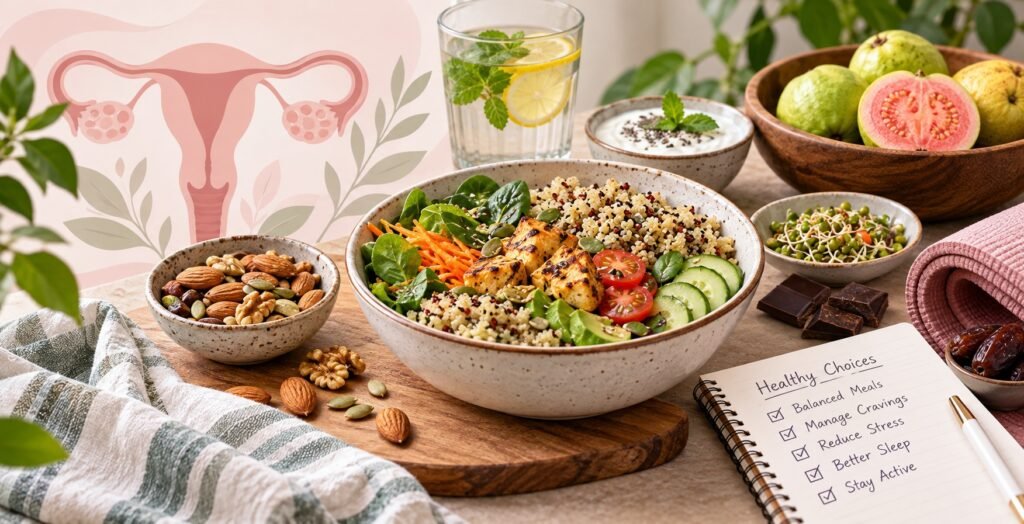
7 Powerful Ways to Manage PCOS Cravings Naturally
Have you ever eaten a full meal and started craving something sweet an hour later? Or felt like eating chocolate, biscuits or salty snacks even when you weren’t really hungry?
If you have polycystic ovary syndrome (PCOS), these experiences may feel familiar. Food cravings can be frustrating, especially when you’re trying to manage your weight, improve your energy levels or follow a balanced diet.
PCOS can affect how your body responds to insulin, and insulin resistance is common. This may influence blood glucose regulation and hunger patterns. Hormonal changes, stress, poor sleep and restrictive eating habits can also affect your appetite.
The good news is that you don’t need to give up every food you enjoy. Small changes to your meals, sleep and daily routine may help you manage cravings more comfortably.
Let’s look at seven practical ways to manage PCOS cravings naturally, using everyday foods and habits that can fit into an Indian lifestyle.
Why Does PCOS Cause Food Cravings?
PCOS is a hormonal condition that can affect menstrual cycles, ovulation, skin health and metabolism. Not everyone with PCOS experiences the same symptoms, and food cravings are not a symptom experienced by everyone.
Still, a few factors may make cravings harder to manage.
- Insulin resistance: Some people with PCOS have difficulty responding to insulin, which helps glucose enter cells. This can affect blood glucose regulation and metabolic health.
- Irregular eating patterns: Skipping meals or eating too little may leave you feeling very hungry later in the day.
- Stress: Emotional stress can increase the desire for foods that feel comforting, particularly sweet or high-fat snacks.
- Poor sleep: Inadequate sleep can affect appetite regulation and make food choices more difficult.
- Restrictive diets: Cutting out carbohydrates or favourite foods completely may increase feelings of deprivation and make cravings more intense.
Understanding the reason behind your cravings is a good starting point. Instead of blaming yourself for wanting certain foods, focus on what your body may need.
7 Powerful Ways to Manage PCOS Cravings Naturally
1. Build Balanced Meals Instead of Cutting Out Carbs
One of the most common mistakes people make after a PCOS diagnosis is cutting out rice, roti, potatoes and other carbohydrate-rich foods completely.
You don’t need to do that.
Carbohydrates provide energy. The type of carbohydrate you choose and the foods you eat alongside it can make a difference to your meal’s overall nutritional value.
Try building meals with a mix of carbohydrates, protein, fibre and healthy fats. This can help you feel satisfied and may support steadier blood glucose levels.
For example, instead of eating plain poha for breakfast, try adding peas and peanuts. You could also have curd or an egg on the side, depending on your food preferences.
Other simple combinations include:
- Roti with dal, sabzi and curd
- Vegetable oats with paneer
- Brown rice or regular rice with rajma and vegetables
- Idli with sambar and a side of protein-rich food
You don’t have to switch to expensive health foods. Everyday Indian meals can work well when you plan them thoughtfully.
The 2023 international PCOS guideline recommends sustainable, balanced eating that suits individual preferences. It does not identify one particular diet as best for everyone with PCOS.
2. Add More Protein to Your Meals and Snacks
Do you often feel hungry soon after breakfast or lunch? Take a closer look at how much protein you’re eating.
Protein can help you feel full for longer when included as part of a balanced meal. It also supports muscle maintenance and other important body functions.
Good protein sources include:
- Dal, chickpeas, rajma and other beans
- Paneer and tofu
- Milk, curd and Greek-style yoghurt
- Eggs, fish and chicken, if you eat them
- Nuts and seeds
For example, if you usually drink tea with two biscuits in the evening, try adding a bowl of roasted chana or plain curd with fruit. You can still enjoy your tea and biscuits sometimes. The idea is to make your snack more satisfying, not to label certain foods as bad.
You could also keep boiled chickpeas or roasted chana ready for busy afternoons. Having something convenient at home or work can make it easier to choose a filling snack when hunger strikes.
Your protein needs depend on your age, activity level, health and overall diet. A personalised plan can help you work out what is suitable for you.
3. Choose Fibre-Rich Foods to Stay Satisfied
Fibre supports digestive health and can slow the digestion of some carbohydrates. Fibre-rich foods can also add volume to meals, which may help you feel satisfied.
If your meals mostly consist of refined grains or packaged snacks, start by adding more whole foods rather than changing everything at once.
Here are a few easy options:
- Oats or whole-grain porridge at breakfast
- Guava, apples, pears or oranges as snacks
- Vegetables with lunch and dinner
- Dal, beans and chickpeas throughout the week
- Whole-wheat roti or other whole grains
Let’s say you feel hungry again shortly after eating lunch. Your meal might need more vegetables, legumes or other filling foods. Try changing one part of the meal and see how your hunger responds.
Increase fibre gradually and drink enough water, especially if you’re not used to eating much fibre. Adding too much at once can cause gas or bloating.
Fibre-rich foods are useful for general health, but they won’t automatically stop every craving. Your overall eating pattern matters more than any single ingredient.
4. Eat Regularly and Avoid Extreme Dieting
Skipping breakfast to reduce calories might seem like a simple weight-management strategy. But if you end up feeling extremely hungry by late afternoon, it may not be working well for you.
Long gaps between meals can make some people more likely to overeat later. Eating too little can also leave you tired and preoccupied with food.
Try a meal routine that suits your schedule. You might have breakfast before work, lunch during your break, an afternoon snack if you’re hungry and dinner at a comfortable time.
There is no universal rule that everyone with PCOS must eat exactly three meals a day. Some people prefer three meals, while others feel better with smaller meals or planned snacks.
Pay attention to your own hunger cues.
If you’re hungry at 5 pm every day, for instance, don’t treat that as a lack of discipline. A planned snack containing protein or fibre may be a sensible response.
Avoid crash diets and very low-calorie plans unless a qualified healthcare professional has prescribed and is monitoring an appropriate plan for your needs. Sustainable eating habits are easier to maintain than strict rules that leave you feeling deprived.
5. Improve Your Sleep Routine
Have you noticed that cravings become harder to manage after a poor night’s sleep?
Sleep affects several processes involved in appetite, mood and energy. When you’re tired, preparing a balanced meal may also feel like too much effort. Reaching for something sweet or convenient can seem easier.
A few habits may help:
- Keep a reasonably consistent bedtime and wake-up time.
- Reduce screen use before bed if it interferes with your sleep.
- Avoid drinking tea or coffee late in the day if caffeine affects you.
- Make your bedroom comfortable, quiet and dark.
- Give yourself time to wind down instead of working until the last minute.
Try not to focus only on food when managing PCOS. Sleep is part of your overall health, too.
If you regularly snore loudly, wake up feeling unrefreshed or experience excessive daytime sleepiness, discuss these symptoms with your doctor. Sleep-related conditions can require assessment and treatment.
6. Manage Stress Without Depending on Food Alone
Sometimes you want chocolate after a stressful day, even though you aren’t physically hungry. That doesn’t mean you’ve done anything wrong.
Food can provide comfort, and enjoying it is normal. The difficulty arises when eating becomes your main way of coping with stress and leaves you feeling worse afterwards.
Start by noticing what happens before a craving.
Are you hungry because lunch was too small? Are you upset after a difficult conversation? Have you been working for hours without a break?
The answer can help you decide what you need.
If you’re physically hungry, eat a satisfying snack or meal. If stress seems to be the main trigger, you could try:
- Taking a short walk outdoors
- Calling a friend
- Listening to music
- Doing a few minutes of slow breathing
- Taking a short break from work
You can still eat the food you’re craving if you want it. These alternatives simply give you more ways to respond to difficult feelings.
If you regularly experience loss-of-control eating, intense guilt after meals or significant distress about food, consider speaking with a qualified mental health professional or dietitian experienced in eating concerns. You deserve support without judgement.
7. Stay Active in a Way You Enjoy
Exercise is often discussed in relation to PCOS, but it doesn’t have to mean intense workouts or spending hours at the gym.
Regular physical activity supports metabolic health, cardiovascular health, mood and general wellbeing. For people with insulin resistance, physical activity can also help improve how the body responds to insulin.
Start with something manageable.
For example, you could walk for 10–15 minutes after dinner, cycle to a nearby place or follow a beginner-friendly strength routine a few times a week.
Other options include:
- Brisk walking
- Swimming
- Dancing
- Yoga
- Resistance exercises
- Cycling
Choose activities that fit your fitness level and schedule. If you dislike running, you don’t have to run.
International PCOS guidance supports regular physical activity but does not identify one exercise type as best for everyone. The most useful routine is one you can maintain safely and consistently.
Physical activity is not a punishment for eating sweets, and you don’t need to exercise to earn your food. Think of it as one part of caring for your health.
A Simple Indian Meal Plan to Help Manage PCOS Cravings
You don’t need a complicated diet plan to get started. Here is an example of how you might structure your day.
| Meal | Food options |
| Breakfast | Vegetable poha with peanuts and curd |
| Mid-morning | Guava, apple or another seasonal fruit |
| Lunch | Roti, dal, sabzi and curd |
| Evening snack | Roasted chana or a handful of nuts |
| Dinner | Rice or roti with paneer, dal or chicken and vegetables |
This is a general example, not a personalised prescription. Adjust portions and food choices to your appetite, activity level, dietary preferences and health needs.
You can also enjoy sweets occasionally. A PCOS-friendly eating pattern doesn’t require you to eliminate sugar.
When Should You Consult a PCOS Nutritionist?
If cravings are frequent or you’re struggling to plan balanced meals, a PCOS Nutritionist can help you understand your eating patterns and develop a plan that suits your lifestyle.
Consider seeking professional guidance if you:
- Feel hungry soon after most meals.
- Frequently skip meals and overeat later.
- Find it difficult to follow restrictive diet plans.
- Need help managing nutrition alongside insulin resistance.
- Want guidance on weight management without extreme dieting.
A qualified nutrition professional can review your food habits, preferences, activity levels and medical history. Your doctor may also assess whether other health concerns are contributing to your symptoms.
At Mitha Aahara, personalised nutrition guidance can help you build realistic eating habits around your health goals, rather than relying on rigid food rules.
Frequently Asked Questions
- What foods help control PCOS cravings?
Meals containing protein, fibre-rich carbohydrates and healthy fats may help you feel satisfied. Examples include dal, chickpeas, curd, vegetables, whole grains, nuts and seeds. No single food works for everyone.
- Does PCOS cause sugar cravings?
Not everyone with PCOS experiences sugar cravings. Appetite can be influenced by several factors, including meal timing, sleep, stress and individual metabolic differences. Insulin resistance may also affect glucose regulation in some people with PCOS.
- Should I stop eating sugar if I have PCOS?
No. You don’t necessarily need to eliminate sugar. Focus on balanced meals, regular eating habits and limiting excessive added sugar while allowing room for foods you enjoy.
- Is intermittent fasting good for PCOS cravings?
Intermittent fasting isn’t necessary for managing PCOS. Its suitability depends on your health, eating patterns, medication and personal needs. If fasting leaves you extremely hungry or leads to overeating, another approach may suit you better.
- Can a PCOS Nutritionist help with weight management?
Yes. A qualified PCOS Nutritionist can help you plan balanced meals, identify patterns linked to cravings and develop realistic nutrition habits. They can also coordinate with your healthcare team when needed.
Manage PCOS Cravings One Habit at a Time
Managing PCOS cravings doesn’t mean fighting your hunger or giving up your favourite foods. Start with balanced meals, enough protein and fibre, regular sleep and movement you enjoy.
You don’t need to change everything tomorrow. Pick one habit that feels manageable and build from there.
With the right support and a flexible approach, you can work towards a healthier relationship with food while caring for your overall wellbeing.