
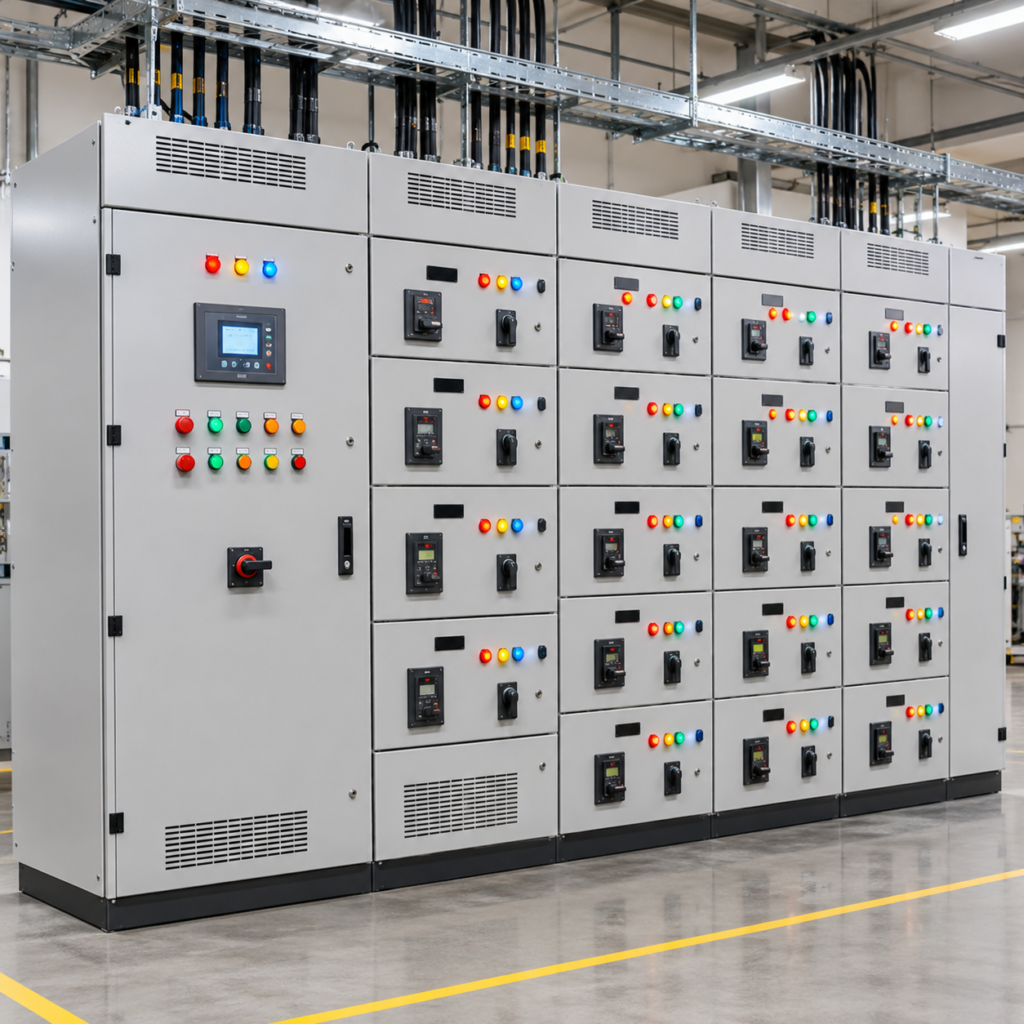
MCC Panel Supplier: Understanding Motor Control Centre Panels, Their Components, Working Principles, Industrial Applications and Benefits for Efficient Motor Management
MCC Panel Supplier: Understanding Motor Control Centre Panels and Their Industrial Applications
Electric motors play an important role in manufacturing plants, commercial facilities, water treatment plants and other industrial operations. They operate pumps, compressors, conveyors, fans and many other machines. Managing several motors from different locations can make operation and maintenance difficult. This is where Motor Control Centre (MCC) panels become useful.
Motor Control Centre panels provide a centralized arrangement for controlling, protecting and monitoring multiple electric motors. They help industrial facilities organize motor circuits, simplify operation and support reliable electrical distribution.
Choosing the right MCC panel supplier is important because panel design, component selection, protection systems and manufacturing quality directly affect plant operations. This article explains how MCC panels work, their components, applications and important factors to consider when selecting a supplier.
What Are Motor Control Centre Panels?
Motor Control Centre panels, commonly known as MCC panels, are electrical assemblies that contain multiple motor starter units, circuit breakers, protection devices and control components in a common enclosure.
They allow operators to manage several motors from one centralized location. Each motor can have its own starter and protection arrangement according to its electrical rating and operating requirements.
An MCC panel generally receives power from an upstream distribution system and distributes it to individual motor circuits. It also provides the necessary control and protection functions for connected equipment.
These panels are commonly installed in facilities where multiple motors operate as part of daily industrial processes.
How Does an MCC Panel Work?
An MCC panel works by receiving incoming electrical power and distributing it to individual motor circuits through separate starter compartments.
The general working process involves the following steps:
1. Incoming Power Supply: Electrical power enters the MCC panel through the incoming circuit breaker and main busbar arrangement.
2. Power Distribution: The busbars distribute electrical power to different motor starter compartments inside the panel.
3. Motor Starting: Each starter controls the starting and stopping of its connected motor. The starting method depends on the motor rating and application.
4. Motor Protection: Protective devices monitor motor circuits and help protect against overload, short circuits and earth faults.
5. Control and Monitoring: Control circuits handle start/stop commands, interlocking and status indication. Advanced configurations can also support digital monitoring and integration with plant automation systems.
This arrangement helps operators manage multiple motor circuits through a centralized electrical system.
Important Components of MCC Panels
The performance of motor control centre panels depends on the correct selection and arrangement of electrical components.
Some important components include:
1. Circuit Breakers
MCCBs and other suitable circuit breakers provide switching and protection for incoming and outgoing electrical circuits. Their ratings are selected according to the electrical design.
2. Motor Starters
Motor starters control the starting and stopping of electric motors. Common configurations include DOL, Star-Delta, Soft Starter and VFD-based arrangements.
3. Busbars
Copper or aluminium busbars distribute electrical power to different sections of the panel. Busbar sizing depends on the rated current and short-circuit requirements.
4. Contactors
Contactors are electrically operated switching devices used to control motor circuits. They receive control signals to connect or disconnect the motor supply.
5. Overload Relays
Overload relays help protect motors against excessive current over a period of time. They operate according to the selected protection settings.
6. Protection Relays
Protection relays monitor electrical conditions and help identify faults such as short circuits, earth faults and voltage-related abnormalities.
7. Control Devices
Push buttons, selector switches, indication lamps, control relays and terminal blocks support motor operation and control circuit connections.
Different Types of Motor Starting Arrangements
The motor starting method is an important part of MCC panel selection. Different applications require different starting arrangements.
DOL Starter: Direct-On-Line starting connects the motor directly to the supply. It is commonly used for smaller motors where the starting current is acceptable.
Star-Delta Starter: This arrangement starts the motor in star connection and changes to delta after the starting period. It helps reduce starting current compared with direct-on-line starting.
Soft Starter: A soft starter gradually increases the motor voltage during starting. It helps reduce mechanical stress and starting current.
VFD Starter: A Variable Frequency Drive controls motor speed by adjusting the supply frequency and voltage. It is useful in applications that require variable-speed operation.
The appropriate starter depends on motor specifications, load characteristics and operating requirements.
Applications of MCC Panels in Different Industries
MCC panels are used in many industries because electric motors are essential for operating industrial equipment.
Some common applications include:
Manufacturing Plants: MCC panels control motors used in production lines, conveyors, mixers, compressors and industrial machines.
Water Treatment Plants: They manage motors connected to pumps, filtration equipment and water circulation systems.
HVAC Systems: MCC panels can control motors used in ventilation fans, cooling towers, pumps and air handling equipment.
Chemical Industries: They support the operation of process pumps, mixers and other motor-driven machinery.
Food and Beverage Industries: Motor control systems operate conveyors, processing equipment, packaging machines and pumping systems.
Infrastructure Projects: MCC panels are used in utility buildings, industrial facilities and large commercial installations.
The panel configuration depends on the number of motors, operating environment and required protection level.
Benefits of Choosing the Right MCC Panel Supplier
Selecting an experienced MCC panel supplier can make a difference in the overall quality and suitability of an electrical installation.
Here are some important benefits to consider:
- Centralized Motor Control: Multiple motor circuits can be operated from a common panel arrangement.
- Organized Electrical Distribution: Separate starter compartments help organize individual motor circuits.
- Motor Protection: Suitable protective devices help reduce the risk of motor damage caused by electrical faults.
- Simplified Maintenance: Clearly arranged components and wiring make inspection and maintenance easier.
- Flexible Configuration: Different starter types can be selected according to individual motor requirements.
- Operational Monitoring: Indication and monitoring arrangements help operators understand motor status.
- Future Expansion: Modular panel designs can support additional motor circuits when properly planned.
These benefits depend on engineering quality, correct installation, testing and regular maintenance.
How to Select a Reliable MCC Panel Supplier
Before selecting a supplier, industrial buyers should evaluate more than the initial panel cost. The technical configuration and manufacturing process should match the project’s requirements.
Consider the following factors:
Technical Experience: Check whether the supplier understands motor control applications and different starter configurations.
Component Quality: Review the circuit breakers, contactors, relays, busbars and other components used in the panel.
Electrical Ratings: Confirm the required voltage, current rating, short-circuit withstand capacity and control voltage.
Protection Requirements: Select the appropriate IP rating according to the installation environment.
Applicable Standards: Review relevant standards such as IEC 61439, UL 845, NEMA ICS and applicable Indian standards according to the project requirements.
Testing and Inspection: Confirm that the panel undergoes appropriate electrical checks and routine testing before dispatch.
Technical Support: Consider the availability of documentation, engineering assistance and after-sales support.
A supplier that understands the complete application can help buyers select an MCC configuration that suits their plant requirements.
Burak Electric: MCC Panel Solutions for Industrial Applications
Burak Electric manufactures electrical control panels for industrial automation, power distribution and motor control applications. Its MCC panel solutions are configured according to motor requirements, electrical ratings and project specifications.
The company offers different motor starter arrangements, including DOL, Star-Delta, Soft Starter and VFD configurations. Panel construction can include copper or aluminium busbars, protective relays, circuit breakers and suitable control devices.
Burak Electric’s MCC panels are engineered with reference to IEC 61439, UL 845, NEMA ICS and IS 8623 requirements, depending on the applicable project specifications.
The company also considers factors such as enclosure protection, starter compartment arrangements, control voltage and monitoring requirements during panel engineering.
For businesses looking for MCC panels for manufacturing facilities, utilities, HVAC systems or water treatment plants, reviewing the technical requirements before selecting a panel is important.
Explore the available configurations here: Burak Electric MCC Panels.
Conclusion
Motor Control Centre panels are an important part of industrial electrical systems. They provide centralized motor control, organized power distribution and individual motor protection through separate starter arrangements.
Choosing the right MCC panel supplier requires careful evaluation of technical specifications, component quality, protection requirements, applicable standards and testing procedures.
A properly engineered motor control centre panel can support organized plant operations, easier maintenance and reliable motor management. Businesses should always select a configuration based on their actual electrical loads and industrial operating conditions.