
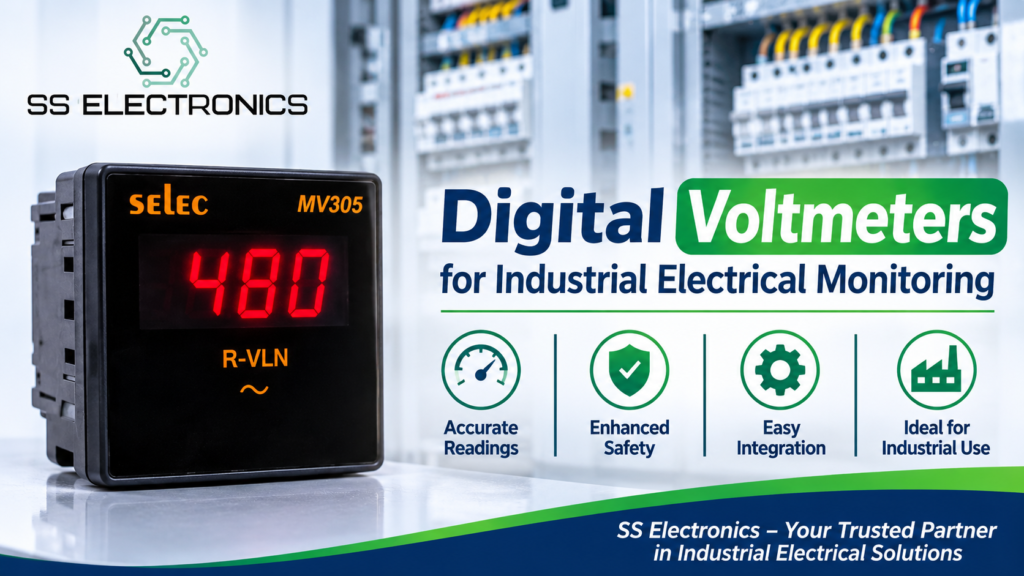
Digital Voltmeters: Applications, Benefits and Selection Guide for Industrial Use
Electrical monitoring is an important requirement in modern industrial and commercial environments. Manufacturing facilities, automation systems, electrical panels, and power distribution networks depend on suitable electrical conditions for their daily operations. Voltage is one of the essential parameters that needs to be monitored because variations in electrical supply can affect the performance of connected equipment. Digital voltmeters provide a convenient solution for measuring voltage and displaying readings in numerical form.
A digital voltmeter is an electronic measuring instrument used to determine the potential difference between two points in an electrical circuit. Unlike conventional analog instruments that use a moving pointer, digital meters display the measured value on an electronic screen. This makes voltage readings easier to observe and helps operators monitor electrical conditions during regular equipment operation.
Understanding the Working Principle of Digital Voltmeters
Digital voltmeters measure the electrical potential difference between two points and convert the input signal into a numerical reading. The electronic measurement circuit processes the input and presents the result on a digital display. Depending on the instrument’s design, it may support specific AC or DC voltage measurement requirements.
The availability of different measurement ranges makes these instruments suitable for various electrical applications. However, users must select a meter according to the voltage level and type of electrical supply involved. Checking the manufacturer’s specifications is important before installing or operating any measuring instrument.
Importance of Voltage Monitoring in Industrial Systems
Voltage monitoring helps maintenance teams observe the electrical supply conditions of machines and connected equipment. Industrial motors, electronic controllers, power supplies, and automation components are designed to operate under specified electrical conditions. Unsuitable voltage levels may affect their performance and require further investigation.
Digital voltage indication allows operators to check readings during routine inspections. If an unusual value appears, qualified technicians can investigate the electrical installation and perform additional testing where necessary. This information can support preventive maintenance activities and help organisations manage their electrical systems more systematically.
In electrical distribution panels, voltage measurement is useful for observing the supply at selected points. Panel-mounted instruments provide visible readings that operators can check without connecting a separate measuring device for every routine observation.
Common Applications of Digital Voltmeters
Digital voltmeters are used across several industries because voltage measurement is relevant to different types of electrical installations.
Manufacturing facilities: Production machinery and industrial equipment depend on suitable electrical supplies. Digital voltage indicators can help operators observe voltage conditions in appropriate control panels.
Electrical control panels: Panel manufacturers may incorporate digital voltmeters into electrical panels and distribution arrangements to provide convenient voltage indication.
Automation systems: Industrial automation involves controllers, sensors, power supplies, and electronic components. Voltage measurement can support commissioning and maintenance activities.
Power distribution: Commercial and industrial distribution boards may use voltage measuring instruments to help personnel observe electrical supply conditions.
Battery and DC applications: Suitable DC voltmeters can be used in battery systems, electronic circuits, and DC power supply arrangements.
Testing and maintenance: Electrical technicians may use digital voltage measuring instruments during inspection and troubleshooting activities, depending on the requirements of the task.
Businesses evaluating Digital Voltmeters should first identify their intended application. This helps them determine the appropriate measurement type, range, and installation arrangement.
Advantages of Using Digital Voltage Measuring Instruments
Digital voltmeters offer several practical benefits for electrical monitoring. Their numerical displays make readings easier to interpret, particularly in environments where operators need to observe measurements quickly.
Another advantage is their suitability for panel-based monitoring. When installed at an appropriate location, a digital meter can provide a visible indication of voltage during normal equipment operation. This can make routine observation more convenient for maintenance personnel.
Digital instruments are also available in different configurations to meet specific measurement and installation requirements. Buyers can evaluate suitable options based on electrical specifications, display requirements, and panel dimensions.
It is important to understand that a digital display alone does not guarantee measurement suitability. Accuracy, operating range, installation conditions, and manufacturer specifications must always be considered.
Factors to Consider Before Selecting a Digital Voltmeter
Selecting an appropriate instrument requires attention to both electrical and physical requirements.
1. Measurement type: Identify whether the application requires AC or DC voltage measurement. The selected instrument must support the intended input.
2. Voltage range: Check the expected voltage level and confirm that it falls within the instrument’s specified measurement range.
3. Accuracy: Review the stated measurement accuracy and determine whether it meets the requirements of the application.
4. Display readability: A clear display helps operators observe readings from their normal working position.
5. Mounting dimensions: For panel installations, check the cut-out dimensions, installation depth, and available space.
6. Environmental conditions: Consider temperature, dust, humidity, and electrical noise when evaluating product suitability.
7. Technical documentation: Review the datasheet, wiring diagram, and installation instructions before purchasing or installing the instrument.
Choosing the Right Supplier for Industrial Requirements
Selecting a suitable supplier is an important part of industrial procurement. Buyers may require individual instruments for maintenance or multiple units for OEM production, electrical panel manufacturing, and infrastructure projects.
A dependable supplier should provide relevant product information and help buyers understand available options. Product authenticity, stock availability, technical specifications, and communication support are useful factors to evaluate before placing an order.
SS Electronics offers Selec digital voltmeters as part of its industrial electrical and automation product range. These products are relevant to businesses looking for voltage measurement instruments for electrical panels and industrial applications.
When comparing Digital Voltmeters Suppliers, buyers should consider product suitability rather than focusing only on the purchase price. Sharing the required measurement type, voltage range, quantity, and mounting arrangement can help make product selection and procurement more organised.
Maintaining Reliable Electrical Measurement Practices
Correct installation and regular inspection are essential for dependable voltage monitoring. Digital voltmeters should be connected according to the manufacturer’s wiring instructions and operated within their specified limits.
Maintenance teams should observe voltage readings during routine inspections and investigate unusual variations through appropriate testing procedures. Electrical installation and troubleshooting should always be handled by qualified personnel following relevant safety practices.
By selecting suitable measuring instruments and following proper maintenance procedures, businesses can improve visibility into their electrical systems. Digital voltmeters remain useful components in industrial monitoring arrangements where clear voltage indication is required.
Frequently Asked Questions
1. What is a digital voltmeter?
A digital voltmeter is an electronic measuring instrument that measures the potential difference between two points in an electrical circuit and displays the result numerically.
2. What is the main purpose of a digital voltmeter?
Its main purpose is to measure voltage and provide a readable indication of electrical supply conditions in suitable circuits and installations.
3. What is the difference between AC and DC digital voltmeters?
An AC digital voltmeter measures alternating voltage, while a DC digital voltmeter measures direct voltage. The instrument must be selected according to the electrical system.
4. Where are digital voltmeters commonly used?
They are used in industrial control panels, electrical distribution boards, manufacturing facilities, automation systems, testing environments, and maintenance applications.
5. What should be checked before purchasing a digital voltmeter?
Buyers should review the measurement type, voltage range, accuracy, display readability, mounting dimensions, wiring requirements, and operating conditions.
6. Are digital voltmeters useful for industrial maintenance?
Yes. They help maintenance personnel observe voltage readings during inspections and identify unusual values that may require further investigation.
7. Who may require digital voltmeters in bulk?
OEMs, electrical panel manufacturers, industrial facilities, electrical contractors, system integrators, and infrastructure project teams may require digital voltmeters in bulk.