
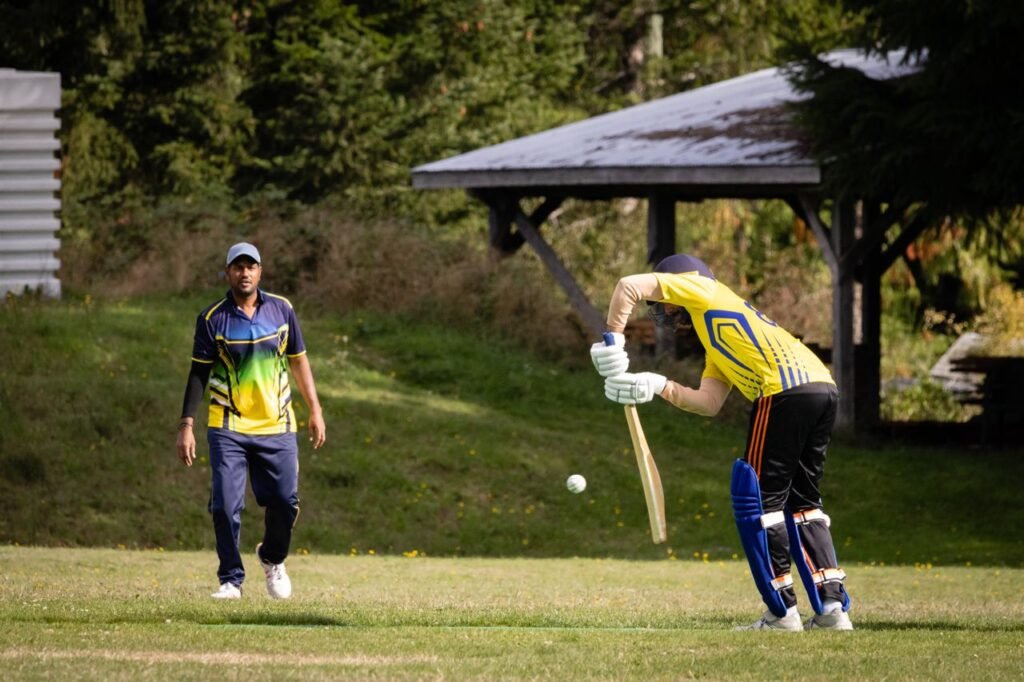
How to Tell When Your Cricket Bat Needs Replacing
A suitable bat is a significant investment for a cricketer. Whether you play casually or at a more competitive level, the right bat can really affect a player’s game. Like other sports equipment, bats deteriorate over time and can be affected by both use and storage. Furthermore, continual ball impact can also contribute to a bat’s deterioration.
It is important to recognise when your bat may need to be replaced so that you can continue to perform effectively and without any unwanted issues. Although certain faults can often be rectified, there may be situations when it is appropriate to replace your bat. Being aware of the various indicators of a bat’s deterioration can therefore be beneficial.
1. Deep and/or splitting cracks
Deep cracks or splits are a clear indicator that a bat may require replacement. While superficial imperfections are common (particularly if your bat is frequently used), deeper cracks can occur and can compromise a bat’s strength.
As a batsman, the edges, toe and blade are commonly impacted in a game. Therefore, it is important to assess these parts of your bat for cracks and whether these are increasing in size or occurring in more than one section. This may suggest that your bat is no longer performing as effectively as it should.
While superficial cracks can often be rectified either by using specific repair kits or by seeking professional bat repair services, significant structural issues may not prove cost-effective to fix. Typically, it would generally be more sensible and effective to replace your bat if the blade is severely splitting.
2. Alterations to performance
Cricket equipment can age like bats; a player may discover that they are not able to strike the ball as effectively or with as much power as previously, despite good contact being made.
This can result from the willow degrading or being damaged and/or from it no longer possessing its initial properties. Nonetheless, there are additional reasons why a player’s performance may alter. For example, a player’s technique and/or timing can also have an impact, as can the cricket ball’s state.
If you frequently sense that your bat is vibrating, does not respond as effectively and/or feels different when hitting the ball, then it may be necessary to analyse it thoroughly. These symptoms can be an indication of underlying or structural issues requiring attention.
3. Issues with the bat’s handle
A bat’s handle is key as it allows a player to effectively and comfortably manage their bat. It also helps to lessen the impact of a ball hitting the blade.
With age, a bat’s handle can become loose and/or crack. This can in turn affect both a player’s handling of and comfort with their bat.
Investigate whether the handle is moving separately to the blade. Furthermore, analyse the handle and ‘shoulder’ region of your bat for cracks. In some instances, slight handle issues can be resolved by a professional. Yet, more serious concerns may necessitate a bat’s replacement.
Failure to address a loose or unstable handle can lead to greater issues, particularly if your bat is frequently utilised.
4. Problems at the toe and along edges
Both the toe and edges of a bat are susceptible to damage. Throughout a game, these sections often come into contact with a variety of objects such as the ball, ground and other items.
Continual contact with both moist pitches and hard ground can lead to the bat’s toe cracking, bulging and/or splitting. Similarly, the edges can become indented, and willow may start to chip off.
While limited toe damage can typically be resolved by fitting toe protection and/or by seeking professional repair, more serious issues or those which impair the blade may indicate that a bat should be replaced.
Periodically analysing your bat’s toe and edges can enable you to detect concerns at an early stage.
5. Faults with the bat’s grip
Although a poorly performing grip does not automatically require someone to replace their entire bat, in most cases it can easily and economically be substituted.
However, if a bat’s grip continually becomes loose and/or tears, then this can adversely affect a player’s handling. Should the bat’s handle also be compromised, then the issue may be even more substantial than just one relating to the grip.
Frequently analyse your grip and assess whether it is deteriorating. Should it now feel unappealing or be hard to firmly grasp, then it may be appropriate to replace it. If issues persist despite fitting a new grip, further examination of your bat’s handle should be conducted.
Effectively managing a bat is facilitated by having a suitable grip. This, in turn, can enhance a player’s control.
6. The duration and frequency of bat use
There is no definitive timescale for how long a bat should last; some people will continue to utilise the same bat for many years. By contrast, others may need to replace theirs sooner due to high levels of both practice and competition participation.
Numerous variables can determine how long a bat lasts. These include the willow’s quality, how often it is used and the type of cricket ball, as well as an individual’s care regime.
Those who regularly practice will inevitably place greater strain upon their bats in comparison to those who play less frequently. If you frequently use your bat, then it is advisable to routinely examine it both before and after games.
Age can be one aspect to consider when deciding whether to replace a bat; it is also crucial to evaluate its general state and its ongoing effectiveness.
7. When repair is no longer cost-effective
While numerous bat faults can usually be rectified, sometimes it may become costly to continually carry out repairs. Particularly if there are multiple areas of concern with regard to a bat, expenses can accumulate. Moreover, if an individual’s bat possesses serious cracks, has an unstable handle and/or continues to experience issues despite undergoing repair, it could be more sensible to acquire a new bat.
In analysing the relative costs of repairing and replacing a bat, it is necessary to take into account its age, state and present performance. If your existing bat is no longer fulfilling your requirements efficiently, then a new one may represent greater value for money.
Conclusion
Being able to recognise when to replace your bat enables you to continue to play effectively and avoid any unanticipated difficulties. Deep cracks, faulty handles, eroded edges and performance alterations are all areas that should be analysed.
Prior to acquiring a new bat, establish whether existing faults can effectively and economically be rectified. Frequently analysing, suitably storing and undertaking fundamental care can also contribute to prolonging a bat’s life.
While age can be a consideration in determining when to replace a bat, it is in fact predominantly a bat’s state which is key. Obtaining a suitable new bat will allow you to both comfortably and confidently prepare for upcoming innings.