
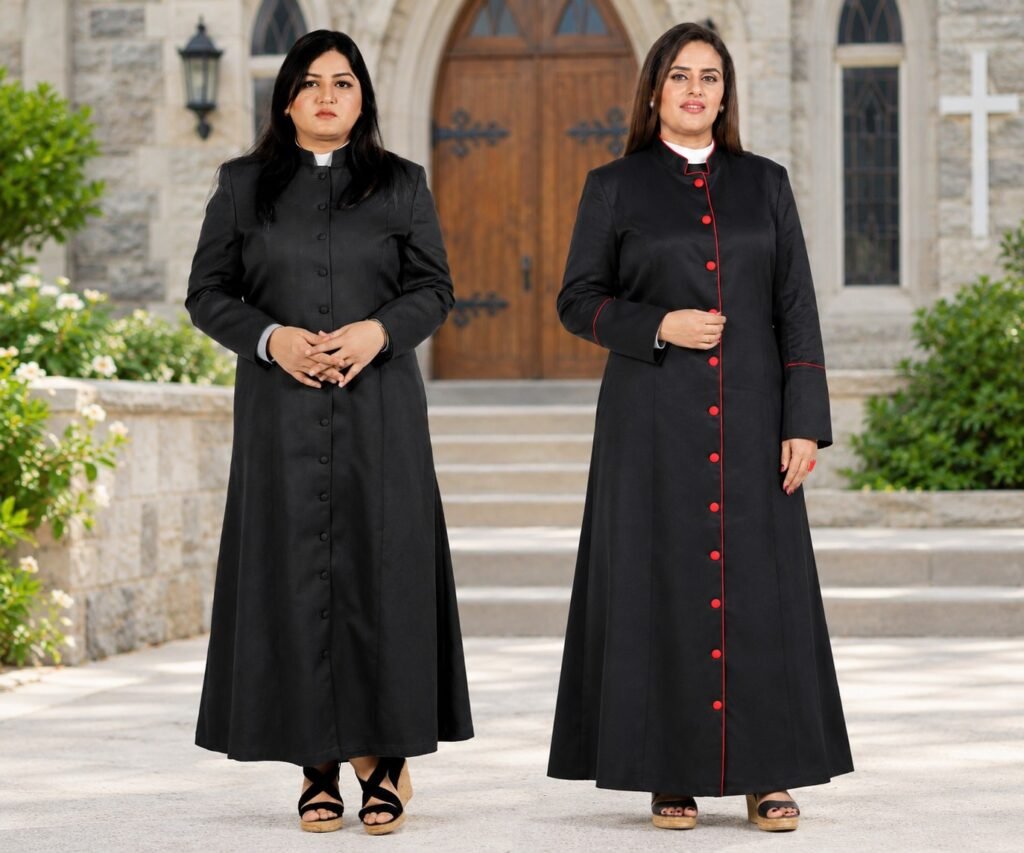
What Can Women Wear Under Ladies Clergy Robes?
A newly ordained pastor stands in the vestry fifteen minutes before her first Sunday leading worship, fully robed, and realizes she has no idea what she actually put on underneath it that morning will matter once the service gets moving. The robe is heavy. The sanctuary has no air conditioning. And if the collar opens even slightly during the sermon, she is not sure what will show. Nobody covered this in seminary.
It turns out the answer is simpler than it feels in that moment. Ladies clergy robes are designed to be worn over a fairly small, practical set of layers: a clerical shirt or bib that keeps the collar visible, something lightweight and modest underneath that, and shoes built to survive a long service on your feet. Understanding exactly what goes where, and why, turns that pre-service uncertainty into a five-minute decision.
What Layer Keeps the Clerical Collar Visible?
The collar is the one detail that has to show no matter what else is happening underneath the robe, and a few different garments can handle that job.
Options for keeping the collar in place:
- A short-sleeve or sleeveless tab-collar shirt: ensures the traditional clerical collar stays visible at the neckline if the robe opens or sits in a V-neck
- A neckband shirt: works the same way with a full band collar rather than a tab insert
- A clergy bib or rabat: a lighter, sleeveless front panel that shows the collar without the bulk of a full shirt underneath a robe
A bib or rabat is worth knowing about specifically because it solves a problem a full shirt does not. Since the robe already covers the arms and body, a full-sleeve shirt underneath can add unnecessary warmth and bulk. A bib does the same visible job at the collar with far less fabric layered underneath.
A quick way to decide between the two:
- Choose a shirt if you want the clerical collar fully self-contained and secure, regardless of how the robe opens or moves
- Choose a bib or rabat if your main priority is minimizing heat and bulk underneath a heavier robe
- Either option works for most occasions; the choice usually comes down to personal comfort rather than a strict rule
What Goes on Underneath the Shirt or Bib Itself?
Below the collar layer, the goal is modesty and comfort rather than formality, since none of it will actually be seen.
Common choices for the base layer:
- A comfortable, breathable slip
- A simple sheath dress
- A lightweight skirt-and-top combination
Any of these works well as long as it does not cling to the outer robe or create visible lines through the fabric. The point is to stay cool and modest without adding bulk the robe then has to accommodate.
Why Does Fabric Breathability Matter So Much Under a Robe?
Clergy robes are heavy and layered by design, and that construction traps heat during a long worship service far more than an ordinary outfit would. Choosing moisture-wicking, lightweight cotton or synthetic blends for everything worn underneath makes a real difference across an hour or more under bright lighting.
This matters even more for a service involving significant movement, processing, leading communion, and moving between parts of the sanctuary, since body heat builds quickly under layered fabric with limited airflow.
How Does Modern Female Clergy Attire Balance Comfort With Formality?
Thoughtfully chosen modern female clergy attire solves exactly this tension, structured enough to look appropriate the moment the outer robe comes off, comfortable enough to survive a long service underneath it. The shift away from heavy, full-coverage layers toward lighter shells, bibs, and slim-fitting shirts reflects decades of women in ministry figuring out, through experience, what genuinely works under a robe rather than what simply looks correct in a catalog photo.
This kind of thinking tends to favor form-fitting or slim layers specifically, since anything loose or bulky bunches up underneath a structured or flowing pulpit robe, creating visible lumps or shifting fabric exactly where a congregation can see it.
This is really where modern female clergy attire has improved most over the past few decades: recognizing that what works under a robe is a genuinely different design problem than what works as a standalone outfit.
What Should You Look for in Black Female Clergy Robes Specifically?
Black female clergy robes remain the most commonly worn option across denominations, and their darker fabric is more forgiving of what shows through from underneath than a lighter-colored robe would be. That said, the same principles apply regardless of color: a slim, breathable base layer prevents bunching, and a visible collar layer keeps the clerical identity clear even with the robe on.
Black female clergy robes paired with a sleeveless tab-collar shirt or bib underneath tend to offer the most comfortable combination for a longer service, since the robe’s own color hides most concerns about visible lines or slight shifting beneath it.
How Do Church Robes for Women Differ in What They Require Underneath?
Not every style of church robes for women fits the same way, which changes what works best underneath each one. A fuller, more traditional Geneva gown with wide sleeves allows more room for a slightly bulkier layer underneath, while a slimmer, more tailored pulpit robe calls for a closer-fitting base layer to avoid visible bunching at the shoulders or waist.
Checking the specific cut of your church robes for women before deciding what to wear underneath helps avoid the common mistake of layering the same way regardless of robe style, which tends to work for one cut and look slightly off under another.
A simple way to match layers to robe style:
- Fuller robes with wide sleeves: a slightly more structured shirt or a dress with a defined shape works well, since there’s extra room to absorb it
- Slim or tailored robes: a sleeveless bib or shell blouse paired with a simple slip keeps everything close to the body and avoids visible bunching
- Open-front or V-neck robes: prioritize whichever collar layer, shirt or bib, sits flattest against the chest so nothing shifts as the robe moves
What Works Best Underneath Female Preaching Robes During an Active Sermon?
Female preaching robes face more physical demands than a processional or purely ceremonial robe, since preaching involves raised arms, gesturing, and movement across the platform. What you wear underneath needs to move with you rather than restrict you.
A sleeveless or short-sleeve tab-collar shirt paired with a slim-fitting base layer gives you the most freedom of movement, since there is no risk of a long sleeve bunching up inside the robe’s own sleeve as you gesture. Comfortable, supportive shoes matter here too, ideally matched to the robe’s hem length, since active preaching often means more standing and movement than a seated or more formal liturgical role.
How Should Ladies Preaching Robes Handle Warmer Climates or Older Buildings?
Ladies preaching robes worn in a warm climate, or in an older church building without reliable air conditioning, put extra pressure on everything worn underneath to manage heat effectively. This is where moisture-wicking fabric stops being a nice-to-have and becomes genuinely necessary.
A lightweight cotton or performance-blend base layer, paired with a sleeveless bib rather than a full shirt, minimizes the heat trapped between your body and the robe itself. Ladies preaching robes in a lighter-weight fabric also help, though what goes underneath still matters just as much as the robe’s own construction.
What Do Women Pastor Robes Communicate When Paired With the Right Layers?
Women pastor robes, properly layered, communicate the same dignity and authority as a well-assembled men’s clerical outfit, without the discomfort of getting the underlying layers wrong. A visible collar, a smooth, non-bunching silhouette, and shoes that hold up through a long service all contribute to a presentation that reads as confident and put-together from the first pew to the last.
Women pastor robes paired thoughtfully with the right base layers let a minister focus entirely on leading worship rather than managing discomfort or worrying about what might be showing through the fabric.
Where Should You Shop for These Coordinated Pieces?
Finding the right combination- robe, collar shirt or bib, and base layer- is considerably easier when you shop through genuine clergy stores rather than piecing items together from unrelated retailers. A dedicated clergy store understands exactly which undergarments are built to pair with which robe styles, something a general clothing retailer simply has no reason to know.
eClergys offers women’s clergy shirts in tab, neckband, full, and Roman collar styles, across sizes 8 through 30, along with bib and rabat accessories designed specifically to layer under a robe without added bulk. Their shirts use a cotton-rich fabric with a tailored fit, so you can shop the shirt, bib, and robe from one consistent source rather than guessing whether pieces from different retailers will work together under the same outer layer.
FAQ: What to Wear Under Ladies Clergy Robes
What to wear under robes?
A lightweight clerical shirt or bib to keep the collar visible, paired with a breathable slip, dress, or skirt-and-top combination underneath.
Are you supposed to wear anything under a robe?
Yes, a modest base layer is expected, chosen for comfort and breathability since it won’t be visible once the robe is on.
What do female pastors wear?
Female pastors typically wear a tailored clergy shirt or bib under their robe, paired with comfortable, breathable clothing and supportive shoes.
What do priests wear under their cassocks?
Priests typically wear a clerical shirt or neckband collar underneath a cassock, along with regular clothing suited to comfort during a long service.
Final Thoughts
What goes under ladies clergy robes comes down to a short, practical list: a clerical shirt or bib to keep the collar visible, a lightweight, breathable base layer that won’t bunch or cling, and shoes built to survive a long service on your feet. Choosing slim, moisture-wicking fabric over anything bulky prevents the heat and visible lumps that come from layering the wrong way underneath a heavy robe. Matching your choice of layers to the specific cut of your robe, fuller and more traditional versus slim and tailored, makes the whole combination sit correctly rather than fighting the outer garment, and choosing a shirt or a simpler bib comes down mostly to how much warmth and bulk you want to manage underneath. None of this needs to feel complicated once you’ve tried a combination that works and stuck with it. Get these basics right once, and you can stop thinking about what’s underneath the robe and give your full attention to leading worship, service after service, regardless of the climate, the robe style, or how long you’ll be standing.