
How to Build Security Into Your Software Development Process
A software release can pass every functional test and still introduce a serious security problem. An exposed API key, a vulnerable dependency, or an overly permissive cloud configuration may go unnoticed until the application is already running in production.
For development teams, the challenge is not simply finding vulnerabilities. It is finding them early enough to fix them without disrupting delivery schedules. This requires a development process in which security decisions are part of everyday engineering work, rather than a separate task handled just before launch.
Two approaches often discussed in this context are DevSecOps and SecDevOps. Understanding how teams apply them can help organizations choose a security strategy that fits their applications, risk exposure, and delivery requirements.
Why Security Needs to Start Earlier
Traditional development workflows sometimes leave security testing until the end of a project. This can create expensive problems when a vulnerability requires changes to application architecture, authentication, or data handling.
Consider a team building an online payment platform. If security reviews happen only after development, the team might discover that sensitive operations lack appropriate access controls. Fixing the issue could require changes across multiple services.
Addressing these requirements during design gives developers a better chance of avoiding that rework.
Early security involvement also helps teams make informed decisions about third-party packages, data protection, cloud permissions, and application interfaces before those decisions become difficult to reverse.
Understanding DevSecOps and SecDevOps
Both approaches aim to make security an integral part of software delivery, but organizations may emphasize different priorities when using these terms.
DevSecOps in Practice
DevSecOps integrates security into an existing development and operations workflow. Developers, security specialists, and operations engineers share responsibility for identifying and managing risks.
Security tools can run automatically during code reviews and CI/CD pipeline execution. Static application security testing can identify certain coding weaknesses, dependency scanners can flag vulnerable libraries, and infrastructure-as-code tools can detect risky configurations.
For example, a developer submitting a change might receive an automated warning about a vulnerable package before the code is merged. The developer can investigate the finding while the change is still easy to modify.
The objective is to make secure development repeatable without relying entirely on manual reviews.
SecDevOps in Practice
SecDevOps is often used to describe a security-first approach in which security requirements shape development and operations decisions from the beginning.
A team building software for a regulated environment might start with threat modeling, data classification, identity requirements, and compliance obligations. These requirements then influence architecture, implementation, testing, and deployment.
The terminology is not universally standardized, and many organizations use SecDevOps and DevSecOps interchangeably. Teams should therefore evaluate actual processes and responsibilities rather than assume the label guarantees a particular level of security.
For a more detailed comparison, this guide to the two approaches to secure software delivery explains how their priorities can differ in practice.
Practical Ways to Strengthen Your Workflow
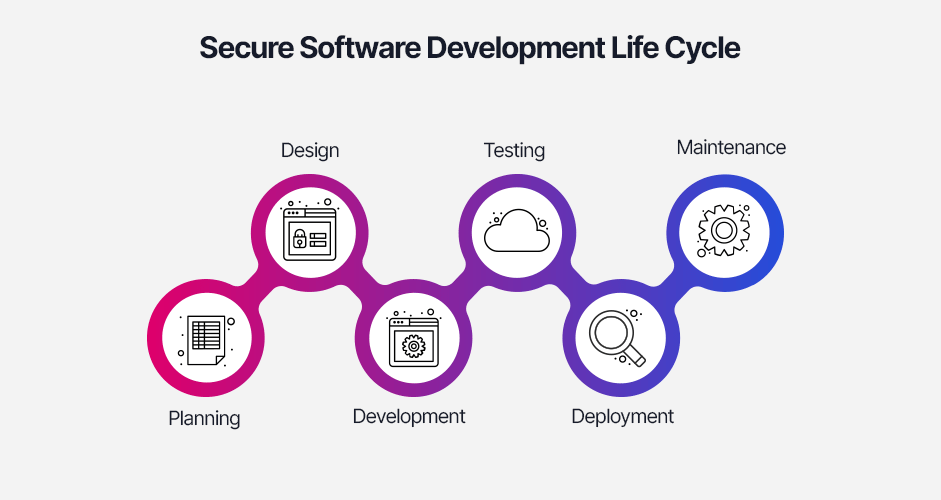
Regardless of which term an organization prefers, several practices can improve security throughout the software lifecycle.
1. Define Security Requirements Early
Before development begins, identify sensitive data, important assets, likely threats, and applicable compliance requirements. Threat modeling can help teams understand how attackers might misuse application features and which controls deserve attention.
Documenting these decisions gives developers clear requirements instead of leaving them to interpret security expectations independently.
2. Automate the Right Security Checks
Automation helps teams identify recurring problems without adding a manual review for every change.
Useful controls include source-code scanning, dependency analysis, secret detection, container scanning, and infrastructure configuration checks. Choose tools based on the application’s technology stack and risk profile.
Automation should also be configured carefully. Excessive false positives can cause alert fatigue, while poorly configured checks may miss important issues.
3. Establish Clear Remediation Rules
Finding vulnerabilities is only part of the process. Teams need agreed-upon rules for prioritizing findings, assigning ownership, and deciding when a release should be blocked.
A critical vulnerability affecting an exposed production service deserves different treatment from a low-risk issue in an isolated test environment. Context matters, and documented exceptions should have clear approval and review procedures.
4. Monitor Applications After Release
Security responsibilities continue after deployment. Production monitoring, access reviews, dependency updates, and incident response help organizations identify risks that emerge over time.
The National Institute of Standards and Technology provides a useful reference in its Secure Software Development Framework, which describes practices for reducing software vulnerabilities and addressing their root causes.
Measure Results, Not Just Tool Usage
Installing security tools does not automatically make a development process safer. Teams need to understand whether their controls are producing meaningful improvements.
Useful measures include the time taken to remediate high-risk vulnerabilities, the number of recurring security issues, and the frequency of security defects discovered after release.
These metrics should help teams improve their process, not encourage developers to hide findings or prioritize easy fixes over serious risks.
Regular discussions between development, operations, and security teams can reveal where controls create unnecessary friction and where additional protection is needed.
Build a Process That Lasts
Effective software security depends on consistent decisions, clear ownership, and controls that fit the way teams work. DevSecOps and SecDevOps offer useful ways to think about integrating security into development, but neither approach replaces sound engineering practices or ongoing risk management.
Organizations should start with their most important risks, introduce appropriate controls, and improve those controls as their applications evolve. When security becomes part of normal development work, teams can deliver changes with greater confidence while reducing avoidable vulnerabilities.