
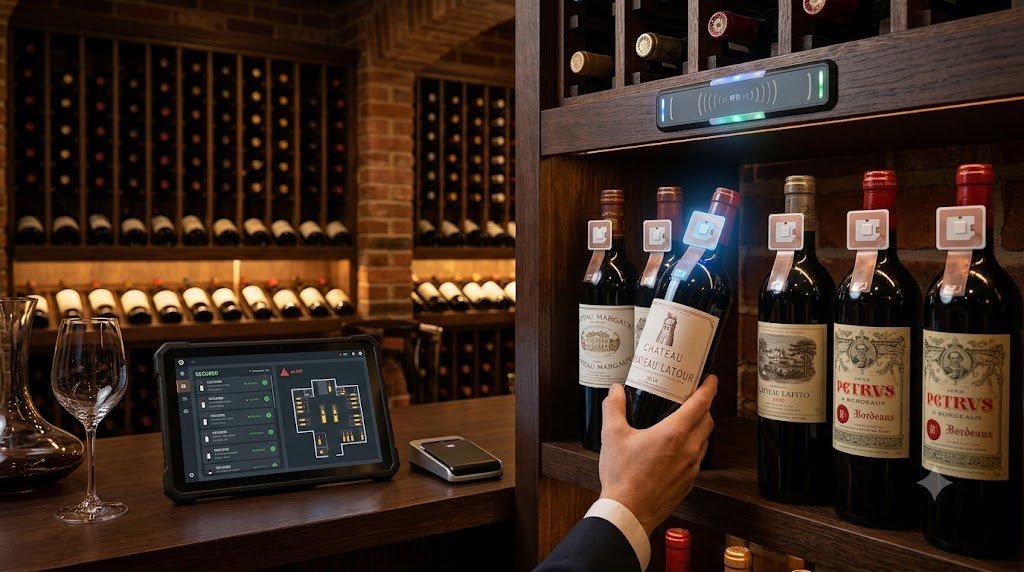
Protect Your Luxury Wine Collection with RFID Technology
A vintage wine bottle can be a treasure trove of age-old expertise on the art of making wine, how to store it, and its collector’s value. Unfortunately, there are counterfeiters out there too who fill genuine bottles, duplicate coveted labels, or tamper with the packaging to fool the customer. With the focus on provenance becoming key to collectors, wineries and technology providers are looking into Radio Frequency Identification (RFID) and tamper-evident security systems to ensure authentication of premium bottles.
These technologies, when used together, can enable collectors to confirm the identity of the bottle and determine if the bottle has had its seal changed. You can talk to an expert to learn more about the RFID warehouse system in detail.
The working principle of RFID Tamper-Evident Wine Seals
RFID relies on radio waves to pass information from an electronic tag to a reader that is compatible with the tag. The RFID tag in a luxury package can be used to hold a unique identifier that can be linked to a particular bottle or to a production batch or authenticated product record.
In the case of high-value wines, the tag can be incorporated into a closure, tamper-evident cord, capsule, or security label. A few creative designs include breakable conductive pathways, which fail when the seal is opened or damaged.
If the circuit is opened, tampering may be noted. The collectors can check the tag using a compatible smartphone, an NFC-enabled device, or a dedicated RFID reader, depending on the technology.
A possible remedy might be to:
- Unique RFID identification: Connects the physical bottle to a digital record.
- Tamper-evident circuitry: Alerts to some tampering or removal of the original closure.
- Authentication software: Verifies the identifier with valid product data.
- Digital provenance records: Record information about production, distribution, ownership, or storage.
Some RFID tags are not sensitive to opening, and some cell phones can’t read all RFID frequencies. The success of the verification will rely on the design of the tag, the compatibility of the reader, and the software.
Luxury Wineries Need Anti-Counterfeiting Tech
Wine counterfeiting can lead to loss of trust in collectors, taint high-quality brands, and even cause confusion about what is inside a wine. If the bottle’s provenance records are not complete, it can be difficult to tell if it’s an actual bottle, even if the bottle claims to be authentic.
There are a number of potential benefits to tamper-evident RFID systems.
- Stronger bottle-level identification
A unique identifier will make each bottle identifiable, making it more difficult for counterfeiters to use copied labels or packaging.
- Signs of potential interference.
If the tamper circuit is broken, it may mean that the lid or security seal is broken. This is especially useful in the cases of resale auctions or private collectors.
- Improved supply-chain visibility
Digital records can be utilized by authorized participants to record the journey of a bottle from winery to distributor, retailer, and collector.
- Enhanced transparency for buyers
Collectors can verify product information prior to purchase, giving them a better idea of the authenticity and provenance of the item RFID solutions for retailers.
But if a bottle has a good seal, it doesn’t mean that it is a genuine wine. Advanced schemes can include cloned tags, fake closures, or tampered records. RFID is best used in conjunction with visual checks and verifiable documentation.
Tips for Rare Wine Collectors
Technology could work in tandem with existing purchasing methods to improve authentication.
- Purchase from reputable dealers: opt for trusted dealers, auction houses, or authorized sellers with proven experience.
- Check closure: Check for worn capsules, loose seals, strange glue marks, or irregularities around the stopper.
- Check the RFID record: If the winery has a recommended application or verification system, check the information on the RFID against the information written on the bottle.
- Inquire about provenance documents: Look through purchase invoices, ownership records, storage history, and authentication history.
- Watch for prices that are too low: If the price is close to that of similarly priced items on the market, but a bit lower, it might be worth checking out further.
- Keep the original packaging: Do not open security seals prior to authenticating.
If a tamper alert is seen, do not presume that the product is no longer safe or that the bottle is broken, but contact the winery or an authorized authentication specialist to determine the problem. A damaged circuit may signify interference, but it doesn’t necessarily mean that there is fraud.
The future of wine authentication
With today’s growing digitalization of luxury collectibles, RFID and tamper-evident packaging are promising solutions for increasing trust in the fine wine market. These systems can be used to make it harder to counterfeit bottles and easier to trace the origins of a bottle if needed.
Finally, it’s not just about a high-tech tag to protect a rare vintage. Smart digital records, judicious physical seals, trustworthy vendors, and clear ownership documents are all crucial to reliable authentication. These protections can work hand-in-hand to help collectors preserve the integrity and value of their most cherished collections.