
Can You Wear a Thawb Dubai Locals Would Approve Of?
Picture yourself stepping out in the warm Gulf air. Everywhere you look, men glide by in long white robes that seem to float. You think, “That looks cool and comfortable. Could I wear one too?” It is a fair question, and people ask it on forums every week. The good news is that a thawb Dubai style robe is welcome when a visitor wears it with care. The key word is care. This guide shows you when it feels right, when to skip it, how to get the fit right, and how to carry yourself so that people smile instead of frown.
The Short Answer First
Yes, a visitor can wear one. No law stops you, and nobody expects a guest to dress this way either. Many locals say they feel pleased when a visitor shows interest in their dress, as long as the person is polite and neat. The trouble starts only when the robe is treated like a joke or a party costume.
So think of it as a gift you are borrowing. Handle it gently, and it will serve you well.
What Local Men Actually Wear
Before you pick one, it helps to know what you are looking at. The long robe has many names, and they can feel confusing at first.
A Quick Name Check
Thawb, thobe, and kandura all point to the same kind of long robe. In the Emirates, people usually say kandura. In other Gulf lands, thawb or thobe is more common. Some folks also say dishdasha. The cut changes a little from place to place, but the idea stays the same.
The Emirati Neckline
The Emirati style has no stiff collar. The neck is simple and clean, and the body is cut close through the shoulders and chest. That fitted look is why it appears so sleek in photos. Other Gulf styles, such as Saudi and Qatari, use firmer collars and a looser or sharper cut.
Times When It Feels Right
Some moments welcome a robe without any fuss.
Desert Trips and Camp Nights
When you ride across the dunes or sit by a fire, a robe is useful and fits the mood. It keeps sand off your legs and lets air move. Guides and hosts often smile when a guest dresses for the setting.
Cultural Events and Festivals
Heritage days, museum nights, and local festivals are friendly places to wear one. You will see many men in robes, so you will blend in without drawing stares.
Family Dinners and Invitations
If a local friend invites you home, wearing a clean robe can show thanks. Ask your host first if you are unsure. A short question shows good manners and often gets a warm answer.
Times to Leave It in the Closet
A good rule is to ask whether the setting matches the meaning of the garment.
Nightlife and Drinking
The robe stands for calm, faith, and family in many homes. Wearing it to a loud party or a place that serves alcohol can send the wrong message. Save it for settings that match its spirit.
Silly Photos and Jokes
A funny pose or a mocking voice turns respect into teasing. Take your photos with a straight, friendly face. If people ask to take a picture with you, say yes kindly.
A Simple Test
Before you step out, ask yourself one thing: would a local elder smile at this? If the answer is yes, you are on the right path.
Putting a Full Look Together
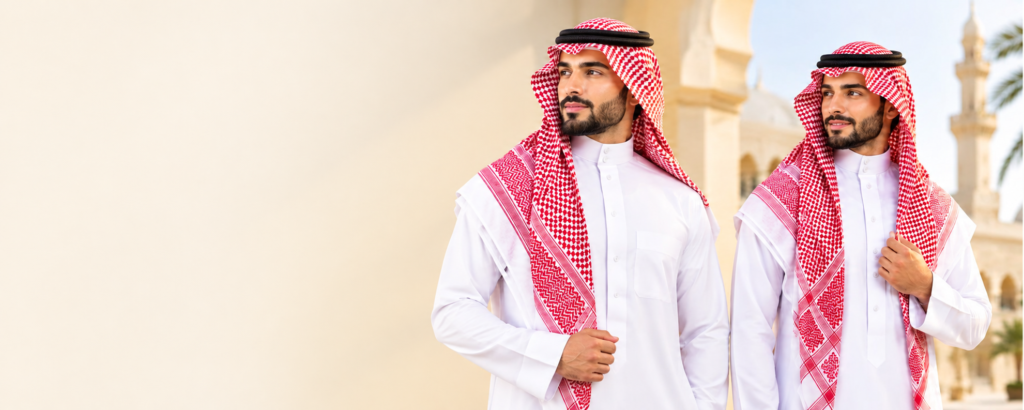
A robe rarely stands alone. When you add other arab clothing traditional pieces, such as a headcloth or a light cloak, the whole picture comes alive. Each piece has a time and place, so add them slowly. Start with the robe, learn how it feels, and then try one extra piece at a time. A calm, neat outfit always beats a crowded one.
The Headcloth
A white or checked headcloth is the most common partner. Fold it into a triangle and let it rest on your head. A thin cap beneath helps it grip. If it feels like too much, skip it. The robe alone looks fine.
The Cloak
A bisht is a light cloak worn over the robe for weddings and formal days. Many visitors worry this one is too bold. Their worry is fair. Unless you attend a special event and know the dress rules, leave the cloak for locals.
The Shoes
Simple sandals are the classic pick. Clean leather shoes work too. Avoid anything loud or sporty, since it pulls the eye away from the robe.
Getting the Fit Right
A robe that fits well looks respectful. A robe that sags or drags looks careless.
Find Your Number
Sizes often run by number. Ethobe.com offers sizes 52 through 62, with a guide that shows three quick measurements. Take them with a soft tape while you stand straight, and write them down.
Check the Length
The hem should fall near your ankle. If it hits the floor, it will pick up dust and fray. If it stops at your calf, it looks unfinished.
Check the Sleeves
The cuffs should end at your wrist bone. If they slide over your hands, they will get in the way when you eat or drive.
When Standard Sizes Feel Off
Some men are very tall or broad. For them, a made-to-measure robe is a smart move. When choosing arab clothing traditional styles, Ethobe.com takes custom requests, allowing a tailor to match your measurements, fabric preferences, and even small stitching details.
Staying Cool in the Heat
Gulf summers are strong. Your robe should help you, not hurt you.
Pick Light Cotton
Soft cotton lets air pass through, so you feel less sticky. White and cream reflect the sun, which keeps you cooler than dark colors do. Ethobe.com also lists summer thobes made for warm days.
Plan for Cold Rooms
Malls and hotels often run strong air conditioning. A thin layer underneath, or a light jacket in your bag, keeps you from catching a chill when you step inside.
Sweat Smart
Wear a thin cotton undershirt. It soaks up sweat and keeps your robe fresh through a long day.
Manners While Wearing It
The robe sets a tone, so your behavior should match.
Walk With Humility
Keep your voice calm. Greet people with a friendly smile. A soft “as-salamu alaykum” often brings a kind reply, especially from older men.
Ask Before You Snap
If you want a photo of someone, ask first. Never photograph people in private spaces or families without permission.
Listen and Learn
If a local corrects you, take it gently. A friendly tip about how to fold your headcloth is a chance to learn, not to argue.
Travel Tips for the Robe Itself
A robe packed carelessly arrives wrinkled. A few small habits help.
Fold Loosely
Lay the robe flat, bring the sleeves to the middle, and fold it in thirds. Slide a sheet of tissue between the layers to soften the creases.
Hang It First
When you reach your room, hang the robe in the bathroom while you shower. The steam relaxes light wrinkles. A quick press with a warm iron handles the rest.
A Calm Way to Begin
Start with one plain white robe in your size. Wear it at a cultural event or a quiet dinner first. Pay attention to how people respond, and let their smiles guide you. Soon the robe will feel like a natural part of your trip.
A thawb is more than fabric. It carries history, faith, and family. When you wear it with a humble heart, a neat fit, and kind manners, it becomes a bridge between you and the people around you.
Frequently Asked Questions
Can tourists wear a kandura in Dubai?
Yes, visitors can wear one. Locals often welcome it when it is worn neatly and respectfully. Skip it for loud parties or places that serve alcohol, and keep your manners calm and polite.
Is a thawb the same as a kandura?
They describe the same long robe. According to ethobe.com, a thobe, also called a thawb or kandura, is the traditional long robe worn by men across the Gulf and Arab world. The Emirati version is called the kandura and has no collar.
What is the difference between Emirati and Saudi styles?
The Emirati kandura is collarless and fitted through the shoulders and chest. The Saudi thobe has a classic collar and a looser silhouette. Ethobe.com also carries Kuwaiti and Qatari cuts, each with its own collar and fit.
What size should I pick?
Ethobe.com offers sizes 52 through 62. Use the size guide on the site, which needs only three quick measurements, to find the closest match before you decide.
Can I get a thawb made to my measurements?
Yes. Ethobe.com accepts custom requests where tailors make a thobe or bisht to your measurements. You tell them the cut, the fabric, and the color, share your size, and they confirm the details by email before stitching begins.