
EMI Testing Procedure: A Complete Guide to Electromagnetic Interference Testing
Introduction
Electromagnetic interference (EMI) testing is an essential part of product development and regulatory compliance. Modern electronic devices operate in environments filled with electromagnetic signals generated by wireless networks, electrical equipment, motors, power supplies, and other electronic systems. These signals can interfere with the normal operation of electronic products, potentially causing performance issues, communication failures, or safety concerns.
The EMI testing procedure helps manufacturers identify, measure, and control unwanted electromagnetic emissions from their products. By conducting appropriate testing, businesses can verify that their equipment meets applicable regulatory requirements and operates reliably without creating excessive interference. Whether developing consumer electronics, industrial machinery, medical equipment, or wireless devices, understanding the EMI testing process is important for bringing compliant products to market.
What Is EMI Testing?
EMI testing is the process of measuring electromagnetic energy unintentionally generated by electronic equipment. Its primary purpose is to determine whether a device produces electromagnetic emissions that could disrupt other nearby electronic systems.
Testing generally evaluates two major emission categories:
- Conducted emissions: Unwanted electromagnetic noise transmitted through power cables, signal lines, or other electrical connections.
- Radiated emissions: Electromagnetic energy released into the surrounding environment through cables, circuit boards, enclosures, and other components.
The results are compared against applicable regulatory limits and technical standards. These requirements depend on the product category, intended market, operating frequency, and applicable regulations.
Why Is the EMI Testing Procedure Important?
Following a structured EMI testing procedure helps manufacturers identify potential interference problems before products reach customers.
Key benefits include:
Regulatory compliance: EMI testing helps demonstrate that electronic equipment satisfies relevant requirements, such as FCC Part 15 in the United States and applicable European EMC standards.
Product reliability: Excessive electromagnetic emissions can affect nearby equipment. Identifying these issues helps improve overall system compatibility.
Reduced development costs: Detecting interference problems during product development is generally more cost-effective than redesigning products after manufacturing or failing certification testing.
Improved customer confidence: Products that undergo appropriate compliance testing are better positioned for reliable operation in real-world environments.
Faster market access: Early testing helps manufacturers identify compliance gaps and avoid unnecessary delays during product approval.
Step-by-Step EMI Testing Procedure
A professional EMI testing procedure involves several stages, from understanding product requirements to evaluating test results.
1. Identify the Applicable Testing Standards
The first step is determining which EMI standards and regulatory requirements apply to the product.
Different electronic products may fall under different regulations depending on their design, function, and intended market.
Common examples include:
- FCC Part 15 for applicable electronic devices in the United States.
- CISPR 32 for multimedia equipment emissions.
- CISPR 11 for industrial, scientific, and medical equipment.
- EN 55032 for multimedia equipment in relevant European compliance frameworks.
- Applicable automotive and industry-specific EMC standards.
Selecting the correct standard ensures that the testing process uses appropriate measurement methods, frequency ranges, and emission limits.
2. Prepare the Equipment Under Test (EUT)
The next stage involves preparing the equipment under test (EUT). The device must be configured to represent its normal operating conditions.
Testing personnel should identify the product’s power requirements, operating modes, connected accessories, communication interfaces, and external cables.
The equipment should operate in a representative configuration that produces its typical or relevant worst-case emissions.
Proper preparation is important because incorrect operating conditions can lead to inaccurate or incomplete test results.
3. Select the Appropriate EMI Testing Environment
EMI testing is performed in controlled environments designed to reduce interference from external electromagnetic sources.
Common testing environments include:
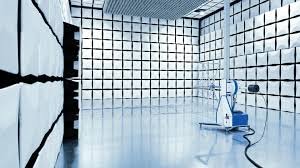
- Semi-anechoic chambers: Specially designed rooms used primarily for radiated emissions measurements.
- Fully anechoic chambers: Environments with electromagnetic absorbing materials designed to minimise reflections.
- Open Area Test Sites (OATS): Outdoor measurement areas used for radiated emissions testing under controlled conditions.
The testing environment must satisfy the requirements of the relevant standard and measurement method.
4. Conduct Conducted Emissions Testing
Conducted emissions testing measures unwanted electrical noise travelling through power supply connections.
A Line Impedance Stabilization Network (LISN), also called an artificial mains network in some standards, is commonly used to provide a defined measurement impedance and isolate external electrical noise.
The typical procedure involves:
- Connecting the EUT to the appropriate power supply and LISN.
- Connecting the measurement receiver or EMI analyser.
- Operating the device in its required test modes.
- Scanning the specified frequency range.
- Recording emissions and comparing results against applicable limits.
This process helps identify excessive electrical noise that could travel through shared power networks and affect connected equipment.
5. Perform Radiated Emissions Testing
Radiated emissions testing evaluates electromagnetic energy released by the device into its surrounding environment.
The EUT is positioned in a controlled test environment, usually on a non-conductive support table or turntable, depending on the applicable test requirements.
A calibrated antenna captures electromagnetic emissions across the required frequency range.
During testing, technicians may:
- Rotate the equipment to identify its strongest emission levels.
- Adjust antenna height and polarisation.
- Evaluate different operating modes.
- Identify significant emission frequencies.
- Record measurement results using an EMI receiver.
The measured emissions are then compared with the applicable regulatory limits.
6. Analyse and Evaluate Test Results
After measurements are completed, engineers examine the collected data to determine whether the product meets the required emission limits.
The analysis considers factors such as frequency, measured amplitude, detector type, measurement bandwidth, and applicable correction factors.
Common detector types include:
- Peak detector: Identifies maximum signal levels.
- Quasi-peak detector: Applies frequency-dependent weighting to measured emissions.
- Average detector: Measures average signal levels over a specified period.
If emissions exceed the permitted limits, engineers investigate the source and determine appropriate corrective measures.
7. Identify and Resolve EMI Problems
When a product fails EMI testing, manufacturers must identify the source of unwanted electromagnetic noise.
Common corrective measures include improving PCB layout, adding appropriate filtering components, using shielding, improving grounding, shortening cable lengths, and controlling switching noise.
After modifications are implemented, the affected measurements should be repeated to verify that the changes have improved performance.
8. Prepare the EMI Test Report
The final stage involves preparing a comprehensive EMI test report.
A professional report generally includes:
- Product identification and description.
- Manufacturer information.
- Applicable testing standards.
- Equipment under test configuration.
- Testing environment and equipment details.
- Conducted and radiated emissions measurements.
- Test conditions and operating modes.
- Measurement results and limit comparisons.
- Photographs of the test setup.
- Compliance status and relevant observations.
Accurate documentation supports regulatory submissions, engineering decisions, and future compliance activities.
Common Equipment Used for EMI Testing
Professional laboratories use specialised instruments to perform accurate electromagnetic measurements.
Common equipment includes:
- EMI receivers and spectrum analysers.
- Line Impedance Stabilization Networks (LISNs).
- Calibrated measurement antennas.
- RF current probes.
- Oscilloscopes.
- RF cables and attenuators.
- Signal generators and measurement accessories.
- EMI shielding and absorption materials.
All relevant measurement equipment should have appropriate calibration and be suitable for the required test methods.
Choosing a Professional EMI Testing Laboratory
Selecting an experienced EMI testing laboratory can simplify the compliance process. Manufacturers should consider laboratory accreditation, technical expertise, available testing facilities, equipment calibration, and familiarity with relevant international standards.
A qualified laboratory can help identify potential compliance issues, recommend corrective actions, perform pre-compliance assessments, and provide detailed test documentation.
Working with experienced testing professionals early in product development can reduce the risk of costly redesigns and regulatory delays.
Conclusion
The EMI testing procedure is a critical step in ensuring electronic products meet electromagnetic emission requirements and operate reliably in modern electrical environments. From identifying applicable standards and preparing the equipment under test to conducting conducted and radiated emissions measurements, every stage contributes to accurate compliance evaluation.
By following a structured testing process and addressing interference problems early, manufacturers can improve product reliability, reduce development costs, and support successful market entry. Partnering with a qualified EMI testing laboratory provides the technical expertise and measurement capabilities needed to achieve dependable compliance results.