
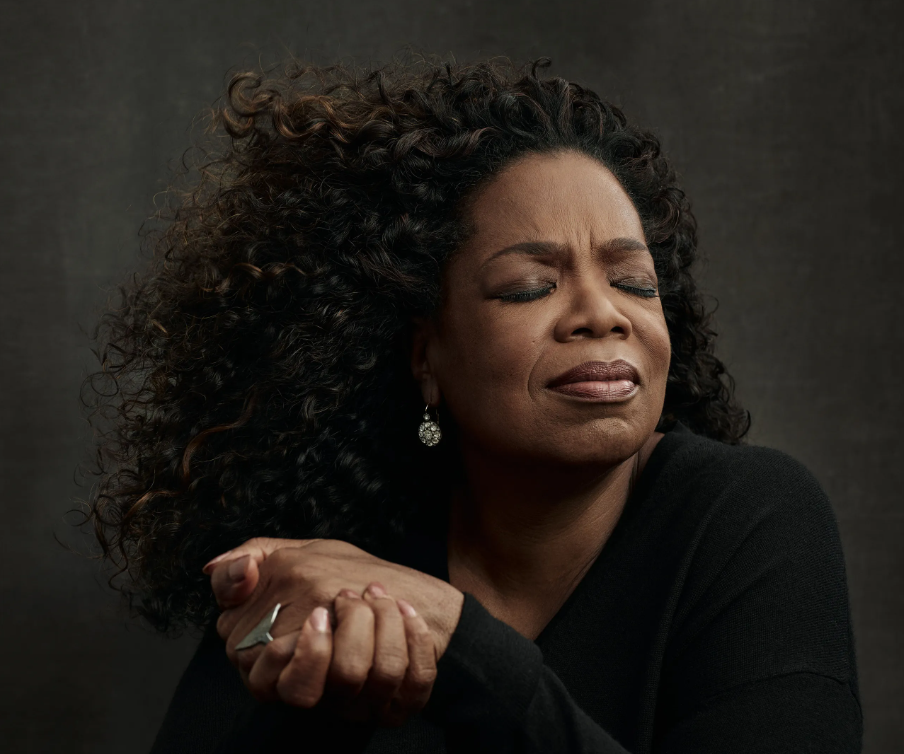
Oprah Winfrey: Breaking Barriers and Building Dreams
Oprah Winfrey’s life is a powerful story of breaking barriers and building dreams. Born into poverty in rural Mississippi, she faced circumstances that could have limited her future, yet she transformed hardship into purpose and opportunity. Through talent, persistence, and an extraordinary ability to connect with people, she became one of the most influential media leaders in the world. Her journey shows that barriers are real, but they do not have to be permanent. With courage and vision, a person can create a life that exceeds the limits imposed by their beginnings Click here.
A Childhood of Challenge
Oprah Gail Winfrey was born on January 29, 1954, in Kosciusko, Mississippi. Her early life was shaped by poverty, family instability, and the social inequalities of the American South. She spent part of her childhood living with her grandmother, who taught her to read and encouraged her to speak in front of others. Even in difficult conditions, Oprah developed a love for storytelling and public speaking. These early experiences planted the seeds of a career that would eventually reach millions of people.
Her childhood was not easy. She later moved to Milwaukee to live with her mother, where life remained unstable and challenging. As a teenager, she was sent to Nashville to live with her father, Vernon Winfrey, whose discipline and support helped her focus on education. Under his guidance, Oprah became an honors student and developed her skills in public speaking. She joined her school speech team and began to see communication as more than a talent; it became a path toward a better future.
Education became one of the most important forces in Oprah’s early life. While still in high school, she worked at a local radio station and later attended Tennessee State University, where she studied speech and performing arts. In 1972, she was named Miss Black Tennessee, an achievement that helped open doors in local media. These opportunities were small compared with the fame she would later achieve, but they were essential first steps. They showed her that dreams could become real when preparation met opportunity.
Breaking Into Television
Oprah entered broadcasting at a young age. At nineteen, she became the youngest person and the first African American woman to anchor the news at Nashville’s WTVF-TV. This was a significant achievement in an industry where Black women faced limited opportunities and strong barriers to advancement. Her success did not come easily, but it demonstrated that talent and determination could challenge expectations.
Although she began in news, Oprah soon discovered that traditional reporting did not fully match her strengths. She was naturally warm, expressive, and emotionally intuitive. In Baltimore, she moved from news anchoring to co-hosting the local talk show People Are Talking. This change allowed her to connect with guests and audiences in a more personal way. Instead of simply reporting events, she could listen to people’s stories and respond with empathy.
In 1984, Oprah moved to Chicago to host AM Chicago, a struggling morning program. Within a short time, her presence transformed the show. Its ratings rose sharply, and it became the leading local talk show in the city. In 1985, the program was renamed The Oprah Winfrey Show. The following year, it entered national syndication, marking the beginning of a new chapter in her career and in American television.
A New Kind of Talk Show
The Oprah Winfrey Show revolutionized the talk show genre. It became the highest-rated talk show in the United States and earned multiple Emmy Awards. Oprah’s honest and engaging personality was central to its success. She did not approach interviews as performances; she treated them as human conversations. Her willingness to listen, ask thoughtful questions, and respond with compassion made viewers feel understood.
The show addressed a wide range of subjects, including family, relationships, health, racism, abuse, spirituality, and personal growth. Oprah used her platform to discuss issues that many people avoided. By bringing difficult topics into public conversation, she helped reduce stigma and encouraged audiences to reflect on their own lives. Her program became a space where personal stories could be shared with dignity and respect.
One of Oprah’s most influential projects was Oprah’s Book Club, launched in 1996. The club encouraged millions of viewers to read and discuss books, helping authors reach larger audiences and making literature a central part of popular culture. Through this initiative, Oprah showed that television could do more than entertain. It could inspire learning, create community, and encourage people to see the world through new perspectives.
Building an Independent Empire
Oprah’s greatest professional breakthrough was not only becoming a successful host, but gaining ownership of her work. In 1988, she established Harpo Studios, becoming one of the few women in the American entertainment industry to own her own studio. This gave her creative and financial control over The Oprah Winfrey Show and allowed her to build a media business on her own terms. Her decision to become a producer and owner changed the direction of her career.
She expanded her influence into film, publishing, and digital media. She launched O, The Oprah Magazine in 2000, creating a publication centered on personal growth, culture, wellness, and inspiration. She also co-founded Oxygen Media, a television network designed for women. These ventures demonstrated that Oprah understood media as a tool for both business and social influence. She was not content to remain in front of the camera; she wanted to shape the stories and opportunities behind it.
In 2011, Oprah launched the Oprah Winfrey Network, known as OWN, in partnership with Discovery Communications. OWN reflected her vision of creating programming that focused on personal stories, inspiration, relationships, and social issues. Even after The Oprah Winfrey Show ended in May 2011, Oprah continued to build media platforms that gave voice to new stories and new audiences. Her ability to reinvent herself showed that success is not a single achievement, but an ongoing process of growth Read more.
Using Fame for Change
Oprah’s influence became especially powerful because she used her success to advocate for others. She became a strong voice against child abuse and encouraged public awareness of issues affecting vulnerable children. Her willingness to speak openly about personal pain helped others feel less alone and gave courage to people who had suffered in silence. Her advocacy showed that breaking barriers is not only about personal achievement; it is also about making space for others to be heard.
Education became one of her most important causes. In 2007, she opened the Oprah Winfrey Leadership Academy for Girls in South Africa, a school designed to provide educational opportunities for academically talented girls from disadvantaged backgrounds. She contributed more than $40 million through the Oprah Winfrey Leadership Academy Foundation to help create the school. The academy reflected her belief that education can transform not only individual lives, but entire communities.
Her charitable work also included the Oprah Winfrey Foundation and Oprah’s Angel Network. Through these organizations, she supported education, empowerment, and humanitarian projects in the United States and around the world. Oprah’s Angel Network raised more than $80 million, with all donations funding charitable projects and grants. Her philanthropy demonstrated that success becomes more meaningful when it creates opportunities for others.
A Legacy of Possibility
Oprah Winfrey’s legacy is built on more than awards, wealth, or television ratings. It is built on the barriers she broke and the dreams she helped others imagine. As a Black woman in a media industry that often excluded people like her, she created a place for herself through talent, persistence, and ownership. Her career challenged assumptions about who could lead, who could succeed, and whose voice deserved to be heard.
Her influence continues through the people she inspired. Many viewers saw in Oprah a reflection of their own struggles and hopes. Her story encouraged them to believe that their past did not have to determine their future. By speaking honestly about hardship, ambition, and healing, she made success feel more possible for people who had been told that their dreams were unrealistic.
Oprah’s life teaches that barriers can be challenged through preparation, courage, and persistence. She did not wait for perfect conditions or easy opportunities. She built her skills, accepted challenges, learned from setbacks, and continued to move forward. Her journey reminds us that dreams require action, and that action becomes powerful when it is guided by purpose.
The Dream Continues
Today, Oprah Winfrey remains a global media leader, producer, philanthropist, and cultural icon. Her work extends beyond television into education, publishing, film, and humanitarian advocacy. She has shown that influence is most valuable when it is used to uplift others and create opportunities for future generations. Her life is a reminder that success is not only about reaching personal goals, but about using one’s platform to make a difference.