
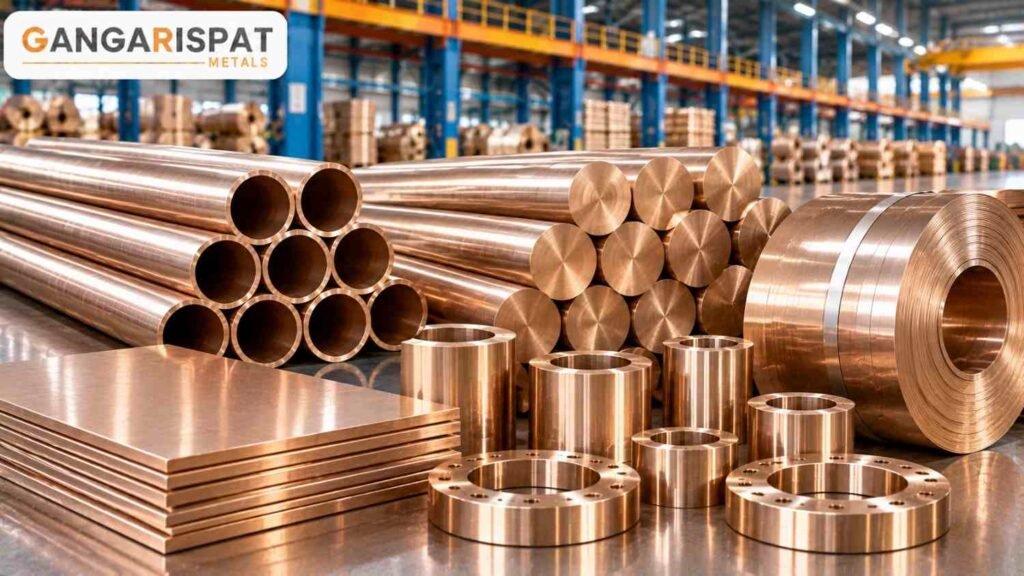
Why Copper Nickel Alloys Are Used in Marine and Industries
Marine and offshore equipment operates in challenging environments. Constant exposure to seawater, moisture, changing temperatures, and flowing fluids can affect the durability of metal components. Engineers must choose materials that can maintain reliable performance under these conditions.
A Copper Nickel Product is often selected for marine systems because copper-nickel alloys offer good resistance to seawater corrosion and useful mechanical properties. These materials support applications such as seawater piping, condensers, cooling systems, and heat exchangers.
Understanding how these alloys perform helps manufacturers, engineers, and procurement teams make informed material choices for industrial projects.
What Makes Copper Nickel Suitable for Marine Applications?
Copper-nickel alloys contain copper, nickel, and small amounts of other elements, depending on the grade. Their composition helps them develop a protective surface film when exposed to suitable seawater conditions.
This film reduces the rate of corrosion and supports long-term material performance. However, its effectiveness depends on factors such as water quality, flow conditions, and system operation.
Experienced Copper Nickel Product Manufacturers generally offer different grades to meet specific engineering requirements.
Two common grades include:
- CuNi 90/10 (C70600): Often used in seawater piping, condensers, and marine cooling equipment.
- CuNi 70/30 (C71500): Used in demanding marine applications where its particular strength and corrosion-resistance characteristics are required.
Both grades have established industrial applications. However, engineers should review the relevant material standards before making a final selection.
How Copper Nickel Helps Resist Seawater Corrosion
Seawater contains dissolved salts, oxygen, and other substances that can accelerate corrosion in unsuitable metals. Continuous exposure may gradually damage pipelines, fittings, and equipment surfaces. Copper-nickel alloys develop a protective oxide-rich film under appropriate conditions. This layer helps reduce direct interaction between the metal surface and the surrounding environment.
The material also offers useful resistance to certain forms of localized corrosion. However, no metal is completely immune to corrosion. Excessive water velocity, polluted seawater, stagnant conditions, and improper system design can still cause problems.
When comparing materials, engineers may also examine conventional Copper Products for applications where high electrical or thermal conductivity is more important than seawater resistance. Selecting the material according to the operating environment is essential for reliable performance.
Major Marine Applications of Copper Nickel Alloys
1. Seawater Piping Systems
Ships and offshore facilities use seawater for cooling and other operational purposes. Piping materials must handle continuous fluid movement while resisting corrosion.
Copper-nickel alloys are used in suitable seawater piping installations because of their corrosion resistance and established service history. Proper pipe sizing, water velocity, and fabrication practices remain essential for reliable performance.
2. Marine Heat Exchangers
Heat exchangers transfer heat between fluids without allowing them to mix. Marine cooling systems often use seawater as one of the working fluids.
Copper-nickel alloys provide useful thermal conductivity and resistance to seawater exposure. This combination makes them suitable for selected tubes and other heat exchanger components. Material selection should consider operating temperature, pressure, water chemistry, and maintenance requirements.
3. Offshore Equipment
Offshore facilities operate in environments containing saltwater, humidity, and changing weather conditions.
Engineers use suitable copper-nickel materials in selected piping, cooling, and fluid-handling applications. The material can help reduce corrosion-related deterioration when operating conditions remain within its design limits.
4. Condensers and Cooling Systems
Condensers play an important role in marine power generation and industrial cooling processes. They require materials that can support heat transfer while handling the surrounding fluid environment.
Copper-nickel alloys are commonly specified for selected condenser tubing applications.
Why Material Quality Matters in Marine Engineering
Marine applications require reliable materials because equipment failure can interrupt important operations. Chemical composition, mechanical properties, manufacturing tolerances, and surface condition can influence component performance.
For this reason, Copper Nickel Product Distributors should provide clear information about material grades and applicable specifications.
Industrial buyers should request relevant documentation, including material test certificates when required. Testing may involve chemical analysis, mechanical property verification, dimensional inspection, and additional examinations specified by the project.
Ganga R Ispat Metals explains its inspection approach on its Quality Assurance page. Before ordering, buyers should confirm that the selected material meets the applicable engineering requirements.
Important Factors Before Purchasing Copper Nickel Materials
Industrial procurement involves more than identifying a suitable alloy. Buyers must also ensure that the supplied material matches the project drawings and technical specifications.
When searching for a copper nickel product for sale, consider these points:
- Alloy grade: Confirm whether CuNi 90/10, CuNi 70/30, or another specified grade is required.
- Product dimensions: Verify thickness, diameter, length, and manufacturing tolerances.
- Operating conditions: Consider seawater exposure, temperature, pressure, and fluid velocity.
- Material standards: Request compliance with the applicable ASTM, ASME, or project-specific standards.
- Documentation: Confirm the availability of relevant inspection and material test reports.
- Delivery requirements: Discuss order quantity, packaging, and project timelines.
A detailed purchase specification helps reduce misunderstandings and supports smoother industrial procurement.
Choosing Reliable Copper Nickel Suppliers in India
Marine engineering businesses often require consistent material quality and dependable supply schedules. When evaluating Copper Nickel Product Suppliers in India, buyers should review product availability, grade options, documentation support, and the ability to meet specific dimensional requirements.
Reliable communication is equally important. Suppliers should clearly explain their material offerings and identify any differences between available products and the buyer’s specifications. Ganga R Ispat Metals lists CuNi 90/10 and CuNi 70/30 among its copper-nickel alloy offerings for industrial applications.
Businesses can Contact Ganga R Ispat Metals to discuss material grades, required dimensions, bulk quantities, and quotation details.
Frequently Asked Questions
1. Why are copper nickel alloys commonly used in marine industries?
They offer good resistance to seawater corrosion, useful mechanical properties, and suitable thermal performance for applications such as piping, condensers, and cooling systems.
2. Which copper nickel grade is commonly used in seawater piping?
CuNi 90/10 is widely used for seawater piping. CuNi 70/30 is also specified for certain demanding applications, depending on engineering requirements.
3. Can copper nickel alloys prevent corrosion completely?
No. They provide good corrosion resistance, but operating conditions such as excessive flow velocity, polluted water, and poor system design can still cause damage.
4. Are copper nickel materials suitable for heat exchangers?
Yes. Suitable grades are used in marine heat exchangers because they combine useful thermal conductivity with resistance to seawater corrosion.
5. What documents should industrial buyers request?
Buyers should request applicable material test certificates, chemical composition reports, mechanical test results, and relevant dimensional inspection records.
Conclusion
Copper-nickel alloys play an important role in marine and offshore engineering. Their resistance to seawater corrosion and useful mechanical properties make them suitable for piping, cooling systems, condensers, and related equipment.
However, successful material selection depends on the correct alloy grade, operating conditions, product dimensions, and quality documentation. Ganga R Ispat Metals offers copper-nickel alloy options for industrial requirements. Buyers can share their technical specifications to discuss suitable materials and procurement needs.