
Importance of PCB and SMD Storage in Modern Electronics Manufacturing
Electronics manufacturing involves handling a wide variety of components, including printed circuit boards (PCBs), surface mount devices (SMDs), and electronic component reels. These materials need organized storage and careful handling throughout the manufacturing process. Improper storage can expose sensitive components to moisture, dust, electrostatic discharge (ESD), and physical damage. It can also make inventory management more difficult and interrupt the movement of materials between storage and production areas.
A suitable storage arrangement helps manufacturers keep components organized, accessible, and protected according to their application requirements. Different facilities may need racks, trays, trolleys, or specialized storage systems depending on the type and quantity of materials they handle.
Businesses exploring PCB and SMD storage can evaluate storage products according to component dimensions, handling frequency, available space, and environmental requirements. Selecting an appropriate arrangement can support better organization and more systematic material management.
Product Specifications
PCB and SMD storage products are available in different designs to support the storage and handling needs of electronics manufacturing facilities. The appropriate product depends on the materials being stored and the operating conditions of the facility.
Some important specification considerations include:
- Storage configuration: Racks, trays, trolleys, cabinets, and other storage arrangements serve different purposes.
- Construction material: The material should be suitable for the intended component-handling application.
- ESD considerations: Anti-static or ESD-safe construction may be required when storing electrostatic-sensitive electronic components.
- Storage capacity: The available compartments, slots, shelves, or reel positions should match the quantity and dimensions of the materials.
- Component compatibility: The storage arrangement should suit the size and type of PCBs, SMD reels, trays, or other electronic materials.
- Accessibility: The design should allow convenient placement and retrieval of stored items.
- Mobility: Trolley-based storage may be useful when materials need to move between different work areas.
- Environmental requirements: Moisture-sensitive components may require suitable humidity-controlled storage conditions in accordance with their handling instructions.
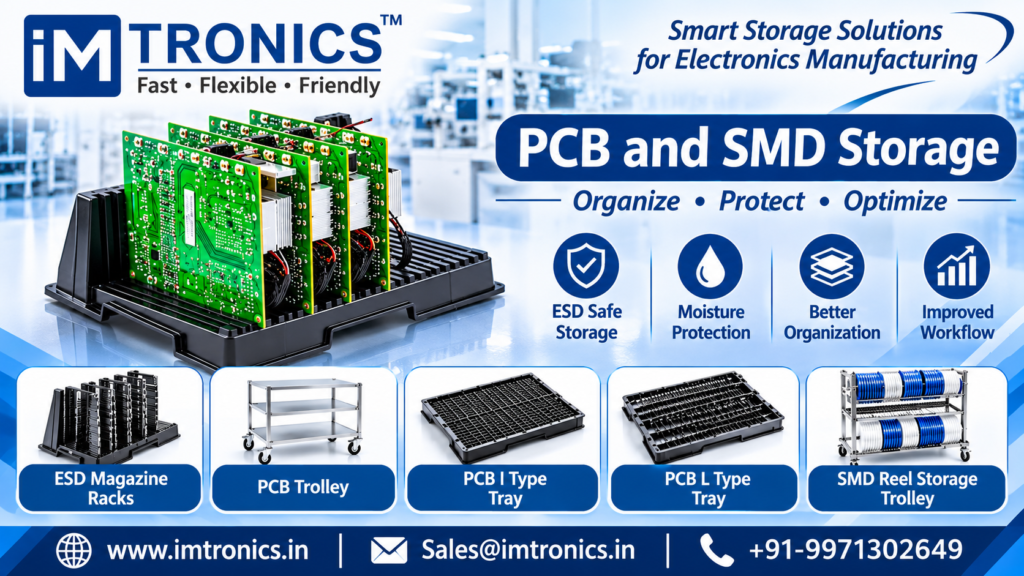
IMTronics Technology lists storage-related categories such as ESD Magazine Racks, PCB Trolley, PCB I Type Tray, PCB L Type Tray, and SMD Reel Storage Trolley. Each category serves a different storage or material-handling purpose.
Actual dimensions, construction, capacity, and features may vary by model. Buyers should verify the product specifications and compatibility before selecting a storage solution for a particular manufacturing application.
Objective
The main objective of PCB and SMD storage is to create an organized environment for electronic materials while supporting their safe handling. Manufacturing facilities often manage different board sizes, component reels, and production materials. Without dedicated storage arrangements, components can become difficult to identify, retrieve, and monitor.
A structured storage system helps assign specific locations to different materials. This can make inventory identification easier and reduce unnecessary handling. It can also support coordination between warehouse personnel, production operators, and procurement teams.
Another objective is to match the storage arrangement with the sensitivity of the components. For example, some materials may require ESD-conscious handling, while moisture-sensitive devices may need controlled storage conditions. Storage decisions should follow the component manufacturer’s recommendations and the requirements of the production process.
Benefits
Choosing suitable storage equipment can support several operational requirements in electronics manufacturing.
1. Organized component management
Dedicated racks, trays, and trolleys provide defined locations for different materials. This makes it easier to arrange components by category, size, or production requirement.
2. ESD risk management
Electrostatic discharge can damage sensitive electronic devices. Suitable ESD-safe storage materials, combined with appropriate handling procedures, help reduce the risk of static-related damage.
3. Better material accessibility
An organized storage arrangement makes it easier for employees to locate and retrieve the required components. This can reduce unnecessary searching and support smoother material movement.
4. Reduced physical handling risks
Appropriate trays and racks help keep materials in designated positions. This can reduce unnecessary movement and help minimize accidental contact or physical damage.
5. Efficient use of workspace
Storage racks and compartment-based arrangements help facilities organize components within the available storage area. Trolleys can also support material movement between designated workstations.
6. Improved inventory visibility
Systematic placement makes it easier to identify stored items and monitor available materials. This supports better coordination between inventory and production teams.
7. Support for production workflows
When components are organized and accessible, manufacturing teams can manage material movement more conveniently. Suitable storage arrangements can contribute to a more orderly production environment.
The benefits depend on the product selected, the storage conditions, and the procedures followed by the facility.
Availability
Different electronics manufacturing businesses require different storage arrangements. A PCB assembly facility may need magazine racks and dedicated board trays, while a company handling large quantities of component reels may need a suitable reel storage trolley. Facilities that move materials between workstations may also consider mobile storage arrangements.
IMTronics Technology lists ESD Magazine Racks, PCB Trolley, PCB I Type Tray, PCB L Type Tray, and SMD Reel Storage Trolley among its storage-related product categories. Businesses researching PCB and SMD storage Manufactures can review these categories and evaluate which options align with their production and inventory requirements.
When comparing products, buyers should consider board dimensions, reel sizes, storage capacity, construction material, ESD requirements, accessibility, and available workspace. Where moisture-sensitive components are involved, the required storage environment should also be considered.
Businesses comparing PCB and SMD storage wholesalers should pay attention to product specifications rather than selecting equipment based only on appearance or general descriptions. Confirming the model, configuration, and intended application before procurement helps ensure that the chosen storage arrangement is appropriate for the facility.
About Us
IMTronics Technology is an India-based supplier and solutions provider serving the electronics manufacturing industry. Its product portfolio includes SMT machines, tools, consumables, and storage-related products used in PCB assembly and manufacturing environments.
The company lists storage categories for organizing and handling PCBs and SMD-related materials. Its website provides product information for industrial buyers evaluating equipment and production-support requirements. IMTronics Technology follows the tagline “Fast • Flexible • Friendly.”
Conclusion
PCB and SMD storage is an important consideration for electronics manufacturing facilities that handle sensitive boards and electronic components. Suitable racks, trays, and trolleys can help organize materials, improve accessibility, and support systematic inventory management.
The right storage arrangement depends on component dimensions, ESD requirements, environmental conditions, storage capacity, and the movement of materials within the facility. By reviewing these factors and verifying product specifications, businesses can select storage equipment that better matches their manufacturing requirements.
FAQs
1. What is PCB and SMD storage?
PCB and SMD storage refers to equipment and arrangements used to organize and hold printed circuit boards and surface mount components when they are not being used in production.
2. Why is ESD-safe storage important for electronics?
Electrostatic discharge can damage sensitive electronic components. Suitable ESD-safe storage materials and handling practices help reduce the risk of static-related damage.
3. What is an ESD Magazine Rack used for?
An ESD Magazine Rack is used to organize and hold PCB magazines. Its suitability depends on its construction, material properties, and the requirements of the stored boards.
4. What is the purpose of a PCB trolley?
A PCB trolley provides a mobile arrangement for holding or moving PCBs and related materials within a manufacturing facility, depending on its design.
5. What is the difference between PCB I Type and L Type Trays?
They are different tray configurations intended for PCB storage and handling. Buyers should check their dimensions and compatibility with the boards they need to store.
6. How are SMD reels stored?
SMD reels can be organized using suitable reel storage arrangements, including dedicated storage trolleys. The selected system should match the reel dimensions and handling requirements.
7. What should businesses check before purchasing PCB storage equipment?
Businesses should review dimensions, capacity, material construction, ESD requirements, component compatibility, accessibility, and any environmental storage requirements before selecting a product.