
Cardiothoracic and Vascular Surgery in Noida: What Patients Should Know Before Choosing a Hospital
What Is Cardiothoracic and Vascular Surgery?
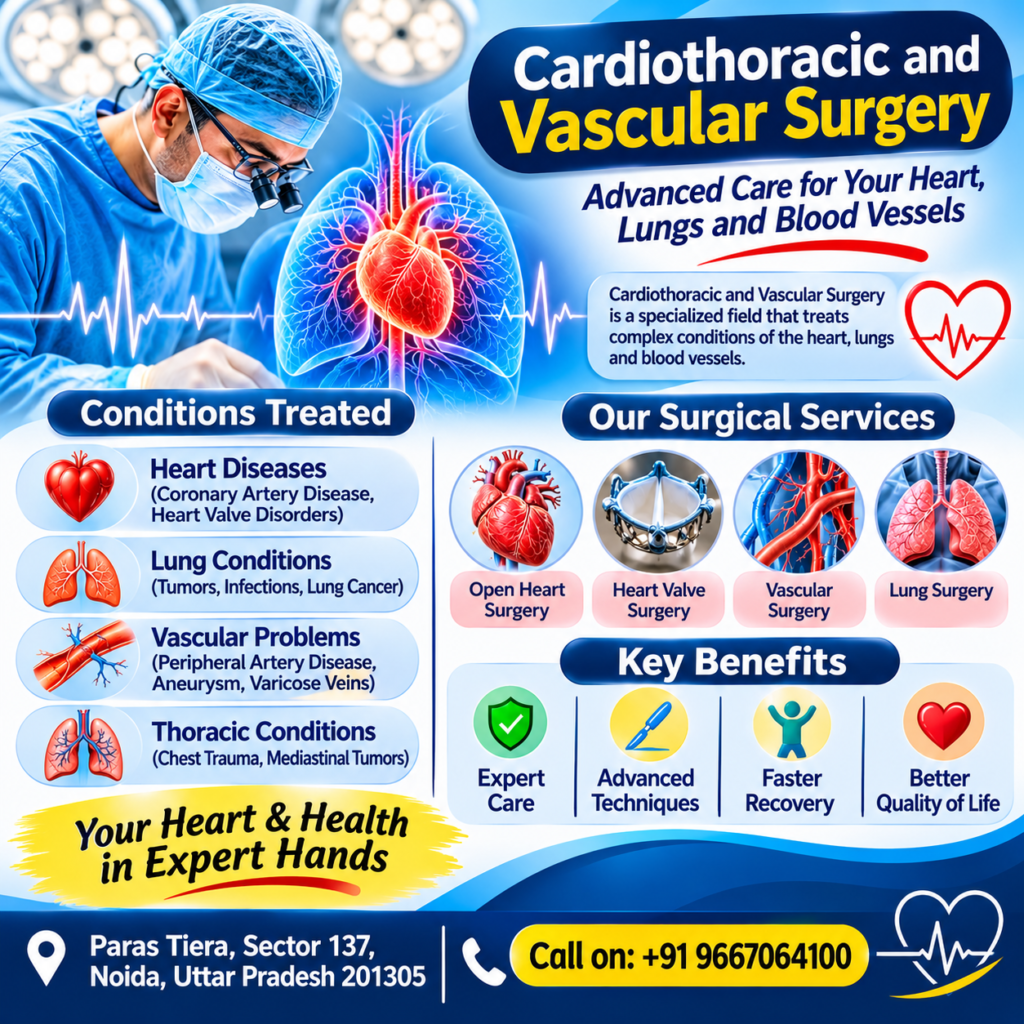
Cardiothoracic and vascular surgery is a surgical specialty that treats diseases of the heart, lungs, chest, esophagus, and blood vessels. It combines two areas: cardiothoracic surgery (heart and chest organs) and vascular surgery (arteries and veins outside the heart). Surgeons in this field perform both open and minimally invasive procedures.
Which Conditions Are Treated?
Patients are usually referred for one of the following:
- Coronary artery disease: blocked heart arteries treated with bypass surgery (CABG)
- Heart valve disease: valve repair or replacement
- Aortic aneurysm: a weakened, bulging artery wall that needs repair
- Lung and chest conditions: lung tumors, pleural disease, and chest wall problems
- Peripheral artery disease: reduced blood flow to the legs
- Varicose veins and deep vein problems: damaged or blocked veins
- Congenital heart defects: structural heart problems present from birth
When Should You Consider Surgery?
Your doctor may recommend surgery when medicines or lifestyle changes are no longer enough. Warning signs include chest pain, breathlessness on mild effort, swelling in the legs, leg pain while walking, persistent cough with blood, or an abnormal scan or angiogram. Never delay a medical review if these symptoms appear, and treat sudden severe chest pain as an emergency.
What Should You Check Before Choosing a Hospital in Noida?
The best hospital is the one that matches your medical needs, not simply the largest or most advertised. Check these factors:
- Surgeon qualifications and experience: Look for specialists with recognized training in cardiothoracic or vascular surgery and a track record in your specific procedure.
- Dedicated cardiac and vascular infrastructure: A cardiac operating theatre, cath lab, and a cardiac ICU should be available in the same facility.
- Modern technology: Ask whether minimally invasive, robotic-assisted, or endovascular options are offered where suitable.
- Emergency readiness: Round-the-clock emergency and critical care support is essential for heart and vascular patients.
- Accreditation and safety standards: Check for NABH accreditation and clear infection-control practices.
- Multidisciplinary team: Cardiologists, anesthetists, intensivists, physiotherapists, and dietitians should work together on your care plan.
- Transparent costs: Ask for a written estimate covering surgery, ICU stay, medicines, and follow-up, and confirm insurance and cashless support.
- Rehabilitation and follow-up: Good recovery programs reduce complications and help you return to normal life sooner.
What Questions Should You Ask the Surgeon?
Bringing a list to your consultation helps you decide well. Useful questions include:
- Why do I need this surgery, and what happens if I wait?
- Are there non-surgical or minimally invasive alternatives?
- How many times has this procedure been performed by your team?
- What are the risks and expected recovery time?
- What will the total cost be, and what does it include?
Also consider a second opinion. A good surgeon will welcome it for major procedures.
What Is Recovery Like?
Recovery depends on the procedure and your overall health. After open-heart surgery, patients typically spend a few days in the hospital, followed by several weeks of gradual recovery at home. Minimally invasive and endovascular procedures often mean smaller incisions, less pain, and a shorter hospital stay. Cardiac rehabilitation, a heart-healthy diet, regular walking, and taking medicines on time all support healing. Your surgical team will give a personalized plan.
Why Do Patients Choose Noida for Heart and Vascular Care?
Noida offers good connectivity across Delhi NCR, a growing number of multi-specialty hospitals, and access to experienced specialists without long-distance travel. Staying close to home also makes family support and follow-up visits easier, which matters during recovery.
Final Thoughts
The right hospital combines skilled surgeons, modern facilities, strong emergency support, and honest communication. Take time to research, ask questions, and seek a second opinion when needed. Informed decisions lead to safer surgery and smoother recovery.
Frequently Asked Questions
Is cardiothoracic surgery the same as heart surgery? Not exactly. Heart surgery is one part of cardiothoracic surgery, which also covers the lungs, chest, and esophagus.
What is the difference between a cardiologist and a cardiothoracic surgeon? A cardiologist diagnoses and manages heart conditions, often with medicines and catheter-based procedures. A cardiothoracic surgeon performs operations when surgery is needed.
What does a vascular surgeon treat? A vascular surgeon treats diseases of arteries and veins, including aneurysms, blocked leg arteries, and varicose veins.
How do I know if a hospital is right for heart surgery? Look for experienced surgeons, a dedicated cardiac ICU, 24/7 emergency care, accreditation, and clear cost communication.
Is minimally invasive surgery safe? For suitable patients, it is a well-established option with smaller incisions and faster recovery. Your surgeon will confirm whether you are a good candidate.