
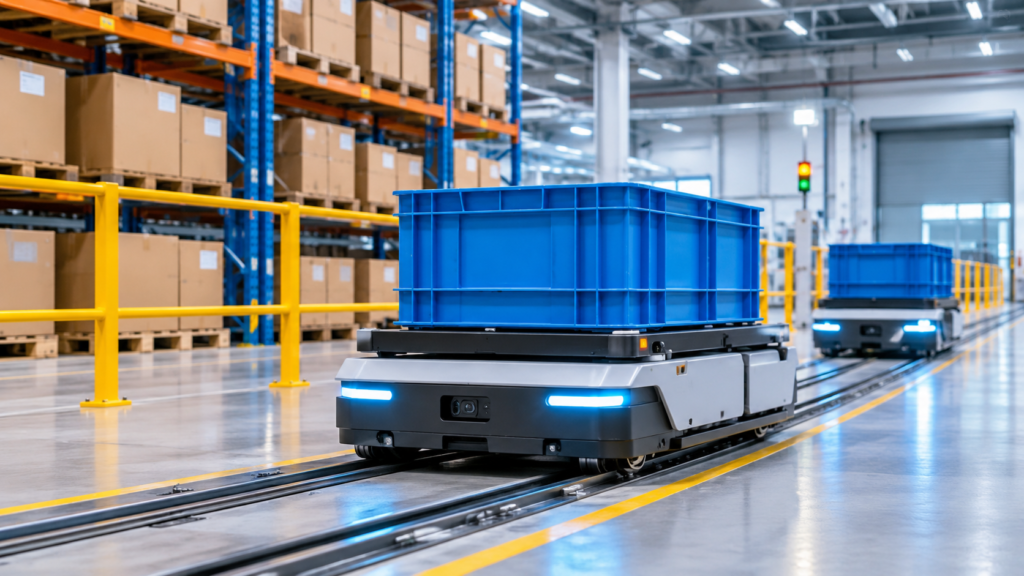
Integrating Electrical Track Vehicle Systems Into Production Lines
Modern industrial production involves multiple interconnected processes. Raw materials enter manufacturing stations, partially completed components move through processing stages and finished products proceed towards inspection and packaging.
The effectiveness of these activities depends on coordination between production machinery and internal transportation equipment.
An Electrical Track Vehicle System can become part of an automated production environment by supporting controlled material transfers between designated workstations.
However, successful integration requires careful engineering, compatible controls and a clear understanding of production requirements.
Understanding Production Line Transportation Requirements
Production lines operate according to defined process sequences. Each workstation performs a specific task before transferring materials to the next production stage.
When transportation activities are not synchronized with manufacturing processes, materials may arrive too early or too late.
Early deliveries can create unnecessary inventory accumulation, while delayed deliveries may interrupt machine operations.
An integrated transportation system aims to coordinate material movement with workstation availability and production demand.
How Electrical Track Vehicle Systems Work With Production Lines
Track-guided vehicles operate along predefined routes connecting designated locations.
In a production environment, these routes may connect machining stations, assembly areas, quality inspection departments and finished goods sections.
Depending on the automation configuration, transportation requests can be initiated by an operator or compatible industrial control equipment.
Vehicles then carry approved loads between designated stations according to the established transportation sequence.
Key Steps for Integrating Track Vehicles Into Production Lines
1. Map the Existing Production Process
Before installing transportation equipment, engineers should understand how materials move through each manufacturing stage.
Process mapping helps identify loading points, transportation distances, production cycle times and areas where materials accumulate.
This information allows businesses to determine which movements are suitable for automation.
2. Establish Transportation Cycle Requirements
Transportation cycle time includes more than vehicle travel duration. Loading, unloading, positioning, waiting and return movements also contribute to the complete cycle.
Engineers should compare expected transportation capacity with production demand to avoid creating new bottlenecks.
Qualified Electrical Track Vehicle System Manufacturers can assist in assessing vehicle capacity and system configuration based on operational requirements.
3. Design Loading and Unloading Stations
Loading stations should provide sufficient space for approved material handling activities.
Vehicle dimensions, component size, loading equipment and workstation accessibility must be considered during station design.
Where automated loading equipment is required, engineers should confirm mechanical and control compatibility between the systems.
4. Establish Control System Communication
Automated production lines often use programmable logic controllers to coordinate equipment activities.
A compatible track vehicle control system may communicate with production equipment to receive transportation requests and provide operating status information.
Communication requirements should be defined during project planning rather than after installation.
5. Plan Safety Integration
Production lines often include employees, machinery, transportation vehicles and supporting equipment operating within shared environments.
System integration should incorporate appropriate safeguarding, emergency controls and risk assessment procedures.
Safety responsibilities and operating restrictions must be clearly defined before commissioning.
Potential Production Line Integration Applications
| Production stage | Transportation function |
|---|---|
| Raw material preparation | Deliver materials to manufacturing stations |
| Machining | Transfer components between processes |
| Assembly | Supply compatible parts to assembly areas |
| Quality inspection | Transport completed components for evaluation |
| Packaging | Move approved products to packaging stations |
| Finished goods | Transfer packaged products to storage |
Actual applications depend on vehicle design, facility layout and production requirements.
Why Production Synchronization Matters
An automated transportation system must match the production line’s operating requirements.
For example, if a manufacturing workstation completes components faster than the transportation system can collect them, materials may accumulate near the workstation.
Conversely, a vehicle that delivers materials faster than the receiving station can process them may create unnecessary waiting and congestion.
Businesses should evaluate the relationship between vehicle availability, transportation cycle time and production capacity.
Consulting experienced Electrical Track Vehicle System Suppliers can help establish suitable transportation configurations for these requirements.
Integrating Transportation With Industrial Automation
Industrial automation systems can coordinate equipment activities through programmed operating sequences.
Where supported, track vehicle systems may exchange information with production equipment regarding transportation requests, workstation availability, vehicle position and task completion.
More advanced integration may connect transportation activities with manufacturing execution systems.
Such connectivity requires suitable hardware, software interfaces and communication protocols. Businesses should verify these capabilities with the equipment provider before including them in project specifications.
Testing the Integrated Transportation System
Commissioning should include testing under approved operating conditions to evaluate equipment compatibility and transportation performance.
Important testing areas include stopping accuracy, workstation communication, load handling, task sequencing and safety functionality.
Engineers should also assess how the system responds to production interruptions and unavailable workstations.
Documented acceptance testing provides a clear basis for determining whether the installed system meets agreed operational requirements.
Benefits of Proper Production Line Integration
A successfully integrated transportation system can support consistent material availability, improved workstation coordination and reduced repetitive transportation activities.
It can also help manufacturers establish more predictable production schedules.
However, these benefits depend on system design, production planning and equipment availability. Automation alone cannot compensate for inefficient manufacturing processes or inaccurate demand estimates.
Production Line Transportation Solutions From Airox Technologies
Airox Technologies Limited provides track-based industrial transportation equipment with customizable configurations and technical consultation.
Businesses evaluating Electrical Track Vehicle System Manufacturers in India can discuss production layout, transportation capacity, automation requirements and system integration expectations with the company.
Providing detailed production information helps engineering teams evaluate equipment compatibility and establish suitable project requirements.
Conclusion
Integrating electrical track vehicle systems into production lines requires coordinated planning between manufacturing, maintenance and automation teams.
Businesses should assess material flow, production cycle times, control interfaces and workplace safety requirements before implementation.
A properly integrated transportation system can support reliable material movement and contribute to more coordinated industrial production.
Frequently Asked Questions
1. Can electrical track vehicles integrate with automated production lines?
Yes, provided the equipment has compatible controls, suitable transportation capacity and appropriate mechanical integration.
2. Can electrical track vehicle systems use PLC-based controls?
Yes. PLC-based controls are available in suitable configurations and can support programmed transportation activities.
3. What is the importance of transportation cycle time?
Transportation cycle time helps determine whether the vehicle system can deliver materials at the rate required by production workstations.
4. Can track vehicles transport partially assembled products?
Yes, when the vehicles and load-support arrangements are designed for the weight, dimensions and characteristics of those products.
5. What should manufacturers check before integrating track vehicles?
Manufacturers should evaluate production layout, material flow, payload capacity, control compatibility, safety requirements and commissioning procedures.