
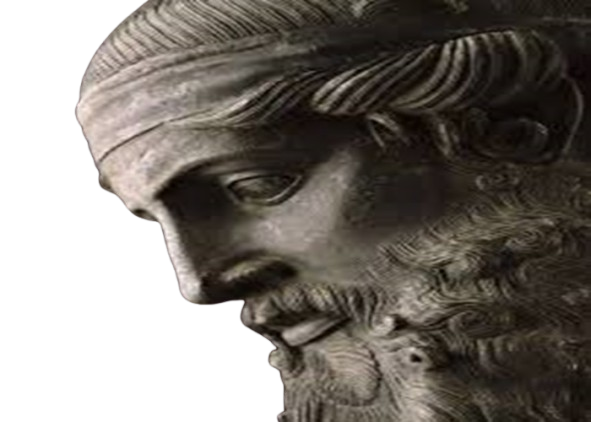
Plato’s Theory of Justice Explained: Meaning, Features, Ideal State and Criticism
Introduction
Plato’s theory of justice is one of the most influential contributions to Western political philosophy. The ancient Greek philosopher developed his ideas about justice in his famous book The Republic, where he explored the relationship between justice, morality, education, human nature, and the ideal state.
Unlike theories that define justice primarily in terms of law, punishment, or individual rights, Plato understood justice as a condition of harmony in which every part of society performs its appropriate function under the guidance of reason and wisdom.
For Plato, a just society is not merely one in which laws are obeyed. It is a society in which political authority is exercised wisely, different social groups perform their respective functions, and the interests of the whole community are maintained.
His theory connects individual justice with political justice. Just as a human being achieves inner harmony when reason governs desires and emotions, a state becomes just when its different classes function in the proper relationship with one another.
This article explains Plato’s theory of justice, its meaning, major features, relationship with the ideal state, and important criticisms.
Who Was Plato?
Plato was an ancient Greek philosopher who lived approximately from 427/428 BCE to 348/347 BCE. He was a student of Socrates and the teacher of Aristotle. He founded the Academy in Athens, one of the most influential philosophical schools of the ancient world.
Plato lived during a period of political instability in Athens. The trial and execution of Socrates in 399 BCE deeply influenced his understanding of politics, knowledge, and political leadership.
He questioned whether ordinary political competition and public opinion could consistently produce wise and just government. His search for a better political order led him to develop the idea of an ideal state governed by philosopher-kings.
His most important political work, The Republic, examines the nature of justice and the characteristics of a perfectly ordered society.
What Is Plato’s Theory of Justice?
Plato’s theory of justice is based on the idea of harmony, proper functioning, and the fulfilment of one’s appropriate role within a larger whole.
In The Republic, Plato attempts to answer a fundamental question: What is justice, and why should an individual be just?
Rather than beginning with the individual alone, Plato constructs an ideal city to understand justice on a larger scale. He believes that justice may be easier to recognise in a state than in an individual because the functions of different groups are more visible in society.
After examining justice in the state, he applies the same principle to the individual human soul.
Plato’s central argument is that justice exists when every part performs its proper function without improperly interfering with the functions of other parts.
This idea is often summarised as the principle of specialisation of functions.
Different Definitions of Justice Examined by Plato
In Book I of The Republic, Plato presents several definitions of justice through a discussion led by Socrates.
1. Cephalus: Justice as Truthfulness and Paying Debts
Cephalus associates justice with telling the truth and paying one’s debts.
Socrates challenges this definition by asking whether returning a weapon to a person who has become mentally unstable would always be just. Returning the weapon might fulfil an obligation but could also cause harm.
This example suggests that justice cannot be reduced to following rules mechanically. The circumstances and consequences of an action also matter.
2. Polemarchus: Justice as Giving Each Person What Is Due
Polemarchus develops the argument that justice means giving each person what is appropriate or due to them. He initially connects this idea with helping friends and harming enemies.
Socrates challenges the idea that a just person should harm anyone, arguing that harming people can make them worse rather than better.
This discussion raises an important question: Can justice be based simply on loyalty to friends and hostility towards enemies?
3. Thrasymachus: Justice as the Advantage of the Stronger
Thrasymachus offers a more radical definition. He argues that justice is the advantage of the stronger.
According to his argument, ruling groups make laws that serve their own interests and then describe obedience to those laws as justice.
Socrates challenges this position by arguing that a genuine ruler, understood as someone exercising the art of ruling properly, should seek the welfare of those being governed rather than merely personal advantage.
The debate introduces an enduring political question: Does justice serve the common good, or does it often reflect the interests of powerful groups?
4. Plato’s Own Understanding of Justice
Plato develops his positive account of justice through the construction of an ideal state and the analysis of the human soul.
Justice is not simply paying debts, helping friends, obeying laws, or serving the interests of the powerful. It is a harmonious arrangement in which each part performs its proper function.
This becomes the foundation of his theory of the ideal state.
Plato’s Theory of Justice in the Ideal State
Plato divides his ideal state into three main classes. Each class has a distinct function, corresponding to a particular aspect of human nature.
1. Rulers or Philosopher-Kings
The ruling class consists of philosopher-kings, who possess philosophical knowledge, wisdom, and the ability to understand the common good.
Plato believes that political authority should be exercised by individuals who understand justice and possess the knowledge required for wise decision-making.
The rulers are responsible for guiding the state and ensuring that its institutions function properly.
Their corresponding virtue is wisdom.
2. Auxiliaries or Warriors
The auxiliary class consists of warriors responsible for defending the state, maintaining security, and supporting the decisions of legitimate rulers.
Members of this class require courage, discipline, and loyalty to the community.
Their corresponding virtue is courage.
3. Producers
The producing class includes farmers, artisans, merchants, and other individuals engaged in economic activities.
They provide the goods and services necessary for the functioning of society.
Their role is essential because the state cannot survive without productive economic activity.
Producers are associated primarily with the appetitive aspect of human nature, which includes material needs and desires.
The producing class is not assigned a separate cardinal virtue in Plato’s account of the city’s structure in the same way as the rulers and auxiliaries. Instead, moderation characterises the agreement of the city as a whole about who should rule.
The Relationship Between the Three Classes
Plato’s ideal state is just when the three classes perform their respective functions in the proper relationship with one another.
The rulers govern through wisdom, the auxiliaries defend the state through courage, and the producers fulfil economic needs.
Justice emerges from the harmonious organisation of the entire political community rather than from the dominance of one class for its own benefit.
| Class | Main function | Associated quality |
|---|---|---|
| Rulers or philosopher-kings | Govern the state | Wisdom |
| Auxiliaries or warriors | Defend the state | Courage |
| Producers | Perform economic activities | Productive contribution |
For Plato, injustice occurs when the proper order is disturbed, such as when personal ambition or economic interests improperly take control of political authority.
Plato’s Four Cardinal Virtues
Plato identifies four cardinal virtues in the ideal state. They are wisdom, courage, moderation, and justice.
1. Wisdom: Wisdom is primarily associated with the ruling class, whose knowledge enables it to make decisions for the welfare of the whole state.
2. Courage: Courage is associated with the auxiliaries, who must preserve their convictions about what should be feared and what should not be feared.
3. Moderation: Moderation involves agreement and self-control regarding who should govern. It is not restricted to one class but characterises the properly ordered state as a whole.
4. Justice: Justice exists when each class performs its appropriate function without interfering improperly with the functions of the others.
Justice is therefore the organising principle that maintains harmony among the different parts of the state.
Plato’s Theory of Justice and the Tripartite Soul
One of the most important aspects of Plato’s theory is the relationship between the structure of the state and the structure of the human soul.
Plato divides the soul into three parts.
1. Rational Part
The rational part seeks truth, knowledge, and wisdom. It evaluates choices and determines what is best for the individual as a whole.
2. Spirited Part
The spirited part is associated with honour, ambition, indignation, and the desire to stand firm in the face of difficulty. When properly guided, it supports reason.
3. Appetitive Part
The appetitive part is associated with bodily desires, pleasure, material possessions, and other forms of gratification.
These three elements are present in the human soul, but they may conflict with one another.
For example, a person may desire immediate pleasure while rationally recognising that restraint would be better in the long term. The spirited element may help the person act according to that rational judgement.
According to Plato, an individual is just when reason governs, spirit supports reason, and appetite remains appropriately regulated.
The relationship can be summarised as follows:
| Part of the soul | Main characteristic | Role in a just individual |
|---|---|---|
| Reason | Wisdom and knowledge | Governs |
| Spirit | Courage and honour | Supports reason |
| Appetite | Desires and material needs | Remains regulated |
Thus, justice in the individual is a form of inner harmony, just as justice in the state is harmony among its different classes.
Plato’s analogy between the soul and the state demonstrates that political justice and individual morality are closely connected.
Plato’s Principle of Specialisation
The principle of specialisation is central to Plato’s political philosophy.
Plato argues that society functions more effectively when individuals undertake work suited to their abilities and when different social functions are properly coordinated.
For example, governing requires wisdom and sound judgement, defending the state requires courage and discipline, and economic production requires specialised skills.
If individuals or groups attempt to perform functions for which they are not suitably prepared, or improperly interfere with other functions, the state may lose its harmony.
However, Plato’s argument is not simply that people should remain in occupations chosen for them at birth. In The Republic, he allows for the possibility that children may possess qualities different from those of their parents and should be assigned roles according to their capacities.
Nevertheless, his system maintains a strongly hierarchical structure, with political authority concentrated in the guardian class.
Plato’s Theory of Justice and the Philosopher-King
Plato’s theory of justice is closely connected with his concept of the philosopher-king.
He believes that good government requires knowledge of justice and the good, rather than merely political popularity, wealth, or the ability to win elections.
Philosophers are considered suitable rulers because they seek truth and knowledge instead of pursuing personal gain as their primary objective.
In Plato’s ideal state, political power and philosophical wisdom should come together. Rulers must possess the intellectual and moral qualities necessary to govern in the interests of the whole community.
This argument is developed through the philosopher-ruler discussion in The Republic, including the famous claim that political problems will not be adequately resolved unless philosophers become rulers or rulers genuinely pursue philosophy.
However, Plato’s proposal also raises an important criticism: who determines that a ruler truly possesses wisdom, and how can citizens hold such a ruler accountable?
Plato’s Theory of Justice and Education
Education is essential to Plato’s theory because the state requires individuals with the appropriate knowledge, abilities, and character.
Plato does not believe that good political leadership emerges automatically. Future rulers must undergo a long process of education and intellectual development.
His educational system includes music and physical training, mathematical studies, dialectical reasoning, and practical experience for those being prepared for leadership.
The purpose is not merely to transmit information but to develop disciplined individuals capable of understanding justice and the common good.
Education also helps identify individuals whose abilities make them suitable for different responsibilities.
For Plato, a just state depends on the proper education of its citizens, particularly those who will exercise political authority.
Plato’s Theory of Justice: Major Features
The following points summarise the most important features of Plato’s theory.
- Justice as harmony: Justice is the proper relationship among the parts of the state and the individual soul.
- Justice as specialisation: Each part should perform its appropriate function without improper interference.
- Collective welfare: Political authority should be directed towards the good of the state as a whole rather than the private advantage of rulers.
- Philosopher-kings: The ideal state requires wise and knowledgeable rulers.
- Moral foundation: Justice is connected with virtue, character, and the proper ordering of human desires.
- Education: A carefully structured educational system prepares individuals for their responsibilities.
- Unity of the state: Plato emphasises harmony and coordination among the different parts of society.
- Connection between individual and political justice: A well-ordered state reflects the same basic principles of harmony found in a well-ordered soul.
Criticism of Plato’s Theory of Justice
Plato’s theory has had a lasting influence on political philosophy, but it has also attracted significant criticism.
1. Excessive Emphasis on the State
Critics argue that Plato places too much emphasis on the unity and welfare of the state, potentially neglecting individual freedom and personal interests.
The individual is expected to fulfil a role within the larger political order, leaving limited room for challenging the structure itself.
2. Hierarchical Political System
Plato’s ideal state divides society into distinct classes and assigns political authority primarily to philosopher-rulers.
Critics question whether this concentration of power adequately protects citizens against domination or abuse.
3. Limited Democratic Participation
Plato is critical of democracy as practised in ancient Athens and does not make popular participation the foundation of legitimate government.
His preference for rule by knowledgeable philosophers raises questions about political equality, accountability, and citizens’ right to participate in decision-making.
4. Difficulty in Defining the Proper Role
Plato assumes that individuals can be assigned roles according to their abilities and that these roles can be coordinated for the common good.
In practice, identifying people’s abilities and determining who should exercise authority are difficult tasks. Institutions may also become unjust if they prevent people from changing their social or professional positions.
5. Risk of Authoritarianism
Plato’s emphasis on the authority of philosopher-kings, together with his proposals concerning censorship and the regulation of education, has led critics to argue that his ideal state contains authoritarian features.
Without effective accountability, even rulers who claim to possess wisdom may misuse power.
6. A Limited Account of Justice
Modern theories of justice often emphasise individual rights, equal treatment before the law, distributive fairness, and protection against discrimination.
Plato’s theory focuses primarily on harmony, virtue, and the proper functioning of social groups. Critics therefore argue that it does not adequately address all the questions of equality and individual rights central to modern political thought.
Despite these criticisms, Plato’s theory remains important because it raises fundamental questions about the relationship between political authority, knowledge, morality, and the common good.
Relevance of Plato’s Theory of Justice Today
Although Plato’s ideal state was developed in ancient Greece, several aspects of his theory remain relevant to contemporary political discussions.
Ethical political leadership: Plato’s insistence that rulers should possess wisdom and act for the common good raises questions about integrity, competence, and responsibility in public office.
Specialisation and institutional responsibility: His principle of specialisation highlights the importance of clear responsibilities within public institutions. Modern governments also depend on different institutions performing their assigned functions.
Education and citizenship: Plato’s emphasis on education demonstrates the importance of developing informed, responsible, and capable citizens.
Public interest versus private interest: His criticism of rulers who govern for personal advantage remains relevant to discussions of corruption, conflicts of interest, and abuse of public power.
However, applying Plato’s ideas today requires caution. Modern constitutional democracies generally place greater emphasis on political equality, individual rights, public accountability, and checks and balances than Plato’s ideal state does.
Plato’s Theory of Justice: Important Points for UGC NET Political Science
For examination preparation, remember these key facts:
- Major work: The Republic.
- Central concept: Justice as harmony and each part performing its appropriate function.
- Three classes of the state: Rulers, auxiliaries, and producers.
- Three parts of the soul: Reason, spirit, and appetite.
- Wisdom: Associated with the ruling class.
- Courage: Associated with the auxiliaries.
- Moderation: Agreement about who should rule.
- Justice: Proper functioning and harmony among the parts.
- Ideal ruler: Philosopher-king.
- Key principle: The relationship between individual justice and political justice.
Students should distinguish Plato’s theory from the idea that justice simply means equal distribution of wealth or identical treatment for everyone. His central concern is the proper organisation of the soul and the state.
Frequently Asked Questions (FAQs)
1. What is Plato’s theory of justice?
Plato’s theory of justice holds that justice exists when each part of the state and each part of the individual soul performs its appropriate function in harmony with the others.
2. Who gave the theory of justice in The Republic?
Plato developed the theory through the dialogues of The Republic, with Socrates serving as the principal speaker who examines competing definitions of justice and develops the account of the just state and soul.
3. What are the three classes in Plato’s ideal state?
The three classes are the rulers or philosopher-kings, the auxiliaries or warriors, and the producers, including farmers, artisans, and merchants.
4. What are the three parts of the soul according to Plato?
Plato identifies the rational, spirited, and appetitive parts of the soul. Justice exists when reason governs, spirit supports reason, and appetite remains properly regulated.
5. What are the four cardinal virtues according to Plato?
The four cardinal virtues are wisdom, courage, moderation, and justice.
6. Why is Plato’s theory of justice criticised?
Critics question its hierarchical social structure, limited democratic participation, concentration of political power, and insufficient emphasis on individual rights and equality.
7. What is the relationship between justice and the ideal state?
Plato’s ideal state is just when its three classes perform their appropriate functions in harmony, while justice in the individual exists when the three parts of the soul are properly ordered.
Conclusion
Plato’s theory of justice presents justice as a condition of harmony, moral order, and the proper performance of functions. Through The Republic, he connects the organisation of the ideal state with the structure of the human soul.
His three classes of society correspond to the rational, spirited, and appetitive aspects of human nature. Wisdom, courage, moderation, and justice sustain the harmonious political order, while philosopher-kings are expected to govern through knowledge and concern for the common good.
Although Plato’s theory has been criticised for its hierarchy and limited democratic participation, it remains a foundational contribution to political philosophy. Its central questions about ethical leadership, political knowledge, public interest, and the relationship between individual morality and social order continue to shape debates about justice.
For students preparing for UGC NET Political Science, understanding Plato’s theory is essential for Western Political Thought and for comparing classical theories of justice with modern approaches.
References
- Political Science Solution. “Plato’s Theory of Justice and the Ideal State.”
- Plato. The Republic. Translated by Benjamin Jowett. Available at Project Gutenberg.
- Stanford Encyclopedia of Philosophy. “Plato’s Ethics and Politics in The Republic.”