
How To Become A Commercial Pilot After 12th
Becoming a commercial pilot is a career goal for many students who are interested in aircraft, flying, and the aviation industry. It is a profession that requires proper education, practical flying experience, medical fitness, and a strong understanding of aviation rules. However, many students are unsure about where to start, what qualifications are required, and how to complete their pilot training. Understanding How to become a commercial pilot is the first step towards planning a successful aviation career. With the right training, regular preparation, and proper guidance, students can work towards obtaining a Commercial Pilot Licence (CPL) and building a career in aviation.
In India, students have different training options depending on their educational background, career goals, and budget. They can choose traditional flight training or explore airline-sponsored programmes. Understanding the available courses, eligibility requirements, and licensing process can help students make better decisions. Pilots Pathway provides aviation courses and training support for students interested in pilot education, including CPL ground training, flight training, simulator training, and airline preparation.
What Is a Commercial Pilot?
A commercial pilot is a licensed pilot who is authorised to perform flying activities permitted under the privileges of their licence. Commercial pilots may work in different areas of aviation, including passenger airlines, cargo operations, charter services, and other commercial flying sectors, depending on their qualifications and experience.
Becoming a commercial pilot involves more than learning how to operate an aircraft. Students must understand aviation regulations, weather conditions, aircraft systems, navigation, communication, and flight safety procedures. They also need to complete the required examinations, medical assessments, and practical flying training before receiving the appropriate licence.
Eligibility Requirements to Become a Commercial Pilot in India
Before starting pilot training, students should understand the basic eligibility requirements. In India, the Directorate General of Civil Aviation (DGCA) regulates pilot licensing and establishes the requirements that applicants must meet.
Some important eligibility requirements include:
- Educational Qualification
Students generally need to complete Class 12 with Physics and Mathematics or meet the applicable DGCA requirements through recognised equivalent qualifications. Students who have not studied these subjects may need to complete them through an accepted route before applying for the relevant licence.
- Age Requirement
Candidates must meet the minimum age requirements established for the licence they are applying for. For a Commercial Pilot Licence in India, the minimum age is generally 18 years.
- Medical Fitness
Medical fitness is an important part of pilot training. Candidates must meet the required DGCA medical standards. They should understand the applicable medical examination process before making a major investment in flight training.
- English Language Skills
English is widely used in aviation communication. Students should develop good English reading, writing, and speaking skills because they need to understand aviation instructions, study technical subjects, and communicate clearly.
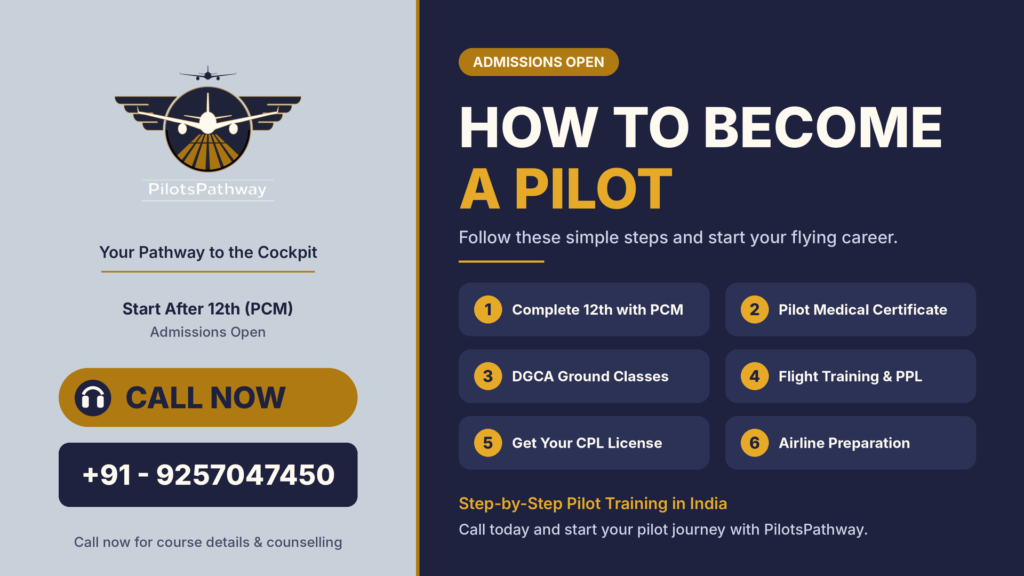
Step-by-Step Guide on How to Become a Commercial Pilot
Students who want to understand How to become a commercial pilot should follow a proper training and licensing process. Although individual training arrangements may differ, the general steps are explained below.
Step 1: Complete Your Class 12 Education
The first step is completing your Class 12 education with Physics and Mathematics or an accepted equivalent qualification. These subjects provide a foundation for understanding important aviation topics, including calculations, aircraft performance, and basic scientific concepts.
Students should focus on their studies and make sure they meet the required educational conditions before applying for pilot training. It is also a good time to learn about aviation careers and understand the responsibilities of a professional pilot.
Step 2: Complete the Required Medical Examination
Medical fitness is necessary for a pilot licence. Candidates should complete the applicable DGCA medical assessments and understand whether they meet the required standards. It is sensible to check medical eligibility early rather than waiting until after spending money on training.
Step 3: Prepare for DGCA Ground Examinations
Ground training helps students understand the theoretical subjects required for pilot licensing. These subjects generally include air navigation, meteorology, air regulations, and technical knowledge related to aircraft and flight operations.
Students should attend proper ground classes, follow a regular study schedule, and practise examination questions. A strong understanding of these subjects is important because pilots need to apply theoretical knowledge during practical flying.
Step 4: Choose a Suitable Flying Training Programme
After understanding the requirements, students can explore different flight training options. Choosing a suitable flying school or training arrangement is an important decision because the quality of instruction, aircraft availability, training schedule, and overall costs can affect the learning process.
Students should check the school’s approvals, aircraft facilities, instructor experience, training records, and applicable licensing arrangements before making a decision.
Step 5: Complete Practical Flying Training
Practical flying training gives students the opportunity to learn aircraft operations under the supervision of qualified flight instructors. During this stage, students develop skills related to aircraft control, take-off, landing, navigation, communication, and flight procedures.
They must complete the required flying experience and meet the applicable DGCA licensing standards. Simulator training can also support learning by helping students understand cockpit procedures and different flight situations, but it does not replace the required actual aircraft flying experience.
Step 6: Obtain Your Commercial Pilot Licence
After completing the required examinations, medical requirements, flying experience, and other licensing conditions, candidates can apply for their Commercial Pilot Licence through the applicable DGCA process. Once licensed, they can explore suitable commercial aviation opportunities according to their qualifications and additional requirements.
What Is a Cadet Pilot Program in India?
A Cadet pilot program in India is a structured training pathway offered by participating airlines in association with their selected flight training organisations. These programmes are designed to prepare eligible candidates for a possible future airline career through a planned training process.
The selection process may include application screening, aptitude assessments, interviews, medical examinations, and other evaluation stages. The exact requirements depend on the airline and the programme.
Students interested in a Cadet pilot program in India should carefully check the eligibility conditions, selection process, training structure, total fees, payment terms, and any applicable sponsorship or employment conditions. It is important to understand that completing a cadet programme does not automatically guarantee an airline job unless the programme’s stated terms specifically provide such an assurance.
Importance of Flying Training in India
Flying training in India provides students with an opportunity to develop the practical knowledge and skills required for pilot licensing. It includes learning aircraft controls, understanding flight procedures, practising navigation, and developing the ability to manage different flying conditions under proper supervision.
Students should compare different flying training options before selecting an institute. They should check the training organisation’s approval status, aircraft availability, instructor qualifications, maintenance arrangements, and the time normally required to complete the training.
A well-planned approach to Flying training in India can help students understand the practical requirements of becoming a commercial pilot and prepare for the responsibilities involved in professional aviation.
What Is PPL Training in India?
PPL training in India refers to training for a Private Pilot Licence. It introduces students to the basic skills and knowledge required to operate an aircraft within the privileges of a private pilot licence.
During PPL training, students learn aircraft handling, basic navigation, communication, flight procedures, and aviation safety. It can be a useful starting point for people interested in flying and understanding aircraft operations.
However, students planning to become commercial pilots should understand that a PPL is not the same as a CPL. A Private Pilot Licence does not provide the same commercial privileges. Candidates must meet the additional examination, medical, and flying experience requirements for a Commercial Pilot Licence.
How to Choose the Top Pilot Training in India?
Finding the top pilot training in India requires proper research instead of depending only on advertisements or promotional claims. Students should compare institutes based on their training facilities, course structure, instructor qualifications, approvals, and overall student support.
Before selecting a training institute, consider the following points:
- Check the applicable DGCA approval and regulatory status of the training organisation.
- Understand the complete course structure and training process.
- Ask about aircraft availability and the practical flying schedule.
- Compare ground training and simulator training facilities.
- Understand the complete fee structure and additional expenses.
- Check the qualifications and experience of instructors.
- Ask about the expected training duration and possible delays.
- Read the admission conditions and payment terms carefully.
Choosing the right training option can help students avoid confusion and make better decisions about their aviation education.
Why Choose Pilots Pathway for Pilot Training?
Pilots Pathway provides aviation courses and training support for students who want to build a career as professional pilots. Students can explore different learning options according to their career goals and training requirements.
The available course offerings include Private Pilot Licence (PPL), CPL ground training, CPL flight training, flight simulator training, airline preparation, cadet pilot courses, foundation courses, and DGCA ground classes.
These courses cover different stages of pilot education, from understanding basic aviation concepts to preparing for commercial pilot training. Students can explore the available programmes, understand their requirements, and plan their next steps based on their educational qualifications and career interests.
Conclusion
Understanding How to become a commercial pilot is important for every student who wants to build a career in aviation. The process involves completing the required education, meeting medical standards, preparing for DGCA examinations, completing practical flying training, and obtaining the necessary licence. Students can also explore a Cadet pilot program in India if they are interested in a structured airline-oriented training pathway.
Choosing the right Flying training in India is equally important because practical experience plays a major role in pilot education. Students can also explore PPL training in India to understand the basics of flying before progressing towards commercial pilot training. Researching the top pilot training in India, comparing course details, and understanding the complete training requirements can help students make informed decisions. With proper preparation and suitable training support from Pilots Pathway, aspiring pilots can take organised steps towards achieving their aviation career goals.