
The Future of Wellness Technology: AI and Smart Healthcare
Imagine checking your smartwatch as soon as you wake up. Within seconds it shows your estimated sleep, daily activity and other wellness indicators, while your phone reminds you to move, drink water or keep a regular bedtime. Tracking that once needed pen and paper is now part of a connected digital experience.
This shift is shaping the future of wellness technology. Artificial intelligence (AI), wearable devices and smart healthcare platforms are helping people understand their daily habits. They are also giving healthcare professionals new ways to receive information that patients choose to share.
How AI Is Changing Everyday Wellness
AI lets software analyse data, spot patterns and turn them into simple insights. In wellness apps, that data may include activity records, sleep patterns, exercise routines and details entered by the user.
A fitness app may review your activity history and suggest realistic movement goals. A sleep-tracking app may point out changes in sleep duration over several nights. Instead of only showing numbers, AI-powered tools organise them into patterns you can review.
These insights are general wellness information. They are not a diagnosis. If an app flags something that worries you, speak to a qualified healthcare professional.
Smart Wearables and AI Health Wearables
Smartwatches, fitness bands and other smart health devices have made personal wellness tracking easier. Depending on the device, sensors can record activity, heart rate, estimated sleep duration and exercise patterns.
This can help you notice your routines. Someone who sits for long hours may use activity reminders to move more, and someone tracking sleep may spot habits that affect their schedule.
The next phase is likely to be better syncing between devices, apps and healthcare platforms. A related example already exists in healthcare: the US Department of Health and Human Services describes remote patient monitoring as a type of telehealth that uses devices, including wearables, to track health at home. Some of these devices send information to the provider automatically. Before sharing any personal data, check a device’s privacy settings and give consent only if you are comfortable.
Smart Healthcare: Connecting Patients and Professionals
Smart healthcare combines digital platforms, connected devices, health information systems and communication tools to improve the delivery of health information. Telehealth is one example, since it lets patients speak with healthcare professionals through digital consultations when an in-person visit is not needed.
AI also appears in regulated medical devices. The US Food and Drug Administration (FDA) publishes a list of AI-enabled medical devices authorised for marketing in the United States, and says the total passed 1,600 as of September 2026. The FDA also notes that it regulates medical devices, not AI as such. These products are a different category from everyday wellness apps.
The World Health Organization (WHO) has said AI holds promise for areas such as diagnosis and screening. Its guidance on ethics and governance of AI for health also stresses that ethics and human rights must be at the centre of how the technology is designed and used.
Personalised Wellness Through Data and AI
People have different goals, routines and preferences, which is why personalised digital experiences are becoming more relevant.
AI-based platforms can organise activity goals, exercise suggestions and reminders using information the user provides. Someone who wants to become more active may get suggestions based on their recorded activity and preferred schedule. In future, connected platforms may bring together data from several devices to give a broader picture of daily habits.
How useful this is depends on data quality, clear communication and whether the suggestions suit the individual.
Smart Technology in Relaxation and Home Wellness
Wellness technology is not limited to hospitals and fitness trackers. Smart home devices, guided meditation apps, fitness equipment and massage chairs are all becoming part of everyday routines.
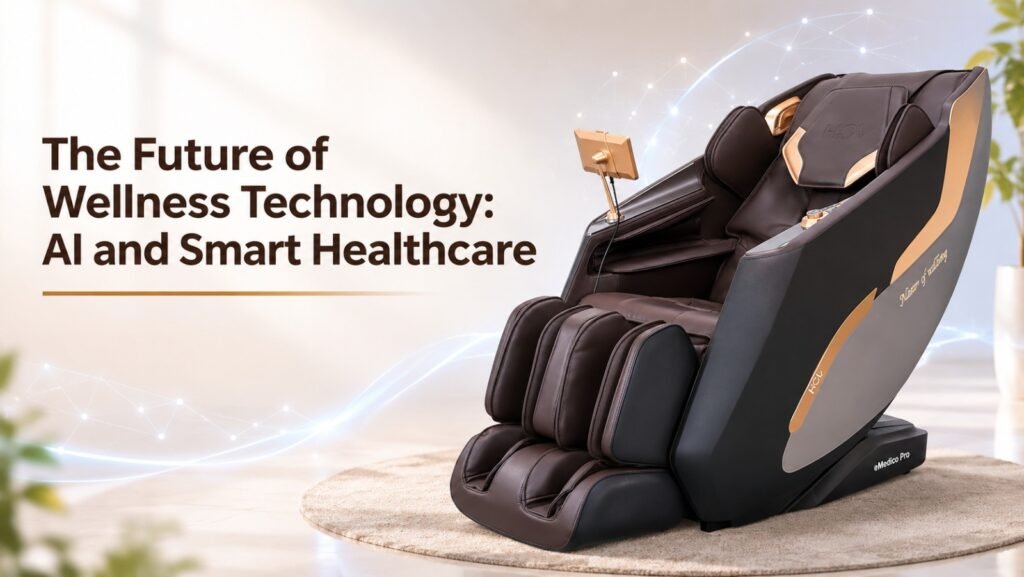
Depending on the model, modern massage chairs may offer programmable massage programmes, adjustable intensity, body-position detection and user-controlled settings. These let people customise their relaxation to their own comfort. Not every automated feature counts as AI, so check the manufacturer’s specifications. You can also compare features in our massage chair buying guide.
Massage chairs are lifestyle and relaxation products, not medical treatments. Follow the manufacturer’s instructions and choose settings that feel comfortable.
Challenges: Privacy, Accuracy and Responsible AI
Privacy. Wellness platforms may collect sensitive personal information, so data protection, security and informed consent matter. Check what a device collects, how it is stored and whether it is shared with third parties.
Accuracy. Wearable readings are estimates, not clinical measurements. AI can also give misleading results when the data behind it is incomplete or unrepresentative, and WHO lists bias in algorithms among the risks of AI in health.
Responsible use. WHO’s guidance sets out six principles: protecting human autonomy; promoting well-being, safety and the public interest; ensuring transparency; fostering accountability; ensuring inclusiveness and equity; and promoting responsive and sustainable AI.
Claims and regulation. The FDA’s general wellness guidance covers low-risk products intended only for general wellness. Products that claim to diagnose or treat a condition are treated differently, so businesses should describe their products accurately.
What the Future of Wellness Technology Looks Like
The future of wellness technology is likely to bring better-connected devices, more personalised digital experiences and more useful AI-powered insights. Better integration between consumer devices and healthcare platforms may make it easier to share selected information when a user chooses to.
One principle in WHO’s guidance is that humans should stay in control of healthcare systems and medical decisions. That is a useful way to think about the whole field. Technology can support people, but its value will depend on accuracy, privacy, accessibility and responsible use.
Frequently Asked Questions (FAQs)
- How is AI changing everyday wellness?
AI helps apps turn data from smartwatches and fitness bands into simple patterns, such as activity trends and sleep estimates. These are general insights, not a diagnosis. - What is smart healthcare?
It combines digital platforms, connected devices and communication tools to improve how health information is delivered. Telehealth and remote patient monitoring are two examples. - Are wearables and wellness apps reliable?
They are useful for spotting everyday trends, but their readings are estimates. For a health concern, a qualified professional is the right source of advice. - Will AI replace doctors and nurses?
WHO’s guidance says humans should remain in control of healthcare systems and medical decisions. AI is best seen as a tool that supports professionals. - What are the biggest challenges for AI in wellness and healthcare?
Key challenges include data privacy, accuracy, algorithmic bias and the need for human oversight and transparency.