

If you have ever watched a construction site come alive, you have probably noticed a small, tidy structure standing near the entrance — the site engineer’s cubicle, the security check-post, or the sales team’s temporary setup. That structure is usually an office cabin, and it has quietly become one of the most practical inventions in modern infrastructure and business planning.
An office cabin is not just a “temporary shed” anymore. It is a fully functional, factory-built workspace that can be delivered, installed, and used within days — not months. Whether you are a builder who needs a site office, a factory owner who wants a control room on the shop floor, or a startup that needs extra space in a hurry, an office cabin can solve your problem faster and cheaper than traditional construction.
In this blog, we will walk you through what an office cabin actually is, why so many businesses across India are choosing them, what goes into building one, and how you can pick the right one for your needs.
What Exactly Is an Office Cabin?
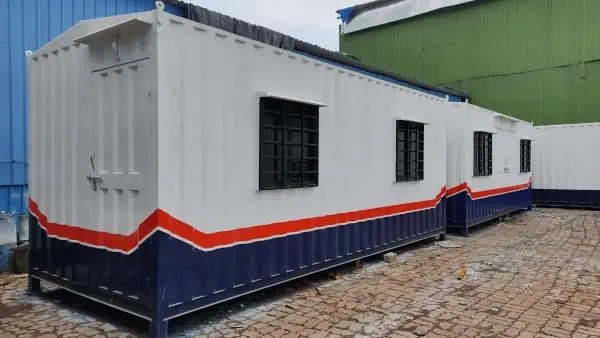
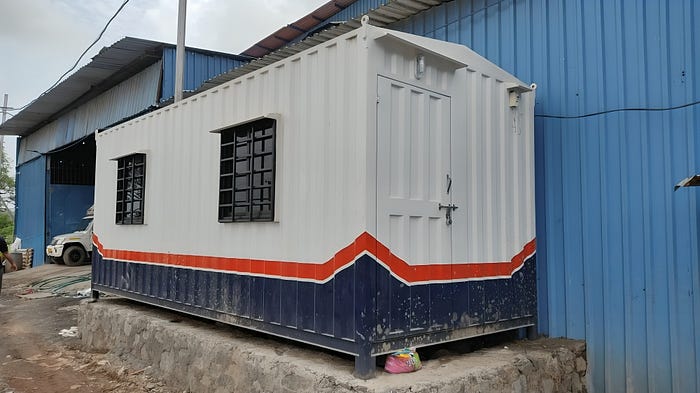
Simply put, an office cabin is a prefabricated workspace built in a factory using a steel frame and insulated panels, then transported to your site and installed within a very short time. Unlike a permanent building, it does not need months of masonry work, plastering, or curing time.
Every office cabin is designed to function like a real office — with workstations, meeting areas, washrooms, proper lighting, ventilation, electrical fittings, and even air-conditioning if required. The only difference is how it is built and how quickly it reaches you. Because it is manufactured under factory conditions, quality control is far more consistent than with on-site construction, and the finished product is ready to use almost as soon as it lands on your property.
Why Businesses Are Choosing an Office Cabin Over Traditional Construction
There are a few clear reasons this trend has picked up so much momentum in recent years.
Speed of deployment A traditional brick-and-mortar office can take months to plan and build. An office cabin, on the other hand, can usually be manufactured and delivered within one to three weeks, and it becomes fully operational within a day or two of reaching the site.
*Lower cost. Because there is no heavy civil work, no long labour deployment, and no material wastage, an office cabin typically costs up to 60% less than permanent construction of a similar size. That is a significant saving, especially for projects with tight budgets or short durations.
Flexibility to relocate. This is where an office cabin really stands apart. If your project moves to a new location, or your business needs change, you can simply relocate the cabin instead of abandoning your investment. It is engineered to handle repeated movement without structural damage.
Customisation. Modern manufacturers do not offer a single generic box. You get to choose the size, wall panel material, flooring, windows, furniture, and even whether you want an attached toilet. This means your office cabin is tailored to your exact operational needs, not a compromise.
Durability in tough conditions. A well-built office cabin uses a heavy-gauge MS steel frame and weatherproof panels, so it can withstand harsh site conditions — whether that is a mining field, an industrial yard, or a coastal construction project exposed to heavy rain and sun.
Where Is an Office Cabin Actually Used?
You will find an office cabin doing quiet, important work across many industries. Construction companies use them as site offices for engineers and project managers. Factories install them as control rooms and supervisor cabins on the shop floor. Mining and oil and gas companies rely on them for durable offices in remote, harsh locations. Real estate developers set them up as on-site sales offices at upcoming projects. Schools and training institutes use them as temporary classrooms or admin rooms when permanent space is not yet ready. Even hospitals and NGOs use a mobile office cabin for medical camps and outreach programs.
This wide range of applications is exactly why an office cabin has become a go-to choice — it adapts to almost any industry that needs fast, functional space without the wait.
What Goes Into Building a Good Office Cabin?
The quality of an office cabin depends heavily on the materials and craftsmanship behind it. A strong steel frame forms the skeleton of the structure, giving it stability and load-bearing strength. The walls and roof are usually built using insulated sandwich panels — often PUF or Rockwool — which help regulate indoor temperature and reduce outside noise, making the space genuinely comfortable to work in.
Flooring options can range from simple vinyl sheets to more durable cement board and laminate finishes, depending on how much foot traffic the cabin will see. Doors and windows are typically made from aluminium or uPVC, offering both security and natural light. And of course, no functional office cabin is complete without proper electrical wiring, switches, sockets, and provisions for air conditioning or internet connectivity.
When all of this comes together under strict factory supervision, you get an office cabin that is not just quick to install, but genuinely built to last for years, even under demanding site conditions.
Thinking about setting up your own site office without the usual construction delays? [Get a free, no-obligation quote for your custom office cabin today] and see how quickly your team can move in.
How to Choose the Right Office Cabin for Your Project
Picking the right office cabin comes down to a few practical questions. First, think about occupancy — how many people will actually use the space daily? A small office cabin comfortably fits two to four people and works well for a guard room or a single-person site office. A medium-sized cabin can accommodate six to ten people, making it ideal for a small team or a sales office. Larger cabins can house anywhere from twelve to twenty people and suit full corporate or project teams.
Next, consider your site conditions. If you are working in extreme heat or cold, insulated panels and proper AC provisions matter a lot more than in a mild climate. If the site is remote, an attached toilet can save your team significant daily travel time. And if the cabin needs to project a more polished, client-facing image — say, for a real estate sales office — options like ACP cladding and wooden laminate flooring can make a noticeable difference in how professional the space feels.
Finally, always check the manufacturer’s delivery timeline and after-sales support. A good office cabin provider should offer installation assistance and be available for relocation or maintenance help long after the initial delivery.
In Summary
An office cabin is a practical, cost-effective, and fast alternative to traditional construction — built in a factory, delivered ready to use, and flexible enough to move wherever your project takes you. From construction sites and factories to sales offices and remote field locations, businesses across India are increasingly turning to an office cabin because it saves time, reduces cost, and still delivers a comfortable, professional workspace. Choosing the right size, materials, and finish for your specific needs is the key to getting the most value out of your investment.
If you are ready to skip the long wait of conventional construction, it might be time to explore what a customised office cabin can do for your project. [Talk to our team today and get a factory-direct quote for your portable office cabin]— with pan-India delivery and installation support included.