

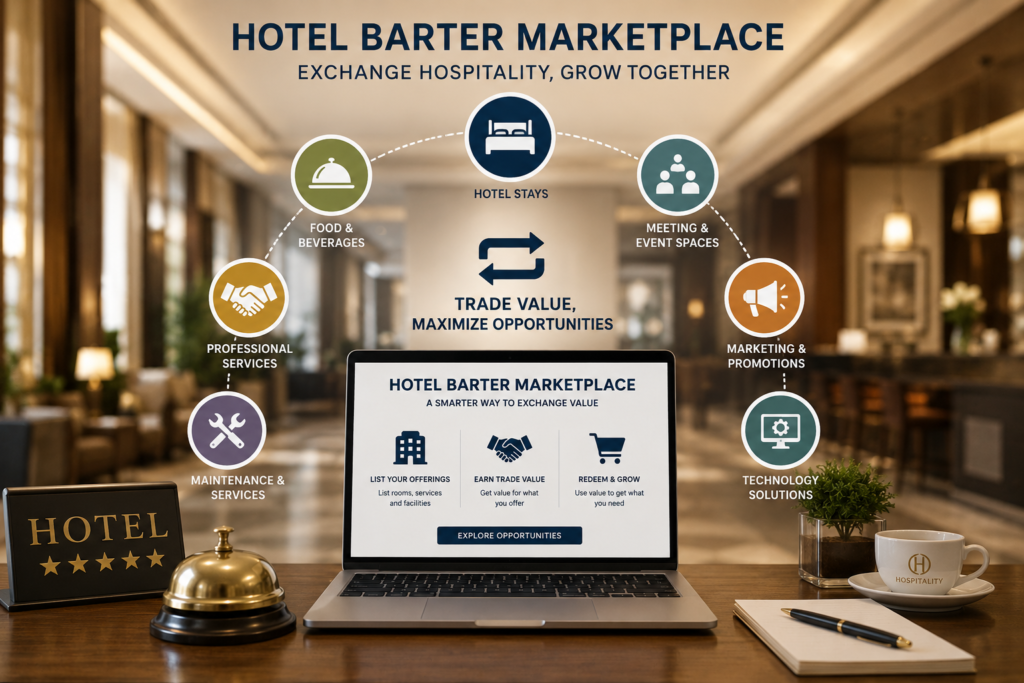

The hospitality industry is built around managing experiences, space, and time. A hotel room that remains vacant tonight cannot be stored and sold tomorrow. An unused banquet hall, empty conference room, or underutilised dining facility can also represent lost revenue opportunities. As hotels look for smarter ways to manage these challenges, the concept of a hotel barter marketplace is becoming an interesting part of the evolving hospitality landscape.
A hotel barter marketplace creates a digital environment where hospitality businesses can offer available products and services in exchange for goods, professional services, or other business requirements. Rather than focusing only on conventional cash transactions, this approach allows hotels to explore alternative ways of creating value from resources they already have.
Turning Perishable Hotel Inventory into Opportunity
One of the most distinctive characteristics of the hotel industry is that much of its inventory is perishable. Once a night passes, an unsold room cannot be recovered. The same applies to unused meeting slots, banquet dates, and event spaces.
A hotel barter marketplace can give hospitality businesses another channel for making use of this available capacity. For instance, a hotel with rooms available during a low-demand period may offer accommodation through a barter network. In return, the hotel can receive value that may be used for relevant business requirements available within the marketplace.
This approach does not replace traditional hotel bookings. Instead, it can provide an additional opportunity to explore value from capacity that may otherwise remain unused.
Supporting Off-Peak and Seasonal Demand
Seasonality is a major factor in hospitality. Many properties experience periods of strong demand followed by quieter months or weekdays when occupancy can fall. Hotels often develop special packages, promotions, and campaigns to attract guests during these periods.
A barter marketplace may provide another option for hotels during off-peak periods. Available rooms or hospitality services can be offered to businesses within the network, potentially generating exchange value instead of remaining completely unutilised.
This can be particularly relevant for hotels located in destinations with seasonal tourism patterns, business hotels experiencing quieter weekends, or resorts facing fluctuations in visitor demand.
Beyond Rooms: Unlocking the Full Hospitality Offering
A hotel is much more than a place to sleep. Modern properties offer a wide range of facilities and services that can hold value for businesses.
A hotel barter marketplace may create opportunities involving:
- Accommodation and extended stays
- Conference and meeting rooms
- Banquet and wedding venues
- Corporate events
- Food and beverage services
- Spa and wellness experiences
- Team-building packages
- Business travel solutions
This wider range of offerings allows hotels to think beyond room inventory. A property may have limited accommodation availability but still have unused event space or restaurant capacity. Different facilities can potentially create different exchange opportunities.
Creating Opportunities in the MICE Segment
Meetings, Incentives, Conferences, and Exhibitions, commonly known as the MICE segment, play an important role in the hospitality industry. Hotels regularly compete to attract corporate events, training programmes, product launches, networking sessions, and conferences.
A barter marketplace can introduce hotels to businesses that require these facilities. At the same time, hotels may gain access to products or professional services needed to support their operations.
For example, a hotel could explore exchanging meeting or event facilities for services such as digital marketing, photography, technology support, creative services, training, or other relevant business solutions.
This creates a more dynamic approach to using event infrastructure and can help hotels explore relationships with businesses outside their existing customer base.
Strengthening Hotel Business Networks
Hospitality is highly relationship-driven. Hotels depend on corporate clients, travel partners, event organisers, suppliers, agencies, and service providers.
A digital barter marketplace can help expand these professional connections by bringing businesses from different sectors into one ecosystem. A transaction may begin as an exchange, but it can also introduce a hotel to a potential long-term customer or supplier.
For instance, a company that uses a hotel for an event through a barter arrangement may later return for paid corporate meetings or accommodation. Similarly, a hotel may discover a new supplier that becomes part of its regular business operations.
The exchange itself can therefore become a starting point for broader commercial relationships.
A Different Approach to Hotel Procurement
Hotels require a constant supply of products and services to maintain operations. From technology and marketing to maintenance and professional services, these requirements can create significant ongoing expenses.
Through a hotel barter marketplace, properties may explore opportunities to obtain selected requirements by exchanging available hospitality services. A hotel might use accommodation, event facilities, dining packages, or other offerings to generate exchange value that can be used within the marketplace.
This gives hotel operators another way to think about procurement. Instead of viewing every requirement solely as a cash expense, businesses can assess whether some needs can be addressed through an exchange of existing resources.
The Importance of Strategic Barter
Barter works best when it supports a hotel’s wider business strategy. Hotels need to consider which rooms, services, or facilities are suitable for exchange and whether the resulting value can be used effectively.
Properties should also maintain clear policies regarding availability, service standards, booking procedures, cancellation terms, and the value assigned to their offerings. Each transaction should be properly documented, and businesses should consider applicable financial, legal, tax, and contractual requirements.
A well-managed barter strategy should complement, rather than disrupt, a hotel’s existing revenue channels.
The Future of Hospitality Exchange
As the hospitality industry continues to adopt digital solutions, hotels are finding new ways to manage capacity and build business relationships. A hotel barter marketplace reflects this shift by combining hospitality resources with the connectivity of an online business network.
The future of hotel barter may be less about simple one-to-one exchanges and more about creating flexible opportunities across a connected marketplace. Hotels can explore ways to use underutilised rooms, event spaces, dining services, and other facilities to generate value beyond traditional transactions.
For hospitality businesses looking to maximise available capacity, strengthen professional connections, and explore alternative procurement opportunities, a hotel barter marketplace offers a fresh perspective on how business value can be created. In an industry where every room night and every available space matters, turning unused capacity into potential opportunity could become an increasingly valuable strategy.