

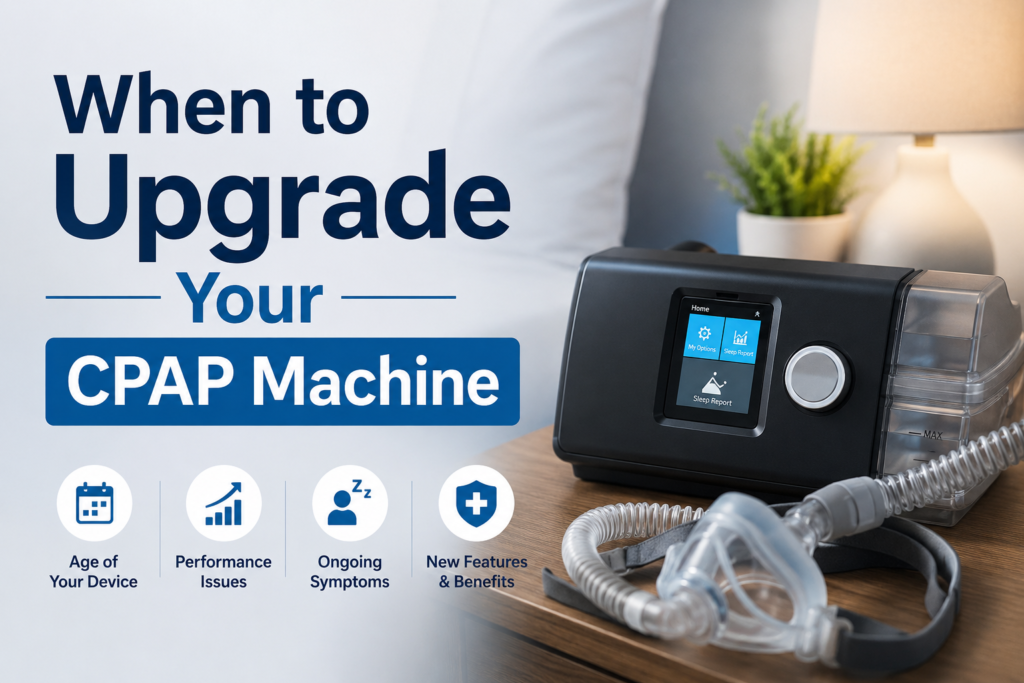

If your CPAP machine is five years old or more, it might be time for an upgrade. Technology moves fast, and newer models offer meaningful improvements in comfort, convenience, and therapy tracking. Here’s how to know if your current device is holding you back.
Warning Signs It’s Time to Replace
- Loud motor noise that disrupts your sleep or your partner’s
- Frequent error messages or unexpected shutdowns
- Humidifier that no longer holds water or heats evenly
- Outdated data tracking with no app connectivity
- Difficulty finding replacement parts or compatible masks
What Newer Machines Offer Modern CPAP devices like the ResMed AirSense 11 feature ultra-quiet operation under 26 dB, integrated Bluetooth for seamless app syncing, auto-adjusting pressure algorithms, and cloud-based therapy monitoring. Some even include cellular connectivity so your care team can check in remotely.
Insurance and Replacement Cycles Most insurance plans, including Medicare, cover a new CPAP machine every five years. If you’re near that mark, check your eligibility. Upgrading isn’t just about comfort—it’s about staying compliant with therapy requirements and accessing the latest health insights.
Don’t Wait for Failure Waiting until your machine dies means interrupted therapy and rushed decisions. Plan your upgrade proactively. Compare features, read reviews, and consult your provider to find the best fit for your needs.
Keep Your Old Machine as Backup If your current device still works, keep it as a travel or emergency backup. Having a second machine reduces stress when you’re on the road or waiting for repairs.
Upgrading your CPAP machine can renew your commitment to therapy and improve your sleep quality. For the latest models, prescription support, and expert guidance on choosing the right device, visit cpaprx.